Commercial HVAC service in White Plains covers the rooftop units, split systems, boilers and refrigeration that keep offices, shops, restaurants and apartment buildings open. Bella Family Air Solutions services all makes and models, schedules work around your business hours and sends OSHA 30-trained technicians with at least 15 years in the trade.
White Plains is the commercial center of Westchester County — the county seat, a courthouse district, office buildings along the Westchester Avenue corridor, and street-level retail downtown. Behind all of it are rooftop units, split systems and boilers that have to run through the busiest hours of the business day. Bella Family Air Solutions serves those properties with the same people who have handled residential heating and cooling here since 1976.
Our commercial work covers offices, retail storefronts, restaurants and multi-family buildings. We service all makes and models, and every tech who arrives has a minimum of 15 years in the trade and OSHA 30 safety training — relevant when the job is on a roof or in a mechanical room shared with other trades.
Most of all, we plan work around your operation. That means early-morning or after-hours maintenance, clear communication with property managers and tenants, and repairs that don’t turn a shop floor into a work zone.
Signs Your Commercial System Needs Service
Commercial equipment runs longer hours than residential, so small problems grow faster.
Hot or cold complaints from one area
Often a failed zone damper, a bad economizer actuator or an RTU serving too much space.
Rooftop unit short-cycling
Dirty coils, low charge, a failed sensor or thermostat placement can all cause it.
Squealing from an RTU or air handler
Worn or loose belts and dry bearings — easy fixes before they become motor failures.
Water stains on ceiling tiles
Clogged condensate drains on rooftop or above-ceiling units.
Utility bills rising without explanation
Stuck-open economizers, dirty coils and poorly programmed controls waste energy every day.
Boiler lockouts in a multi-family building
No heat in a residential building is urgent — call us immediately, day or night.
Commercial HVAC problem? Shut down, call now or schedule
In a building full of staff, customers or tenants, the first decision is how serious this is. Use this to sort it quickly:
Clear the area first
Gas odor near a rooftop unit, boiler room or kitchen — evacuate and call 911 or the gas utility from outside
A carbon monoxide alarm in any occupied space
Smoke or a burning smell from an air handler or rooftop unit
Water pouring onto electrical panels, lighting or equipment
Call us now, day or night
No heat in a residential or mixed-use building in cold weather
Refrigerated product warming above safe holding temperature
A server or equipment room overheating
Rooftop unit off during a heat wave with a full building
Water leaking through ceiling tiles from above-ceiling equipment
Schedule a visit
One office or zone always too warm or too cold
Squealing belts or rattling from a rooftop unit
Utility bills climbing without a change in use
Filters, belts or coils overdue for service
What our commercial service covers, unit by unit
Commercial equipment fails in different places than a house furnace. These are the parts of a building’s system we service, and what you get back after each visit.
Rooftop package units
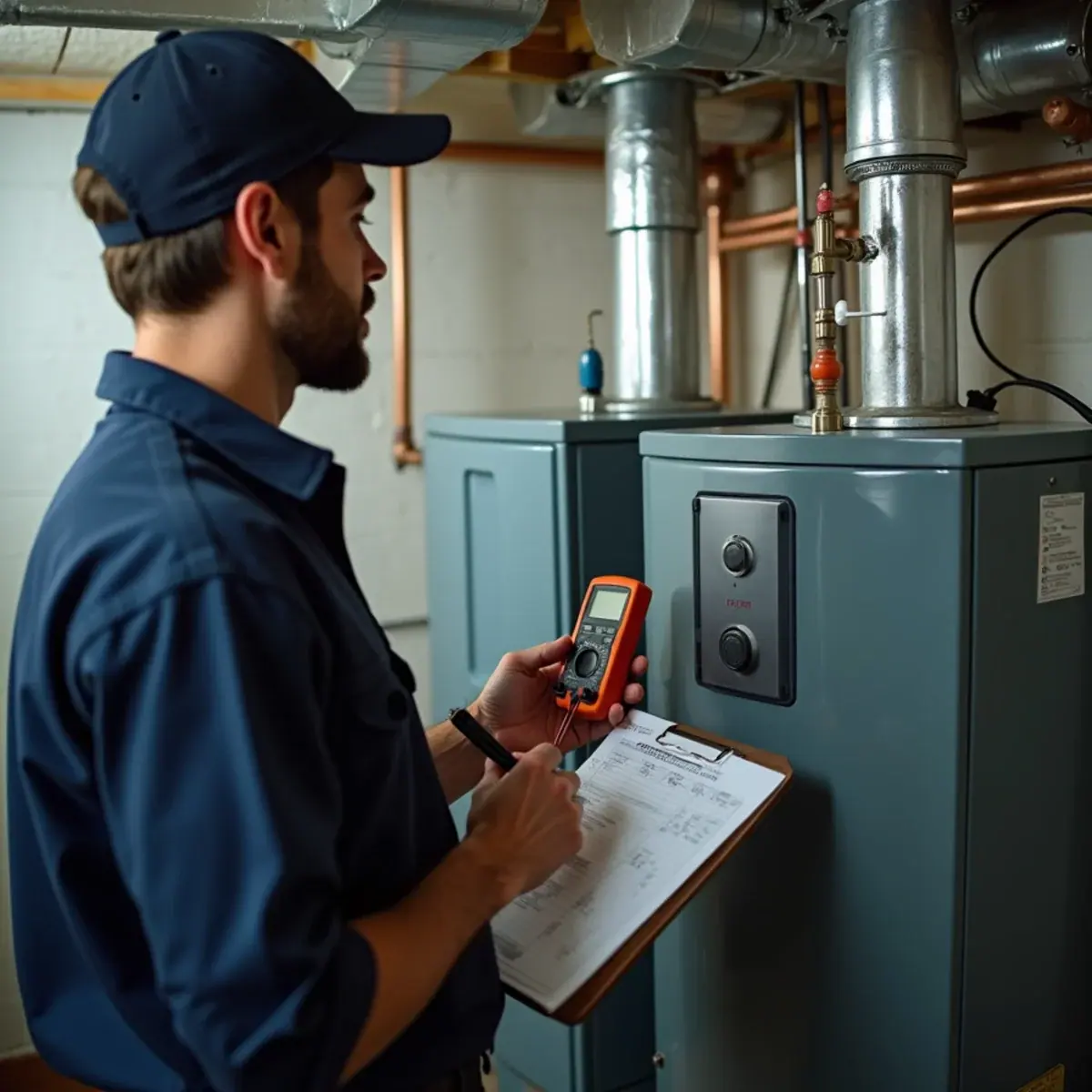
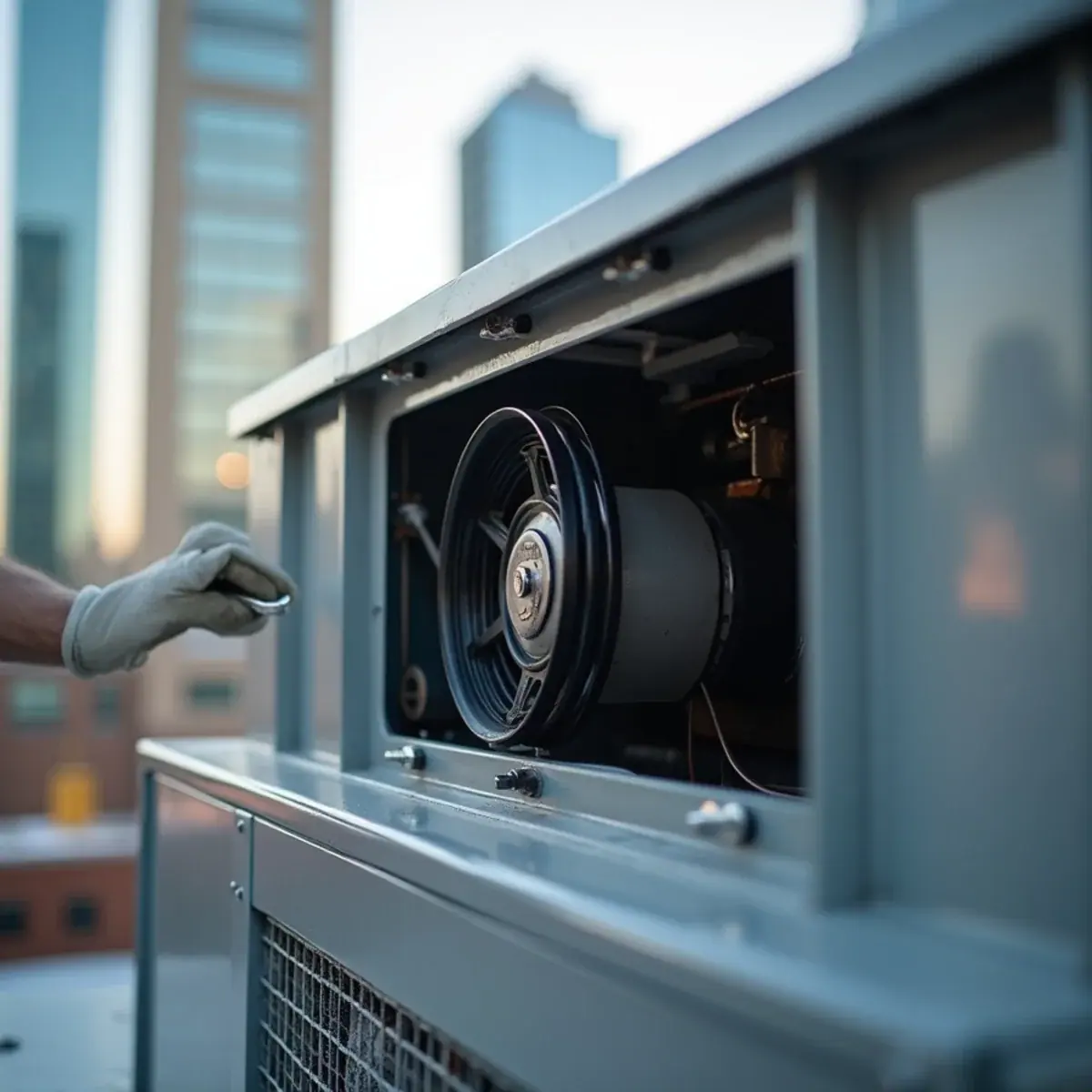
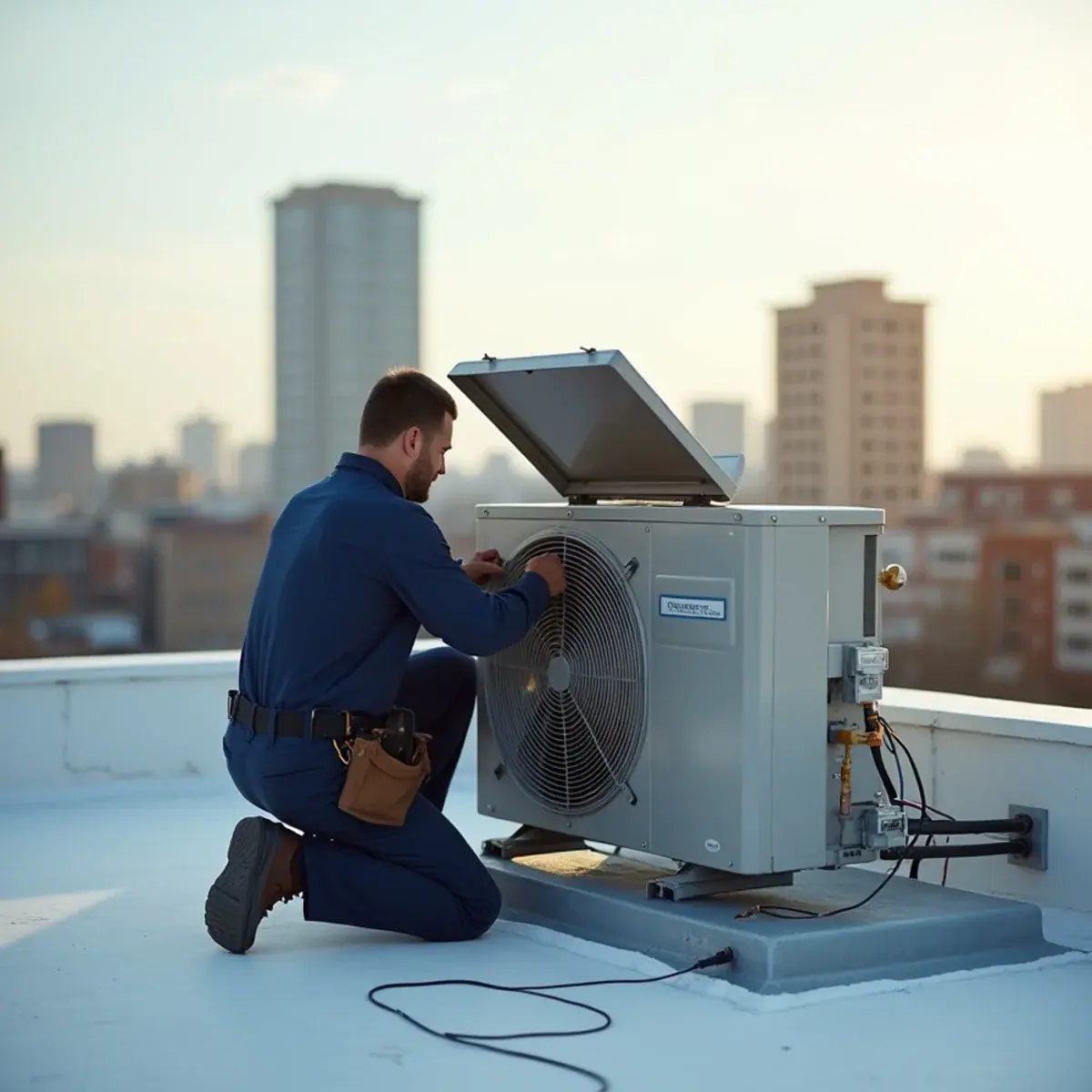
Belts and bearings, blower and condenser fan motors, capacitors and contactors, coils, condensate pans and drains, and a check that the economizer actually opens and closes. On gas-heat RTUs, burners and heat exchangers are inspected and combustion checked.
Split systems serving offices and storefronts
Condensers on roofs or in alleys and air handlers above drop ceilings get cleaned, measured and checked. Above-ceiling units are where a clogged drain becomes stained tiles over a sales floor, so drains and float switches get extra attention.
Boilers in multi-family and mixed-use buildings
Burner cleaning, low-water cutoff testing, pressure and safety controls, and zone draining and purging on hot-water systems. Steam plants get venting and water-condition checks through our steam heating work.
Commercial refrigeration
Refrigeration equipment that keeps product cold is serviced alongside the building’s HVAC, so a restaurant or shop isn’t juggling separate contractors for comfort cooling and cold storage.
Refrigerant work on record
Every recovery, repair and recharge is handled by EPA Universal-certified technicians and noted with refrigerant type and amount. You keep the records for your own compliance files, landlord or insurer.
Thermostats and controls
Programmable and networked thermostats checked for schedules that match your hours, sensors that read the right space and setbacks that actually happen overnight. Poorly programmed controls cost money every day without anything looking broken.
A written visit report
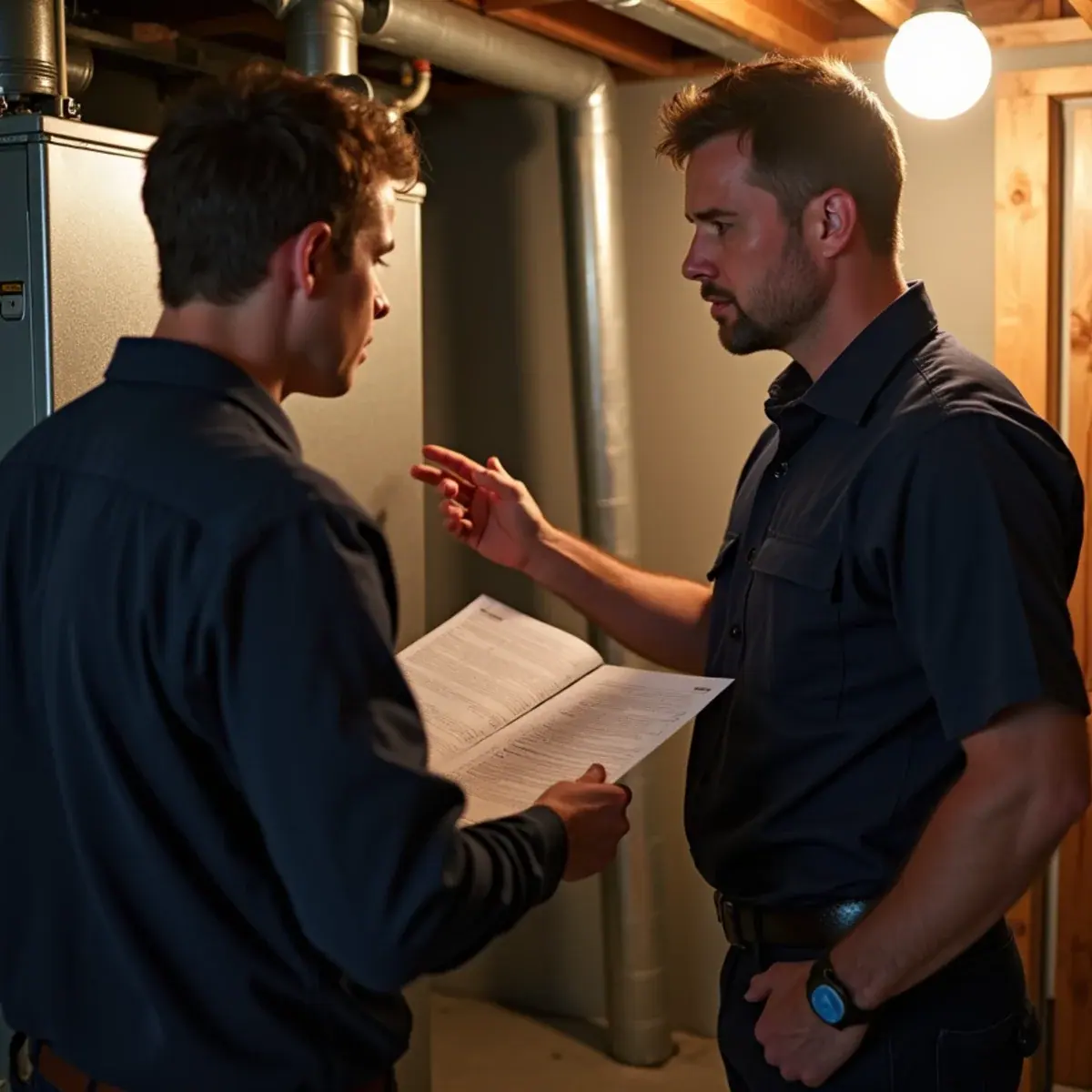
After each visit you get what we found, what we did and what we recommend, by unit. Urgent items are separated from items to budget for, so a property manager can forward it without rewriting it.
How We Work With Commercial Clients
Commercial service requires planning, documentation and respect for the business operating around us.
1
Site walk and equipment inventory
We record each unit’s make, model, age, refrigerant, filter sizes and access requirements.
2
Maintenance plan
A preventive maintenance agreement tailored to your equipment: seasonal visits, filter schedules, belt changes, coil cleaning and boiler checks.
3
Scheduled around you
Visits timed for before opening, after close or weekends, coordinated with building management.
4
Documented service
Findings, readings and recommendations reported per unit so you can plan budgets.
5
Priority emergency response
Maintenance clients get priority on our 24-hour line when something fails.
What Shapes Commercial HVAC Costs
Every building is different. These are the factors that drive maintenance agreements and repair quotes.
Number and type of units. Several small RTUs, one large boiler or a mix of splits and package units each require different labor.
Visit frequency. Restaurants and medical offices often need more frequent filter and coil service than a small office.
Access and safety. Roof access, ladders, lifts and fall protection affect time on site.
After-hours scheduling. Work outside normal hours to avoid disruption carries after-hours labor.
Equipment age. Older units need more repairs and may use R-22, which affects refrigerant costs.
We quote maintenance agreements after a site walk, not from a price sheet. For aging equipment, we’ll give you a repair-versus-replace outlook so capital planning isn’t a surprise.
Equipment We Service
Most small and mid-size commercial buildings in the area use one or more of these systems, and we service all makes and models.
Rooftop package units (RTUs): belts, economizers, gas heat sections, coils and controls.
Split systems: offices, server closets and retail spaces.
Hot-water and steam boilers: multi-family buildings and older mixed-use properties — see our boiler repair service and steam heating pages.
Commercial water heaters: restaurants, laundries and multi-unit buildings, via our water heater repair team.
Refrigerant leak repair: EPA Universal-certified work covered on our refrigerant leak repair page.
Why Preventive Maintenance Pays Off in Commercial Buildings
Commercial units work hard: long run hours, high occupancy loads and often a rooftop exposed to weather. A preventive maintenance agreement keeps filters, belts, coils and drains in good shape, catches failing capacitors and contactors early, and keeps records you can show to insurers or tenants. It also puts you ahead of the line on emergency calls.
Whether it’s a repair, a replacement or ongoing maintenance, compare proposals line by line. Each one — ours included — should state:
Line by line
Every unit covered, identified by location, make, model and serial number
What each visit includes per unit: filters, belts, coils, drains, controls, combustion checks, refrigerant readings
Visit timing: business hours, before opening, after close or weekends — and how after-hours labor is priced
Roof access, ladders, lifts or cranes needed, and who arranges them
Refrigerant handling under EPA Section 608, with type and amount recorded
How emergency calls are handled and how the building reaches a person after hours
The report format you’ll receive after each visit
Written warranty terms on repair work and replacement parts
For replacements: permits, curb adapters, electrical changes, disposal of old units and startup testing
A low per-visit price that leaves out coil cleaning, drain service or after-hours scheduling usually costs more by the end of the year. Our blog on commercial HVAC maintenance for offices and retail covers what a sound plan includes.
Before our first visit to your building
A little preparation gets the first visit spent on equipment instead of hunting for keys:
Access
Roof hatch or door access, keys and any alarm codes for mechanical rooms
A contact on site who can open ceilings, closets and locked spaces
Any existing equipment list, service history or warranty paperwork
Tenant or staff notice if units will be shut down during the visit
Known problem areas: which rooms, which hours, which season
Why businesses and property managers call Bella Family Air Solutions
Work planned around your hours
We schedule maintenance before opening, after close or on weekends, and coordinate roof access, elevators and tenant notices with building management. Our office is open until 10 PM seven days a week, and the emergency line runs 24 hours.
OSHA 30 safety training
Rooftops, ladders and shared mechanical rooms carry real risk. Our OSHA 30 training means the crew on your roof works to documented safety standards — something your landlord, insurer or general contractor may ask about before we step onto the property.
Veteran technicians, all makes and models
Every technician has at least 15 years of work history. Commercial buildings often carry a mix of brands and ages installed by different contractors, and our crew works on all of it without needing the original installer’s paperwork.
A real person on the phone
When a unit fails mid-shift or tenants lose heat overnight, a person answers our line — a theme customers mention in reviews. You explain the problem once, and the technician arrives knowing which unit and what failed.
Local, licensed and accountable
We’re licensed, bonded and insured, BBB accredited with an A+ rating, and based at 18 Jefferson Place in the Fairview section of White Plains, close to downtown and the Westchester Avenue office corridor.
Where we work
Commercial HVAC near you
We provide commercial hvac in White Plains and these nearby communities — plus the rest of Westchester County.
Our commercial calls follow Westchester’s business districts. Office buildings along the I-287 corridor in Harrison and Tarrytown run banks of rooftop units that need seasonal service before tenants notice anything. Medical offices near Westchester Medical Center in Valhalla and near Northern Westchester Hospital in Mount Kisco can’t let exam rooms swing hot or cold.
Retail strips along Central Park Avenue in Yonkers depend on keeping sales floors comfortable through a Saturday rush, and downtown New Rochelle has a growing number of mixed-use and apartment buildings where one boiler or rooftop system serves dozens of households. We plan each property’s visits around how it actually operates.
Do you offer commercial HVAC maintenance agreements?
Yes. We build preventive maintenance agreements around your equipment and operation after a site walk. A typical plan includes seasonal visits for heating and cooling, filter and belt changes, coil cleaning, condensate drain service, and boiler checks where applicable. Maintenance clients also get priority on our 24-hour emergency line.
Can you work outside business hours?
Yes. We regularly schedule commercial work before opening, after close or on weekends so staff, customers and tenants aren’t disrupted. We coordinate with property managers on roof access, elevator use and tenant notices. After-hours scheduling carries after-hours labor, and we’ll discuss that up front when we plan the work.
What types of commercial properties do you serve?
Offices, retail storefronts, restaurants and multi-family residential buildings. Equipment ranges from rooftop package units and split systems to hot-water and steam boilers. We don’t service PTAC units, window units or wall units, which are common in some hotels and apartments.
Do you service multi-family buildings with steam boilers?
Yes. Many older apartment and mixed-use buildings in and around White Plains run on steam. We service the boilers, burners, low-water cutoffs, pressure controls and venting, and we respond around the clock when a building loses heat, because no heat in a residential building can’t wait.
Should we repair or replace an aging rooftop unit?
It depends on age, refrigerant, the condition of the heat exchanger and coils, and how often it has failed recently. An older R-22 unit with a cracked heat exchanger or failing compressor is usually a replacement candidate; a sound unit that needs a motor or controls is usually worth repairing. Replacement also raises curb-adapter, crane and permit questions, which we lay out in writing.
Do restaurants need different HVAC service than offices?
Yes. Cooking grease coats coils and filters faster, kitchen exhaust pulls large volumes of air out of the building, and makeup air has to replace it or doors whistle and dining rooms turn uncomfortable. Restaurants usually need more frequent filter and coil cleaning than offices, and the refrigeration side matters as much as comfort cooling.
Can you take over equipment another contractor installed or maintained?
Yes. We service all makes and models, and many buildings come to us with equipment from several installers. Share any service history, warranty paperwork and prior reports you have. If there are no records, the first visit becomes a baseline inventory: what each unit is, what shape it’s in and what needs attention first.
Written by the Bella Family Air Solutions team · Last reviewed . Planning ranges, permit and rebate guidance are reviewed at least quarterly.
Rooftop units, split systems and boilers keep White Plains offices, shops and restaurants running. Here’s what a solid commercial preventive maintenance program covers and how to schedule it.
Ten practical questions to ask before hiring an HVAC contractor in White Plains, from proof of insurance and EPA 608 certification to load calculations, permits and payment milestones.