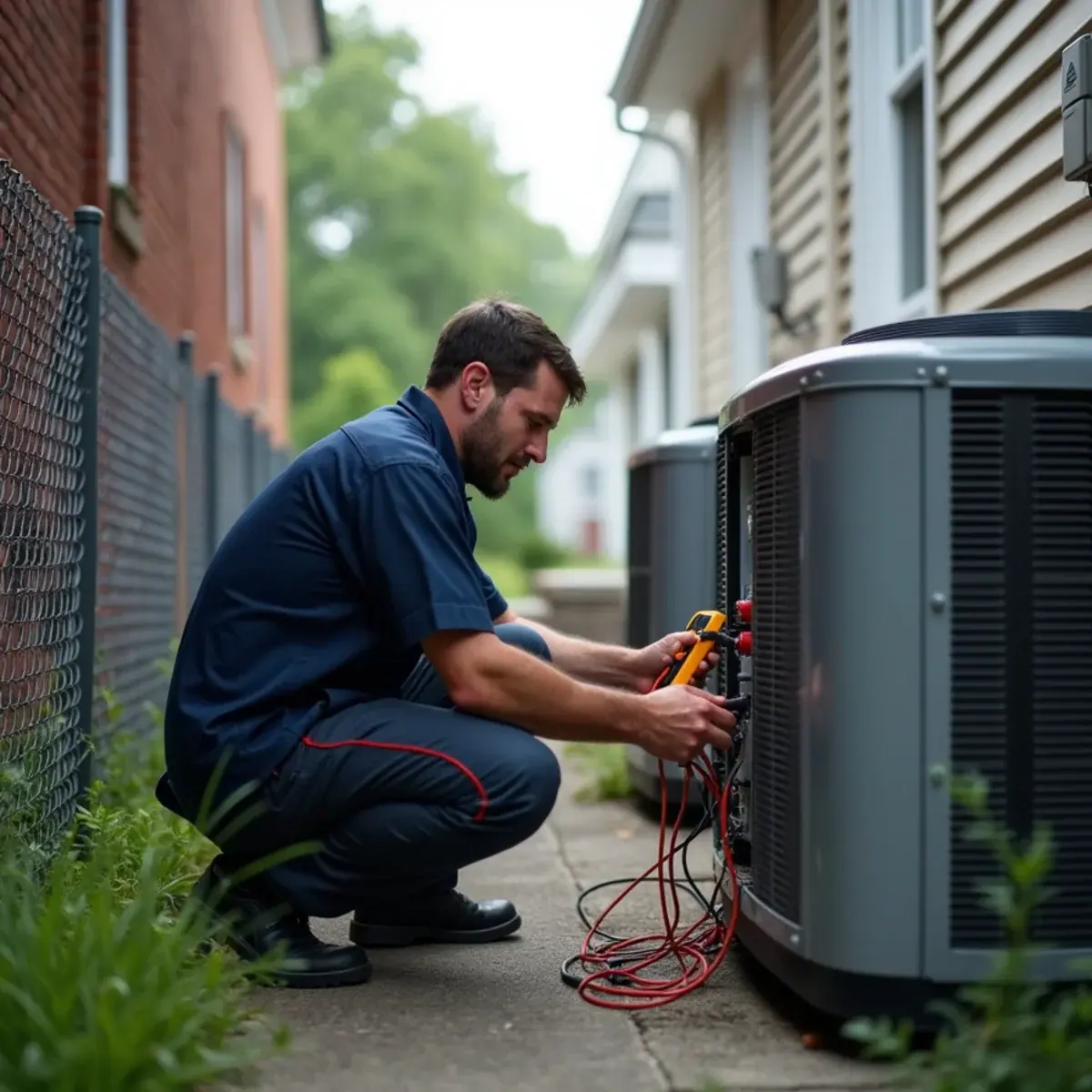
24/7 emergency service · White Plains & Westchester
Emergency AC Repair in White Plains, NY
When the thermostat reads 84 inside and still climbing, you need a seasoned tech who can find the failed part fast and get cold air moving again — day or night.
Emergency AC repair in White Plains, NY is for central air that quits when indoor heat becomes a health risk or water is coming through a ceiling. A person answers our line around the clock, households with vulnerable people are triaged first, and the technician tests before recommending anything. We don’t service window, wall or PTAC units.
Central air rarely fails on a mild June morning. It fails on the third day of a July heat wave, when every condenser on the block has run flat out since breakfast. That is when a weak run capacitor gives up, a contactor welds shut, or a dusty evaporator coil ices over. Our 24-hour line exists for those days, and the techs who answer it have at least 15 years in the trade.
During a heat emergency we triage. Homes with infants, older adults or someone with medical needs move to the front of the line, because indoor heat is a health issue for them. Say so when you call. While you wait, close blinds on the sunny side and move vulnerable family members to the coolest room — often the basement.
One boundary to know up front: we work on central air conditioning and ducted split systems. We do not service window units, through-the-wall units or PTAC units. For planned installs and non-urgent tune-ups, see our AC repair and installation page.
Signs Your AC Problem Can’t Wait
Some cooling problems can sit until Monday. These are the ones that tend to get worse — or more expensive — by the hour.
Outdoor fan spins but the air inside is warm
Often a failed run capacitor or a compressor tripped on its internal overload. Running it longer risks the compressor.
Ice on the copper line or indoor coil
Low airflow or low refrigerant is freezing the evaporator. Set the system to OFF and the fan to ON to thaw it.
Condenser humming but not starting
The classic sound of a bad capacitor or stuck compressor. Shut it off — a locked motor overheats fast.
Water on the ceiling or around the air handler
A clogged condensate drain or cracked pan in an attic unit can ruin drywall quickly.
Breaker trips again after one reset
Reset once. If it trips a second time, leave it — that points to a shorted component or wiring fault that needs a meter, not another try.
Burning smell or smoke from a vent
Turn the system off at the breaker. If there is visible smoke, get everyone out and call 911 before you call us.
Call now, first thing tomorrow, or schedule it?
Not every dead air conditioner needs a 2 a.m. visit — and some situations need 911 before they need us. On a 95-degree day in a Downtown White Plains condo with the air handler in a closet, or a top-floor apartment in Yonkers or Mount Vernon, sort it out first:
Call 911 first
Anyone confused, fainting, not sweating with hot skin, or with a racing pulse — signs of heat stroke
Smoke or flames from a vent, the air handler or the condenser
A burning electrical smell that doesn’t stop when the system is off
Call us now — 24/7
No cooling during a heat advisory with infants, older adults or medically fragile people at home
Water coming through a ceiling or pouring from an attic air handler
The condenser hums but won’t start, or the breaker trips again after one reset
Indoor temperature climbing past the mid-80s and still rising
Can usually wait for a morning or scheduled visit
Everyone at home is healthy and the house is holding a tolerable temperature
The system runs but struggles only in the late afternoon
One room is warmer than the rest
A slow drip into the drain pan that isn’t overflowing
What a heat-wave repair visit covers
When the house is at 85 and climbing, the temptation is to swap the cheapest part and hope. These are the checks that make sure tonight’s fix is the right one.
Capacitor or compressor?
A dead capacitor and a failed compressor can look identical from the driveway. We measure compressor amp draw and winding resistance, so you don’t replace a condenser that only needed a start component — or pay for a capacitor that won’t save it.
Frozen-coil protocol
An iced coil can’t be diagnosed until it thaws, and forcing the system to run cools nothing. The technician sets up a controlled thaw, finds whether airflow or charge caused it, and tells you honestly what can be done tonight.
Condenser coil rinse on the spot
A coil packed with cottonwood and grass clippings drives head pressure up until the compressor overheats and trips. If dirt is part of the failure, we clean the coil with non-toxic cleaner during the same visit.
Outdoor fan motor and blade
A fan that turns slowly or not at all can overheat a healthy compressor on a hot afternoon. We check the motor’s bearings, amp draw and blade condition before calling the repair complete.
Low-voltage wiring and control fuse
A wire chafed against the cabinet or chewed where it runs to the outdoor unit can blow the board’s low-voltage fuse and kill the whole system. We trace the short instead of just replacing the fuse.
Refrigerant type and system age, noted
We record whether the system runs on R-22 or a newer refrigerant, plus the equipment age. That determines whether a big repair makes sense, and it lets us lay out repair and replacement side by side once the heat breaks.
How an Emergency Cooling Call Unfolds
A typical after-hours call follows the same disciplined sequence, because guessing wastes time you don’t have in 95-degree weather.
1
Phone triage
A person answers, asks who is home, what the equipment is doing and whether you’ve seen ice or water.
2
Electrical checks first
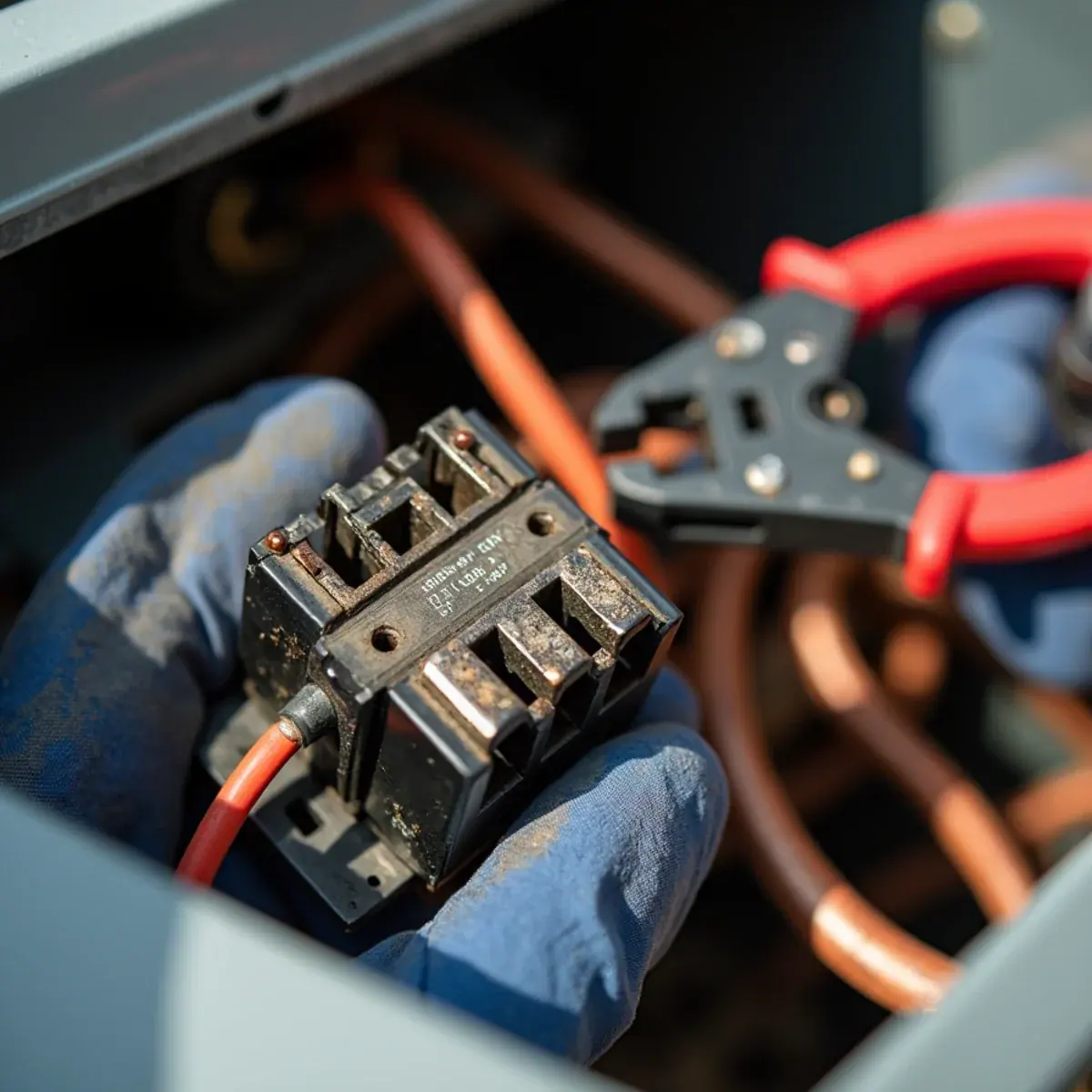
We verify voltage at the disconnect, test the contactor and measure the capacitor against its microfarad rating.
3
Airflow and refrigerant side
Filter, blower, coil and static pressure, then pressures, superheat and subcooling.
4
Options before work starts
You hear what failed, what it takes to fix it tonight, and whether a longer-term repair makes more sense once the heat breaks.
5
Restore and verify
We measure the temperature drop across the coil and confirm the condensate drains before we leave.
What Shapes the Cost of an Emergency AC Repair
We don’t post flat prices because two “AC not cooling” calls can involve completely different parts. These are the variables that move the number.
Time of the call. Overnight, weekend and holiday visits carry after-hours labor; a next-morning slot can cost less.
Which part failed. A capacitor or contactor is a modest repair. A compressor, outdoor fan motor or evaporator coil is a different conversation.
Refrigerant type and leaks. Systems on R-22 are costly to recharge because that refrigerant is no longer produced. A leak also has to be found, not just refilled.
Access. An air handler in a tight attic or a condenser on a roof takes longer to service than a basement unit and a pad at grade.
Parts availability. Common capacitors ride on the truck; brand-specific boards or motors may need a supply-house run.
You approve the scope before we start. If an older system is the real problem, we’ll lay out repair and replacement options side by side and let you decide — no pressure either way.
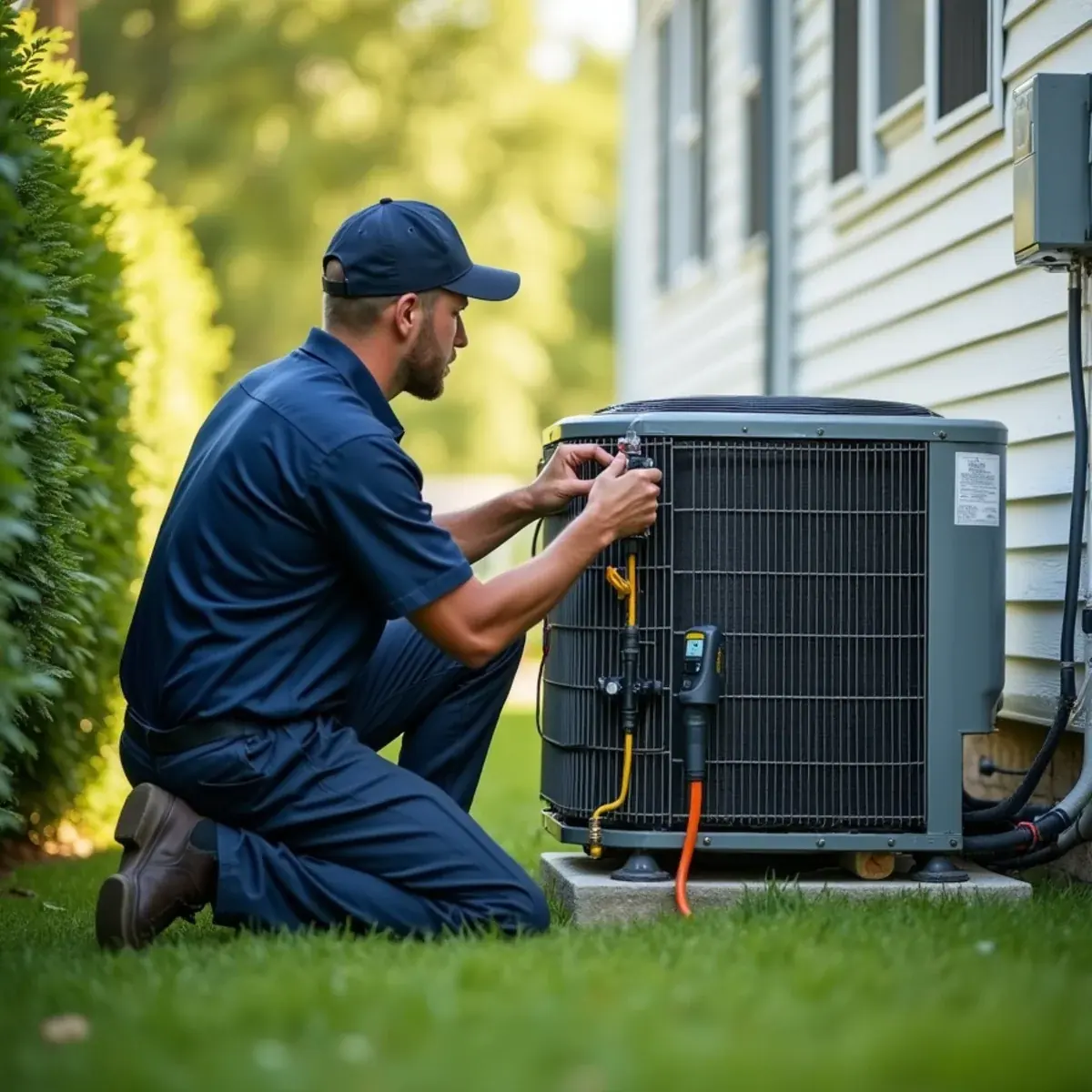
From our job files: aC condenser back in service.
Heat-Wave Triage You Can Do Before We Arrive
A few safe checks can save a trip. Confirm the thermostat is set to COOL below room temperature, and replace its batteries if the display is blank. Look at the filter; a matted one can freeze the coil on its own. Make sure the outdoor disconnect hasn’t been bumped off, and see whether the air handler’s drain pan is full.
Stop there. Don’t open the condenser cabinet — a capacitor can hold a charge after power is off — and don’t buy a can of refrigerant. If the failure is part of a broader breakdown, our 24/7 emergency HVAC repair team handles heating and cooling alike, and our blog walks through what to do when the AC dies in a heat wave.
Why the Same Homes Break Down Every Summer
Patterns repeat. A never-cleaned condenser coil means high head pressure and a hot compressor — a recipe for a July failure. A home with a slow refrigerant leak freezes up the first week the temperature stays above 90. A preseason AC tune-up and maintenance visit catches weak capacitors, dirty coils and clogged drains in May, when there is time to fix them calmly.
We cover White Plains and the surrounding towns, from colonial neighborhoods in Scarsdale to split-levels in Elmsford: the cheapest emergency call is the one that never happens.
What to tell us when you call about no cooling
These details let us triage correctly and bring the right parts on a busy heat-wave day:
Have this ready
Who’s home and whether anyone is especially vulnerable to heat
Indoor temperature now, and whether it’s still climbing
What the equipment is doing: outdoor unit silent, humming, or running with warm air; indoor fan on or off
Where the air handler is: attic, closet, basement or crawlspace
Ice or water: frost on the copper lines, a full drain pan or water on a ceiling
What you already tried: thermostat, breaker (once), outdoor disconnect, filter
Photos, if safe: the thermostat, the condenser’s data plate and any leak
If you’re without cooling during a heat advisory and someone at home is at risk, check Westchester County’s heat advisory information for cooling-center options while you wait.
If water came through the ceiling
Attic and closet air handlers pull gallons of water out of humid Westchester air every day. When the drain clogs and the float switch fails — or there isn’t one — that water finds the ceiling:
Limit the damage
Turn the system off at the thermostat so it stops producing condensate.
Stay clear of light fixtures and outlets near the wet area; switch off that circuit at the panel if water is near electrical.
Catch and contain the water with buckets and towels, and move furniture and valuables out of the way.
Photograph the ceiling, the air handler and the drain pan before cleanup, and note the date and time.
Tell your insurer, landlord or condo board — in condos, a leak can reach the unit below.
We clear the drain, check or add the float switch that should have shut the unit off, and document what we find; the insurer decides what’s covered. Planned drain service is part of spring AC maintenance.
Why households call Bella Family Air Solutions for emergency cooling
Vulnerable people first
During a heat wave, calls are sorted by risk. A home with an infant, an older parent or someone with a heart or lung condition moves up the list. Tell the person who answers, and they will ask the right follow-up questions.
Refrigerant handled by the rules
Our technicians hold EPA Universal (Section 608) certification. Refrigerant is recovered and charged properly, never vented, and a low charge means a leak search is on the table — not a can of refrigerant and a hopeful goodbye.
Diagnosis from 15 years’ experience
Every technician we hire has at least 15 years of work history. On a 95-degree evening, that experience separates a quick, correct capacitor swap from a guessed compressor replacement that costs you far more.
Honest about old R-22 systems
One reviewer described being given several options on an old R-22 air conditioner instead of a hard push toward replacement. That is our approach during emergencies too: get you cool first, then decide calmly.
Where we work
Emergency AC Repair near you
We provide emergency ac repair in White Plains and these nearby communities — plus the rest of Westchester County.
Some neighborhoods feel a failed air conditioner faster than others. Top-floor apartments and attached homes in Yonkers and Mount Vernon trap heat under the roof, and indoor temperatures climb quickly once cooling stops. Condensers near the Sound in New Rochelle, Rye and Mamaroneck lose coil fins and fan motors to salt air sooner than inland units.
Condo communities such as Heritage Hills in Somers have attic and closet air handlers that overflow when drains clog in July. We take emergency cooling calls across Westchester and into the Bronx and Queens.
Do you offer emergency AC repair at night and on weekends?
Yes. Our line is answered 24 hours a day, seven days a week, and during heat waves we triage calls so homes with infants, older adults or medical needs are seen first. After-hours visits carry after-hours labor, so if your home is safe and reasonably cool, we may suggest a first-thing-morning appointment instead.
My AC is running but blowing warm air. Should I keep it on?
Turn it off at the thermostat. Warm air with the outdoor unit humming usually means a failed capacitor or a compressor that won’t start, and forcing it to keep trying can damage the compressor. If you see ice on the lines, set the system to OFF and the fan to ON so the coil thaws before we arrive.
Can you fix my window unit or PTAC in an emergency?
No. We do not service window units, wall units or PTAC units. Our work is central air conditioning and split systems, including the air handlers, condensers, ductwork and controls that go with them. For a failed window unit, replacing it through a retailer is almost always quicker and cheaper than a repair visit.
Will you just add refrigerant to get me through the heat wave?
Only as a clearly labeled stopgap, and only after you understand the leak is still there. Refrigerant doesn’t get used up; if the charge is low, it escaped somewhere. We’ll explain the options, including a proper leak search and repair once temperatures ease.
How much does emergency AC repair cost?
Researched local planning ranges for AC repair run about $175 to $1,600+: a capacitor or contactor at the low end, a fan motor, coil or compressor higher. After-hours, weekend and holiday visits add after-hours labor, which is why a first-thing-morning slot can cost less when everyone at home is safe. You approve the price before any work starts.
Is it safe to stay home without AC during a heat wave?
For healthy adults in a home that stays tolerable, usually — keep blinds closed, drink water and use the coolest room. Infants, older adults and people with heart, lung or other medical conditions are at higher risk; move them somewhere cooler if the house keeps heating up. Confusion, fainting or hot, dry skin are signs of heat stroke: call 911.
Why did my AC shut off and won’t restart after a water leak?
Many air handlers have a float switch in the drain pan or condensate line that cuts power to the system when water backs up. That’s the switch doing its job. The fix is clearing the clogged drain or replacing a failed condensate pump — not bypassing the switch. Call us and we’ll flush the line and test the switch.
Why does my AC trip the breaker only on the hottest afternoons?
Peak heat is when the compressor works hardest and draws the most current. A weak capacitor, a dirty condenser coil, a failing fan motor or a loose connection can push the draw past the breaker’s limit only then. Reset once; if it trips again, leave it off and call — repeated resets can damage the compressor.
Should I turn off my AC during a brownout?
Yes, if the lights dim or the utility asks customers to cut use. Low voltage makes motors and compressors draw more current and run hotter, which shortens their life. Switch the system off at the thermostat, wait until power is steady, and give it a few minutes before turning it back on. Call us if it won’t restart.
How can I tell if my AC compressor is dead or it’s just the capacitor?
You can’t tell safely from outside the cabinet. Both can leave the outdoor fan still or the unit humming without cooling. A capacitor holds a dangerous charge even with the power off, so don’t open the panel. A technician measures the capacitor and the compressor windings — often the fix is the far cheaper part.
Written by the Bella Family Air Solutions team · Last reviewed . Planning ranges, permit and rebate guidance are reviewed at least quarterly.
Central air gave out in the middle of a heat wave? Here are the safe checks to run, the mistakes that make things worse, and how to keep your household cool until a tech arrives.
Warm air, ice on the lines and a hissing coil can all point to a refrigerant leak. Here is why adding more refrigerant isn’t a repair, and what finding and fixing the leak involves.