Emergency
Refrigerant Leak Signs and Why Topping Off Isn't a Fix
By Bella Family Air Solutions 4 min read
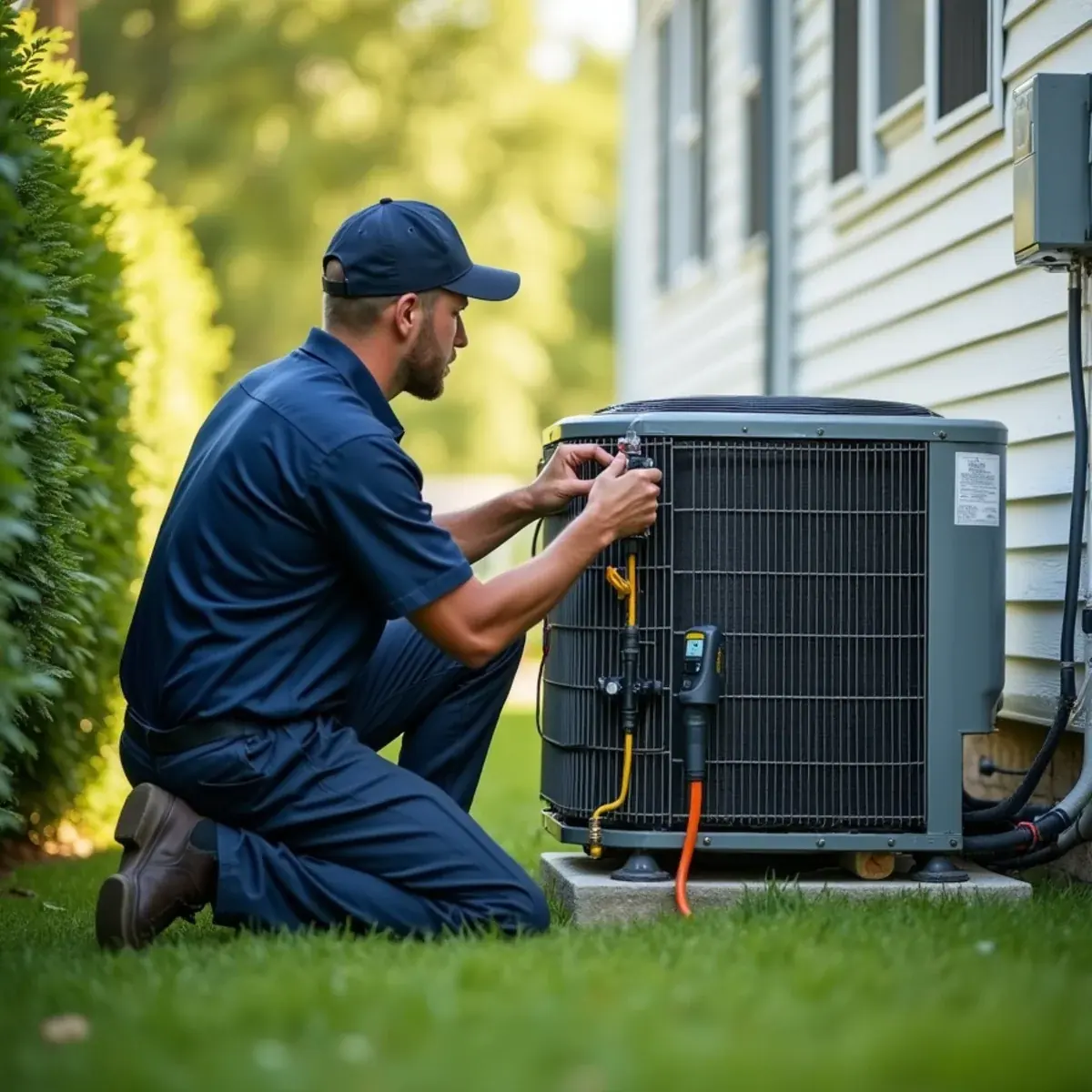
AC refrigerant leak repair starts with one fact that surprises many homeowners: a central air system does not use up refrigerant. It circulates the same charge in a sealed loop for its entire life. If your system is low, refrigerant is escaping somewhere, and adding more without finding that spot just means paying for the same problem again next summer.
Common signs of a refrigerant leak
Leaks are often slow, so the symptoms creep in over weeks or seasons. Watch for:
- The system runs longer than it used to and struggles to reach the thermostat setting on hot afternoons.
- Air from the vents feels cool but not cold.
- Ice or frost forms on the larger insulated copper line at the outdoor unit or on the indoor coil.
- Humidity stays high indoors, and the house feels clammy.
- A hissing or bubbling sound near the indoor coil or line set.
- Electric bills climb even though you haven’t changed how you use the AC.
- Oily residue on copper fittings or coil joints, since refrigerant carries compressor oil out with it.
Some of these overlap with a dirty filter or a failing blower, so a symptom alone is not a diagnosis. That is why pressure readings and a proper leak search matter. Before you call, swap the filter and make sure nothing is blocking the outdoor unit; if the symptoms persist after that, a refrigerant problem becomes more likely.
Why topping off isn’t a fix
A top-off, sometimes sold as a “recharge,” adds refrigerant to bring pressures back to normal. It can restore cooling for a few weeks or a season, depending on how fast the leak is. But it has real downsides:
- You keep paying. Every top-off is a service call plus refrigerant, and the refrigerant goes straight back out.
- The compressor suffers. Running low on charge can overheat the compressor, and compressor failure is one of the most expensive repairs on any AC system.
- Moisture and air can get in. A leak point can allow contaminants into the system over time, degrading oil and components.
- It is released into the atmosphere. Refrigerants are potent greenhouse gases, which is why their handling is federally regulated.
The rules behind refrigerant work
Under EPA Section 608 of the Clean Air Act, technicians who work on sealed refrigerant systems must be certified, and it is illegal to knowingly vent refrigerant into the air. Our techs hold EPA Universal certification, which covers every equipment type. Certification also means the refrigerant is recovered properly when a system is opened for repair.
If your system uses R-22
Systems installed before roughly 2010 often run on R-22, sometimes called Freon. Production and import of new R-22 ended in the United States at the start of 2020, so the only supply left is recovered and reclaimed stock. That makes it scarce and expensive, and it makes repeated top-offs on an R-22 system an especially poor investment. You can’t legally substitute a newer refrigerant like R-410A into an R-22 system, because the oils and pressures are different.
Owning an R-22 system doesn’t automatically mean you need a new one. A leak in an accessible spot, like a flare fitting or Schrader valve, may be worth repairing. A leak in an evaporator coil on a 20-year-old unit is a different conversation. A good technician lays out the options, including the cost of each, and lets you decide. Customers have told us they appreciated being given several repair paths on older R-22 equipment instead of being pushed straight into a replacement.
What real leak repair involves
- Confirm the charge problem. The tech measures pressures, superheat and subcooling to confirm the system is actually undercharged rather than suffering from an airflow or metering issue, such as a sticking TXV.
- Find the leak. Methods include electronic leak detectors, bubble solution on joints and valves, UV dye, and isolating sections with nitrogen pressure testing.
- Repair or replace the leaking part. Tightening or replacing a valve core, brazing a joint, or replacing a coil depending on where the leak is.
- Evacuate and recharge. After a repair that opens the system, the tech pulls a deep vacuum to remove air and moisture, then weighs in the correct charge.
- Verify. Final pressures and temperatures confirm the system is operating as designed.
Where leaks tend to show up
Indoor evaporator coils are a frequent source, particularly on coils exposed to household chemicals or years of moisture. Service valves and Schrader cores at the outdoor unit are another. Line sets running through walls can be rubbed or nicked during renovations, and vibration can fatigue copper where it passes through the condenser cabinet. In the larger colonials common in Harrison, homes frequently have two systems, one for each floor, so a technician should check both whenever one has been topped off more than once.
Does the newer refrigerant in 2025 and later systems change anything?
Federal rules have pushed new residential central air toward lower-impact refrigerants such as R-454B and R-32, so systems installed from 2025 on increasingly use them instead of R-410A. For a homeowner, three things matter:
- The refrigerants are not interchangeable. An R-410A system can’t be topped off with R-454B, just as R-22 can’t take R-410A.
- The new refrigerants are classed as mildly flammable, so many indoor units now carry leak sensors and technicians follow added handling steps. A leak still needs finding and fixing, not refilling.
- Replacing only an outdoor unit on an older system gets harder as matched parts for older refrigerants thin out. That is worth weighing when a leak shows up on a 15-year-old system.
Where our technicians keep finding leaks in Westchester homes
The leak we find most often is in the indoor evaporator coil, and on copper coils it often looks like nothing at all: pinholes so small that only an electronic detector or a nitrogen pressure test picks them up. That kind of corrosion is linked to household chemicals in the air around the coil, which is one reason basement air handlers sitting next to paint cans, cleaning supplies or a laundry area tend to leak sooner. Next on the list are Schrader valve cores at the service ports, line sets rubbed against a joist or a sharp sheet-metal edge, and brazed joints on the condenser that crack from vibration after years of running.
Finding a slow leak can take patience. When bubbles and the electronic detector come up empty, the refrigerant may need to be recovered and the system isolated and pressurized with nitrogen, section by section. UV dye helps with slow leaks but only shows up after the system has run for a while. We tell you which method we are using and why, because a leak search that stops at the first easy suspect is how homeowners end up paying twice.
The honest trade-off comes at the coil. A leaking coil on a system under ten years old is usually worth replacing on its own, and it may be under the manufacturer’s parts warranty. On an older R-22 system, we lay out the choices side by side and let you decide.
- Store paints, solvents and cleaners away from the furnace and air handler.
- Ask for locking caps on the service ports after any refrigerant work.
- Keep every leak report; a pattern of leaks in the same coil settles the repair-or-replace question.
Fixing the leak for good
If your AC is losing refrigerant, the goal is to locate and repair the leak, not to refill it every year. Our refrigerant leak repair service includes a proper leak search and a clear explanation of what we find. If the diagnosis points toward a larger repair, our AC repair and installation team can walk you through repair and replacement side by side, and our HVAC maintenance plans help catch slow leaks early. Call our team to set up a visit.
Frequently asked questions
Can I buy refrigerant and recharge my AC myself?
For home central air systems, no. Refrigerants used in residential split systems can only be purchased and handled by technicians with EPA Section 608 certification. Beyond the legal issue, charging correctly requires gauges, temperature readings and knowledge of the system’s metering device. Overcharging can damage a compressor just as surely as running low.
How long does a refrigerant leak search take?
It varies with the system and how accessible the lines are. A leak at an outdoor service valve can be found quickly, while a slow leak inside a coil or wall may need dye or a nitrogen pressure test and more time. Your technician should explain which method they plan to use and why before they start.
Is it worth repairing a leak on an R-22 system?
Sometimes. If the leak is in an accessible fitting and the rest of the system is in good shape, a repair and recharge can buy several more seasons. If the leak is in the coil or compressor area of an older unit, the cost of parts plus scarce R-22 may favor replacement. Ask for both prices so you can compare.
Do the leak-sealant additives sold for AC systems actually work?
They can plug a very small leak for a while, but they are a gamble. Sealant can gum up the metering device, the compressor’s oil or recovery equipment, and some technicians won’t connect gauges to a system that contains it. If a sealant has already been added to your system, tell the technician before any refrigerant work begins so they can plan for it.
Is a refrigerant leak dangerous to my family’s health?
At the slow rates typical of home AC leaks, the refrigerant disperses and is not a toxic exposure risk. A large, sudden release into a small closed room can displace oxygen, so ventilate the space and step out if you hear a loud hiss indoors. Newer mildly flammable refrigerants add reason to keep sparks and flames away. The bigger risks are to the compressor and your bills.