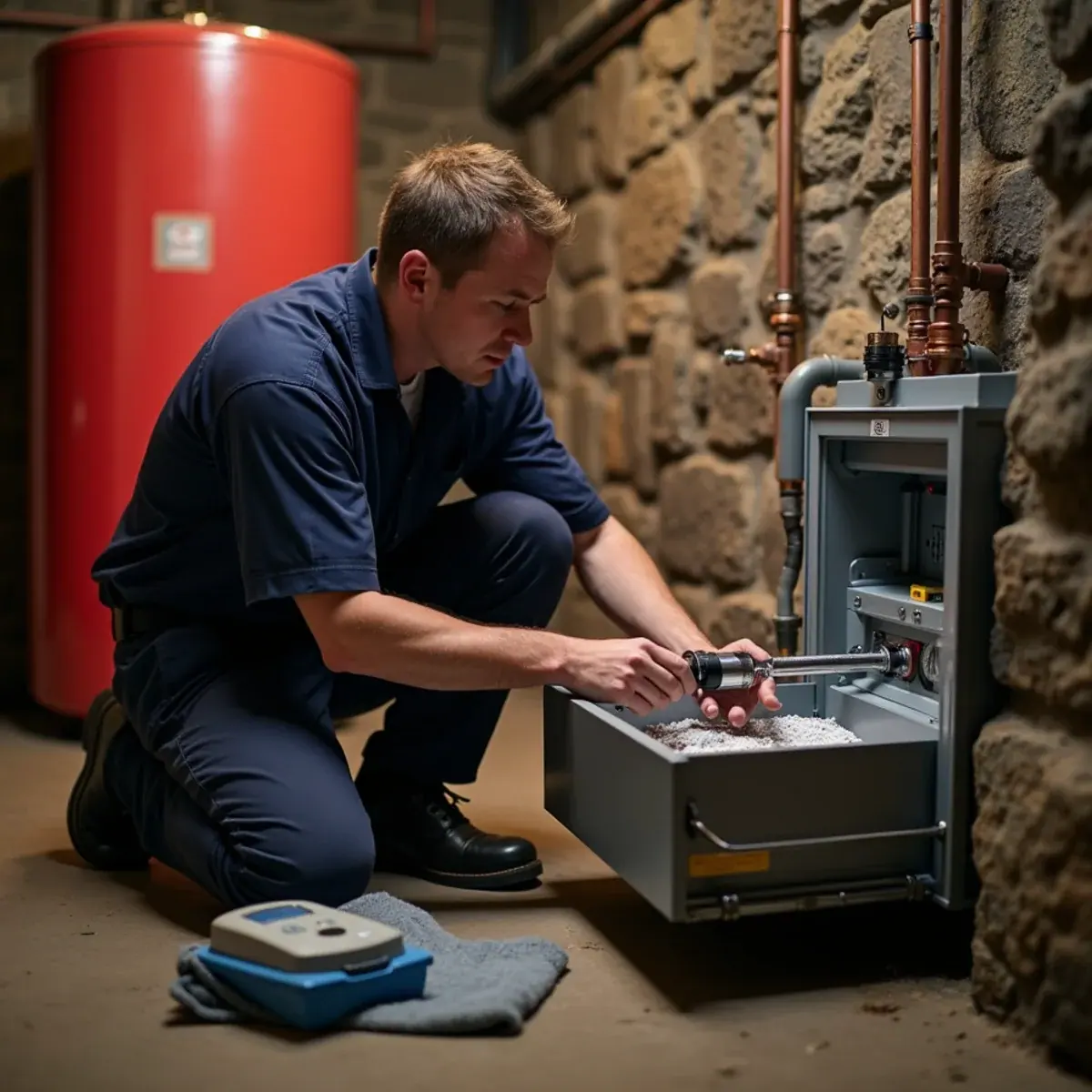
HVAC maintenance in White Plains, NY works best as two visits a year: heating equipment in early fall, cooling in spring. Ours takes things apart — burners pulled and cleaned, boilers purged zone by zone, return ducts sanitized with non-toxic Nu-Calgon products — and you keep a written record of what we measured and found.
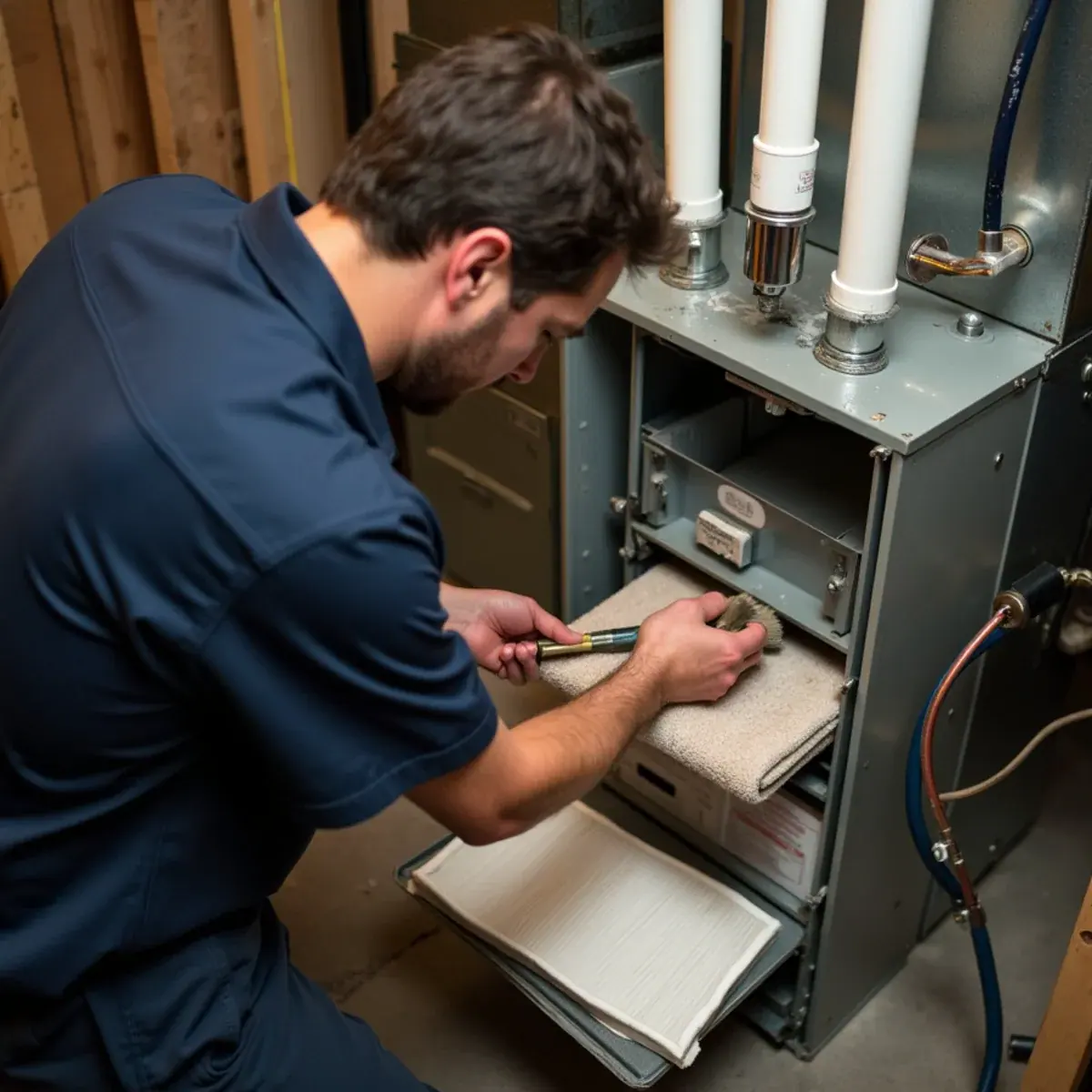
A proper tune-up is not a quick look and a sticker on the cabinet. On central air systems, our maintenance is a two-part service: we pull out and clean the burners, and we remediate and sanitize the return ducts where mold and dust collect. On boilers, we clean the burners and purge the system zone by zone. On oil equipment, the burner gets a full preventive service.
Every cleaning product we use is from Nu-Calgon and is environmentally safe, non-toxic and non-abrasive. That matters when the treated surfaces sit in the air your family breathes. We maintain systems across White Plains and nearby towns such as Hartsdale, and we recommend a heating visit each fall and a cooling visit each spring.
Signs Your System Is Overdue
If any of these sound familiar, maintenance will likely pay for itself.
No service in over a year
Burners soot up, flame sensors corrode and coils load with dirt every season, used or not.
Dust returns right after cleaning
Leaky or dirty returns keep pulling basement dust into the system.
Musty odor at startup
Moisture in the return side is feeding growth that sanitizing addresses.
Longer run times
A system working harder for the same comfort is losing efficiency somewhere.
Soot around an oil burner
A sign the nozzle, filter or air adjustment is off. It won’t fix itself.
Beyond the cleaning: the checks we add on every maintenance visit
The burner cleaning and duct sanitizing get the attention. These are the smaller checks that decide whether the system starts reliably on the first cold morning or the first hot afternoon.
Thermostat and control wiring
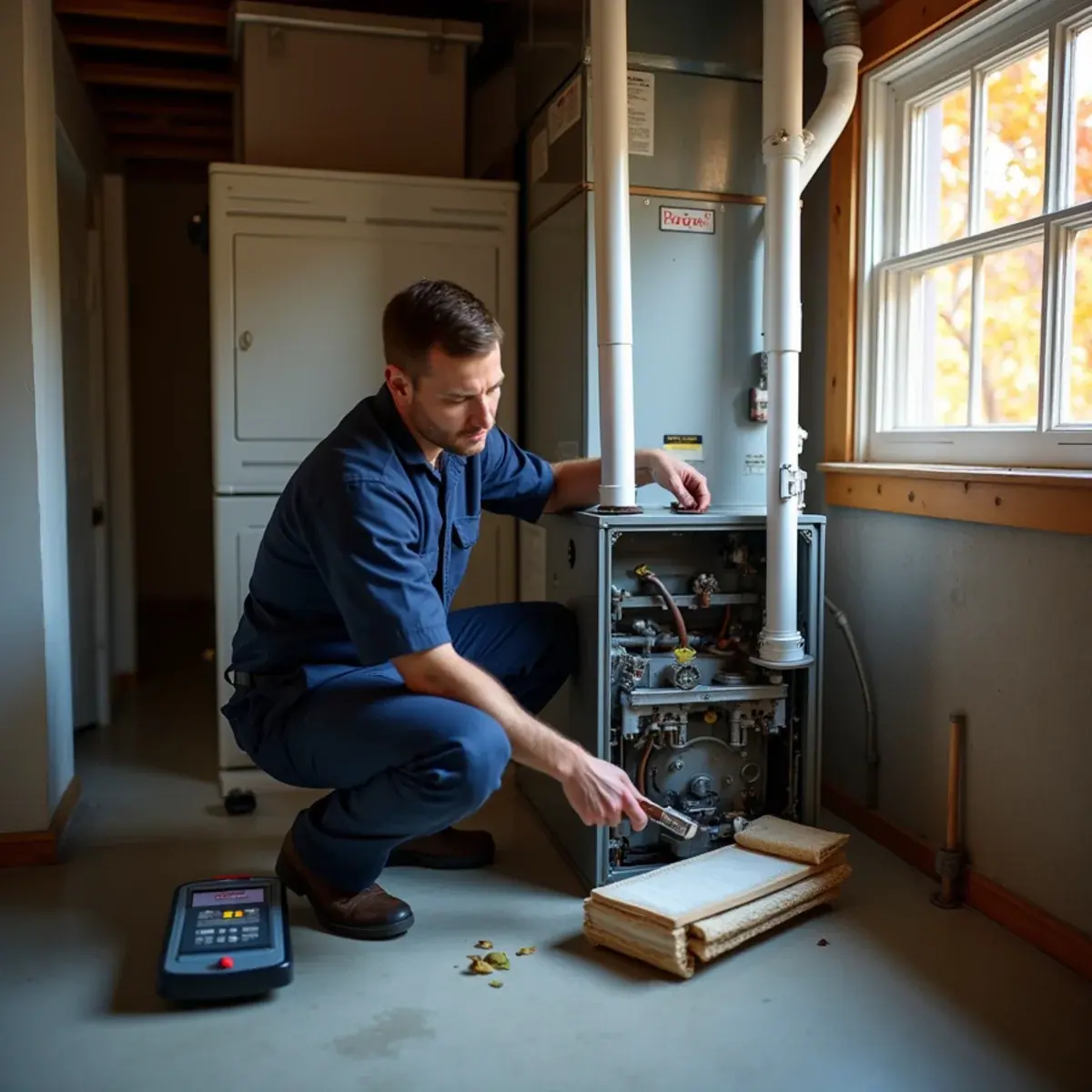
We compare the thermostat’s reading with a calibrated thermometer, check the wiring at both ends for loose or chewed conductors and confirm the system responds to each call for heat or cooling.
Flue and vent path
The chimney connector on older furnaces and boilers is checked for rust, gaps and proper slope. On high-efficiency equipment, we look at the PVC vent and intake outside for nests, leaves and ice damage.
Safety switch function
High-limit, rollout and pressure switches are tested for function, not just looked at. A safety switch that has been jumpered or bypassed by someone in the past gets flagged in writing, every time.
Blower motor amp draw
We measure what the blower motor is drawing against its nameplate rating. A motor running hot or pulling high amps usually fails in the middle of a season, so this is where we catch it early.
Steam boiler low-water cutoff
On steam systems we blow down the low-water cutoff, confirm it shuts the burner off, and check the sight glass and pressure control setting. That single device is what keeps a steam boiler from dry-firing.
Humidifier and air accessories
If your furnace has a whole-house humidifier, the water panel, supply valve, drain line and bypass damper are checked and set for the season. Media air cleaners get their filter size recorded for you.
A record you keep
You get the model and serial numbers, filter size, combustion or refrigerant readings and the date on paper. It is the proof a manufacturer may ask for, and it gives the next technician a baseline.
What Our Two-Season Maintenance Covers
The specifics depend on your equipment, but every visit follows this outline.
1
Fall heating service
Burners removed and cleaned, flame sensor and ignitor checked, heat exchanger inspected, combustion analysis and CO test.
2
Boiler and oil extras
Hot-water boilers purged zone by zone; oil burners get a new nozzle and filter, electrode setting and efficiency test.
3
Return-duct sanitizing
Accessible return ducts are cleaned and treated with non-toxic mold remediation products.
4
Spring cooling service
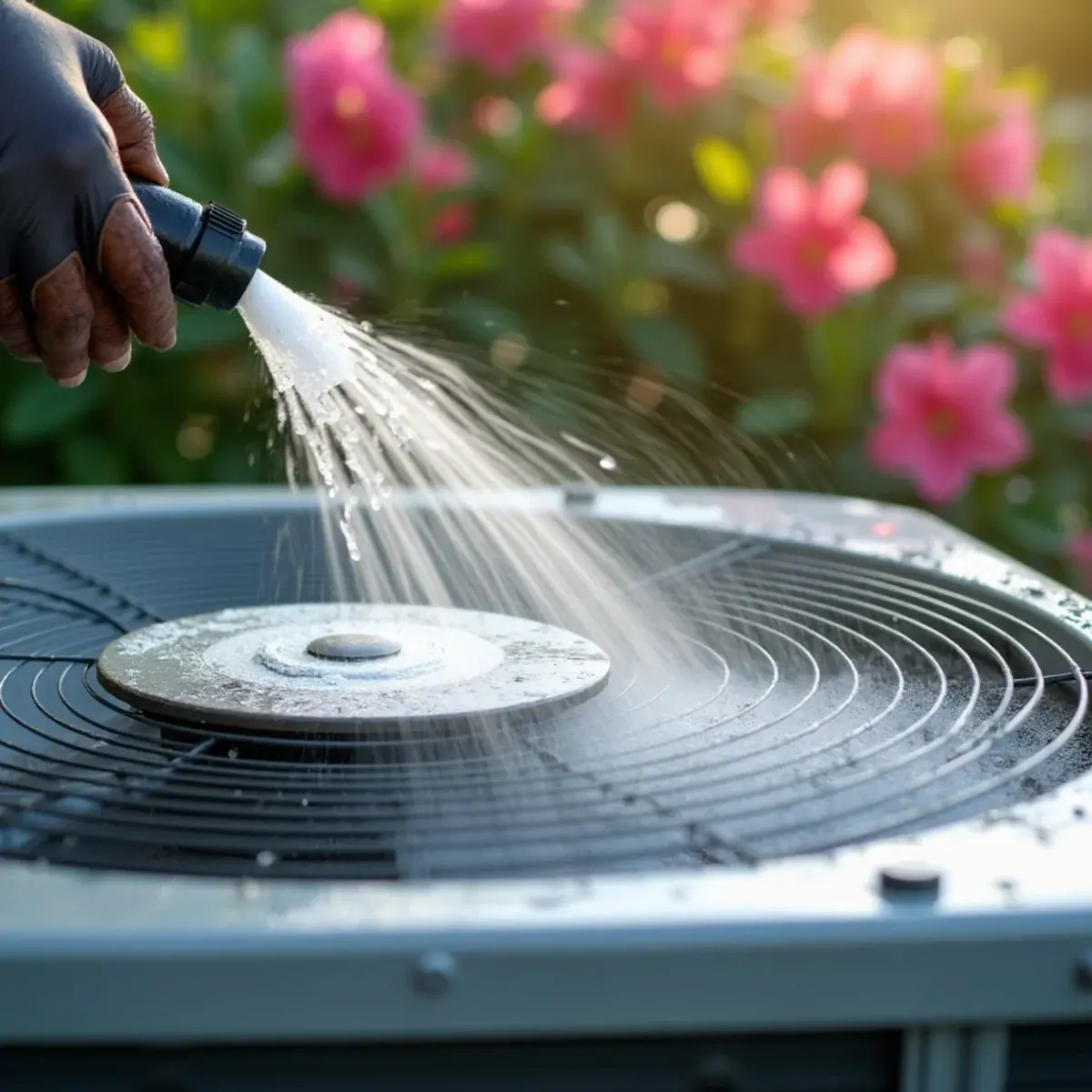
Condenser coil washed, capacitor and contactor tested, refrigerant readings taken and condensate drain cleared.
5
Report and recommendations
You hear what we found, what’s wearing and what can wait. Nothing gets replaced without your approval.
What Affects Maintenance Cost
Maintenance pricing depends on what you have and how much of it there is.
Number of systems. Many larger homes have separate systems for each floor, each needing its own service.
Fuel type. Oil equipment needs parts such as a nozzle and filter that gas equipment doesn’t.
Duct sanitizing scope. Return layout and accessibility determine the time it takes.
Condition. A system that hasn’t been serviced in years takes longer to bring back to spec.
We quote maintenance after learning what equipment you have. Ask about scheduling recurring spring and fall visits when you call.
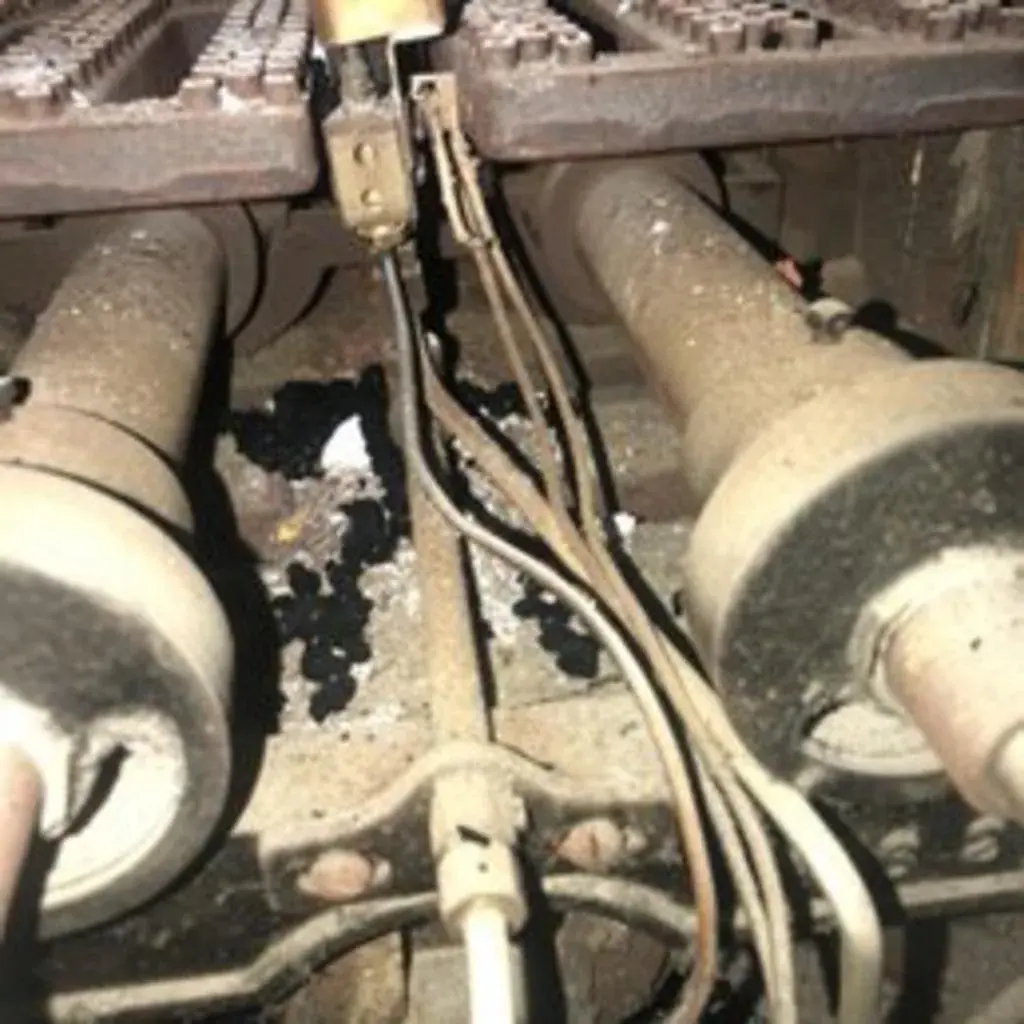
From our job files: burners pulled for cleaning.
Why Two Visits a Year
Heating and cooling equipment wears on opposite schedules. A fall visit catches the ignitor that’s about to crack or the oil filter that’s nearly blocked, before a cold night finds it. A spring visit catches the weak capacitor and the algae in the drain line before the first heat wave. Our spring and fall maintenance schedule for Westchester lays out the timing.
It also changes how breakdowns go. A tech who has already seen your system knows its history, which makes a later repair faster.
Maintenance by Equipment Type
What we do depends on what’s in the basement. The basic scope for each system type:
Forced-air furnaces and central air: our two-part service, plus duct mold remediation on the returns
Hot-water and steam boilers: burner cleaning, purge, safety controls; see boiler service
Comparing tune-up offers? What a real maintenance visit should cover
“Tune-up” can mean anything from a thorough teardown to a filter swap and a sticker. Before you book — with us or anyone — ask which of these are actually done on your equipment:
Ask any company whether the visit includes
Filter checked and replaced (or sized for you to replace), with the size written down
Burners removed and cleaned, not just vacuumed in place
Flame sensor, ignitor or pilot, and heat exchanger inspected
Combustion analysis and a CO test on gas and oil equipment, with the readings recorded
Hot-water boilers: pressure and expansion tank checked, zones purged of air
Outdoor coil cleaned, and capacitors, contactor and electrical connections tested
Refrigerant pressures and temperatures measured — not topped off without finding why
Condensate drain, trap, pump and float switch flushed and tested
Belts, blower wheel and motors checked where the equipment has them
A written summary of what was found, what’s wearing and what can wait
Our two-part service goes beyond this list on central systems: we also treat and sanitize the return ducts with non-toxic Nu-Calgon products. A lower price often means fewer of these steps — compare the scope, not just the number.
Your year-round HVAC calendar for Westchester homes
Two professional visits a year do the heavy lifting. These homeowner habits fill the gaps — and the timing matters here, because heat waves and cold snaps fill every contractor’s schedule at once:
Between our visits
Every month in heating and cooling season: check the filter; replace it when it’s gray or clogged (every 1–3 months for most 1-inch filters).
Spring (April–May): book cooling maintenance before the first heat wave; clear leaves and cottonwood from around the condenser.
Summer: watch for clammy air, water near the indoor unit and short cycling — all signs the condensate line or coil needs attention.
Early fall (September–October): book heating maintenance before the first sustained cold; test smoke and carbon monoxide alarms.
Winter: keep the outdoor vents of high-efficiency furnaces and boilers clear of snow, watch for odors or repeated shutdowns, and know how to protect pipes during a no-heat event.
All year: keep one folder with model and serial numbers, service reports, repair invoices, filter sizes and warranty papers.
Larger homes around Armonk, Scarsdale and Harrison often have two or three systems that each need their own visit. In Hartsdale and Downtown White Plains co-ops and condos, the building usually maintains the central boiler — the equipment inside your unit is still yours to service. On oil heat, which is common in northern Westchester, the fall visit is the one you can’t skip.
Why homeowners book seasonal maintenance with Bella Family Air Solutions
Maintenance is only worth the appointment if the person doing it knows what worn looks like.
Two-part service on central systems
Most tune-ups stop at the cabinet. On central systems we also treat the return ducts, where dust and mold collect and get pulled back through the house. That is the half of the job a standard tune-up leaves out.
Nu-Calgon certified cleaning
Our team is Nu-Calgon certified, and every coil cleaner and duct treatment we use is non-toxic, non-abrasive and environmentally safe. That matters for families with small children, pets or allergies, because the treated surfaces sit in the airstream.
Technicians with 15 years or more
Elton, our service manager, hires only technicians with at least 15 years of work history. Experience is what tells a tech whether a flame sensor has another season in it or should come out today.
Options, not pressure
Reviewers describe technicians who explained everything before starting and laid out several options on an old R-22 system instead of pushing a replacement. A maintenance visit should inform your decisions, not sell you one.
Where we work
HVAC Maintenance near you
We provide hvac maintenance in White Plains and these nearby communities — plus the rest of Westchester County.
Some towns put more strain on equipment than others. Pre-war homes in Bronxville and Scarsdale run steam boilers whose low-water cutoffs need attention every fall. Along the Sound in Rye and Mamaroneck, salt air corrodes condenser coils, so the spring visit carries extra weight there.
In Pound Ridge and Lewisboro, most houses burn oil, which soots up faster than gas and leaves little margin if a fall service is skipped. Subdivisions in Yorktown Heights have forced-air systems from the 1960s through the 1980s, where a visit often decides whether the equipment gets another year. We maintain systems everywhere between those towns and our White Plains shop.
On central air systems, it’s the combination of pulling out and cleaning the burners and remediating and sanitizing the return ducts. The burner cleaning restores clean combustion and efficiency. The return-duct work removes mold and dust where they tend to collect, using non-toxic, non-abrasive Nu-Calgon products. Together they address both the equipment and the air it moves.
When should I schedule maintenance?
Heating service is best in September or October, before the first cold stretch. Cooling service fits best in April or May, before the first hot week. Booking in those windows also avoids the peak-season rush, when a lot of calls are breakdowns rather than tune-ups.
Does maintenance really prevent breakdowns?
It prevents a large share of them. Many no-heat and no-cooling calls trace back to parts that were visibly worn months earlier: a corroded flame sensor, a clogged oil nozzle, a bulging capacitor. Maintenance finds those while they’re cheap to replace. It won’t stop every failure, but it changes the odds considerably.
Is maintenance required to keep my equipment warranty?
Many manufacturers require regular professional maintenance as a warranty condition, and some ask for proof. Check your warranty paperwork for the exact terms. We document what we do on each visit so you have a record if you ever need one.
How much does an HVAC tune-up cost in White Plains?
Researched local planning ranges put a seasonal tune-up at roughly $85 to $225 per system, but the scope behind that number varies widely — some visits are a filter swap, others take the burners out. We quote maintenance after learning what equipment you have, and our two-part service includes return-duct sanitizing on central systems.
How often should I change my furnace or AC filter?
Check it monthly while the system is running and replace it when it looks gray or clogged — every one to three months for most 1-inch filters, less often for thicker media filters. Homes with pets, renovation dust or allergies need more frequent changes. A clogged filter can trip a furnace’s high-limit switch or freeze an AC coil.
How should I prepare for a maintenance visit?
Clear a path to the furnace, boiler, air handler and outdoor unit, and move stored boxes back a few feet. Note anything odd you’ve noticed — noises, smells, rooms that never get comfortable — and have the filter size handy if you know it. If you have pets, keep them away from the work area while panels are off.
Can you maintain a system another company installed?
Yes. We service all makes and models, including Goodman, Bryant, Carrier and Lennox equipment we see regularly in our job files. On the first visit we record the equipment details and its condition so there’s a baseline. If we find installation problems, such as missing drain traps or poor venting, we point them out and explain the options.
Does a heat pump need maintenance in both spring and fall?
Yes, because it runs in both seasons. The spring check covers the cooling side: coils, drainage and refrigerant readings. The fall visit focuses on defrost operation, backup heat and the outdoor unit’s clearance from snow. Skip the fall check and a failed backup heat strip may not show itself until the first hard freeze.
Written by the Bella Family Air Solutions team · Last reviewed . Planning ranges, permit and rebate guidance are reviewed at least quarterly.
A practical spring and fall HVAC maintenance calendar for Westchester homes, covering cooling and heating tune-ups, monthly filter checks, boiler purging and oil burner service.
A line-by-line checklist of what an annual oil burner tune-up should include, from nozzle and filters to draft, combustion testing and the oil tank, for Westchester oil heat homes.