Core Service
Oil Burner Tune-Up Checklist for Westchester Oil Heat Homes
By Bella Family Air Solutions 5 min read
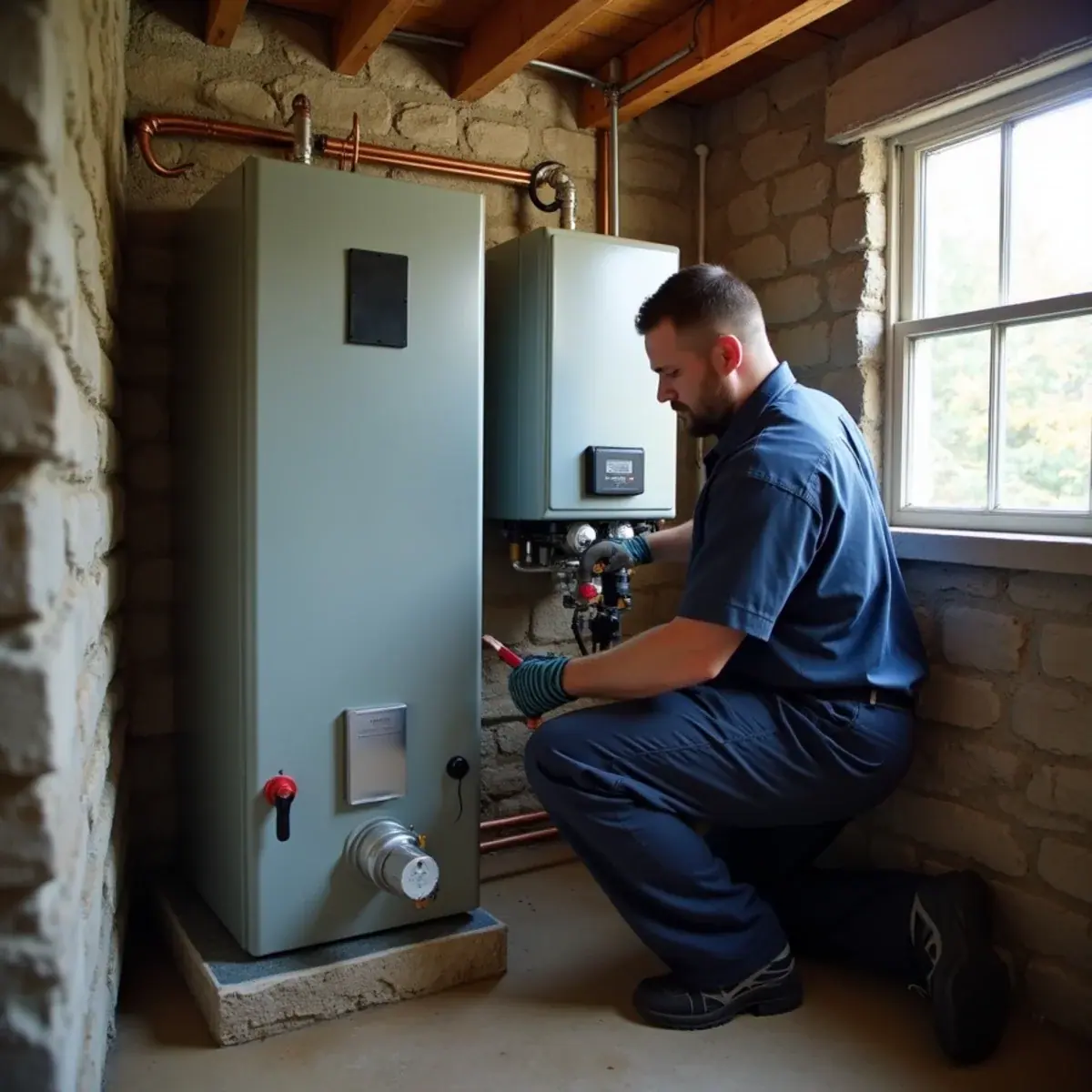
An oil burner tune-up in Westchester should take the better part of an hour or two, leave soot on the technician’s gloves, and end with printed or written combustion numbers. If your yearly visit is a quick vacuum and a new filter, you are paying for half a service. Below is the checklist we work through on every oil-fired boiler and furnace, so you know exactly what to expect and what to ask about.
Oil heat is still common in the northern part of the county, where many homes sit beyond the reach of natural gas mains. Houses in Pound Ridge and Bedford often run a single oil boiler for both heat and domestic hot water, which means one skipped tune-up can cost you both at once.
Why Oil Burners Need Yearly Attention
Oil does not burn as cleanly as gas. Every season leaves a layer of soot on the heat exchanger, and roughly a sixteenth of an inch of soot can noticeably reduce heat transfer. Meanwhile, the nozzle wears, filters load up with sludge from the tank, and small air leaks creep into the fuel line. It shows up first as higher oil deliveries and a smoky start-up, and eventually as a no-heat call in January.
The Burner Checklist, Part by Part
Fuel delivery
- Nozzle: replaced every year with the correct firing rate (GPH), spray angle and spray pattern for that burner and appliance. A worn nozzle drips and sprays unevenly, which makes soot.
- Oil filter: the cartridge at the tank or line filter is changed and the housing gasket replaced so the canister does not weep or pull air.
- Pump strainer: the fuel pump has its own screen inside the cover. It is pulled, cleaned or replaced, and the cover gasket is renewed.
- Pump pressure: checked with a gauge and set to the burner manufacturer’s specification, since the nozzle’s rated output depends on it.
- Fuel lines: inspected for kinks, weeping fittings and signs of air in the line, which causes delayed ignition and rumbling starts.
Ignition
- Electrodes and gap: cleaned, inspected for cracked porcelain, and set to the manufacturer’s gap and position relative to the nozzle. Mis-set electrodes are a common cause of hard starts.
- Igniter and cad cell: the igniter is checked, and the cad cell (the flame-sensing eye) is cleaned and tested so the primary control sees the flame reliably.
- Primary control: safety lockout timing is verified so the burner shuts down if it fails to light.
Heat exchanger and combustion chamber
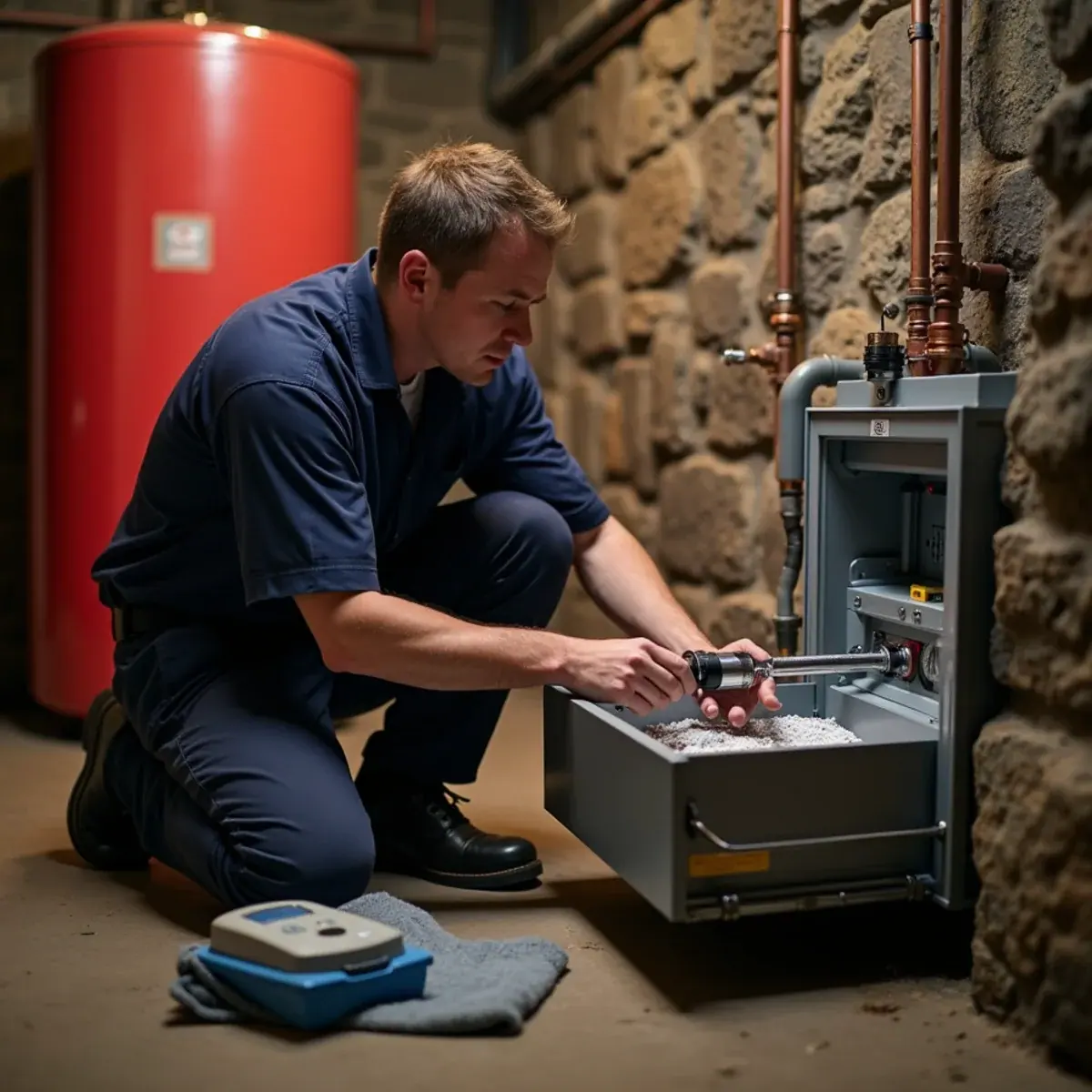
The appliance is opened up, the flue passages are brushed, and the soot is vacuumed out. The combustion chamber (the refractory liner the flame fires into) is inspected for cracks, crumbling and signs of flame impingement. A damaged chamber can let flame reach metal it was never meant to touch, so we point it out rather than quietly work around it.
Draft, Venting and the Flue Pipe
An oil burner is only as good as its draft. We check the chimney draft and the overfire draft with a gauge, then set the barometric damper so draft stays steady on windy days and cold nights. Too much draft pulls heat up the chimney; too little can push combustion gases back into the basement.
- The flue pipe from the boiler to the chimney is inspected for rust-through, loose joints and proper pitch upward toward the chimney.
- The chimney base cleanout is opened where accessible to check for soot and debris buildup.
- Any sign of spillage, such as soot around the damper or draft hood, is investigated before the visit ends.
Combustion Analysis: The Numbers That Prove the Work
Cleaning without testing is guesswork. After the burner has run long enough to stabilize, we test through a small hole in the flue pipe and adjust air to the burner until the numbers line up.
- Smoke test: a sample is pulled through filter paper. The goal is zero to a trace of smoke; anything darker means the burner will soot up again quickly.
- CO2 (or O2): tells us how much excess air is going through the flame. A clean, properly adjusted flame-retention burner typically reads in the manufacturer’s recommended range.
- Stack temperature: a high net stack temperature often points to a sooted or under-cleaned heat exchanger, or an over-fired appliance.
- Carbon monoxide: measured in the flue and checked in the living space if anything looks off.
- Efficiency: calculated from the readings so you have a baseline to compare against next year.
The Oil Tank and Fire Valve
The burner is only one end of the system. A good tune-up includes a look at where the oil comes from.
- Tank inspection: we look for rust, weeping seams, wet spots at the bottom, and legs that are corroded or sitting unevenly. Outdoor and older basement tanks deserve extra attention.
- Vent and fill pipes: the vent should be clear and the vent whistle working so delivery drivers do not overfill.
- Fire valve: the thermally activated safety valve, usually at the burner or tank, is confirmed to be in place. It is designed to shut off oil flow if there is a fire near the burner.
- Oil line protection: buried or floor-run copper lines should be sleeved so they do not corrode against concrete.
Buried tanks are common on older northern Westchester properties. We cannot see inside them, but water or sludge in the filter bowl is worth flagging.
What Our Oil Burner Service Adds
Our oil burner service is full preventive burner maintenance, not a spot cleaning. The burner assembly comes out, the parts above are cleaned or replaced, and the appliance is tested before and after. On hot-water systems we can also purge air from the zones during the same visit as part of boiler repair and service, which helps quiet gurgling pipes and cold radiators. Every technician we send has at least 15 years of work history, and the cleaning products we use are Nu-Calgon, environmentally safe and non-abrasive.
When to Schedule
Late spring and summer are the best time for an oil burner tune-up. The burner is off, soot has not had months to harden, and if we find a cracked chamber or a failing pump you have time to plan the repair instead of reacting to it in a cold snap. If you would rather cover heating and cooling together, a seasonal HVAC maintenance plan keeps both on the calendar.
How Much Does an Oil Burner Tune-Up Cost in Westchester?
Our researched planning range for a seasonal tune-up in the White Plains area is $85–$225. That’s a planning range, not a quote. The spread comes from what’s actually done: a visit that swaps the nozzle and filter sits at the low end, while one that also brushes every flue passage, replaces the pump strainer and gasket set, and runs a full combustion analysis sits higher. Parts found worn during the visit, such as a cracked electrode, a failing cad cell or a leaking pump seal, are quoted separately before anyone replaces them.
- Ask for the checklist in writing before the visit so you can compare two companies line for line.
- Ask whether the nozzle, filter and strainer are included or billed as parts.
- Ask whether you’ll get the smoke, CO2, stack temperature and efficiency numbers afterward.
From our burner bench: what the numbers tell us year to year
One tune-up tells you the burner is clean today. Two or three years of readings tell you how the equipment is aging. If the net stack temperature creeps up every season even though we brushed the boiler thoroughly each time, the soot is coming back faster than it should. That usually points to an air leak on the suction side of the fuel pump, a nozzle mismatched to the boiler, or a draft problem that only shows up on windy nights. That’s why we write the readings and the nozzle size on a tag at the burner. The next visit starts from a baseline, not a guess.
Downfiring is a trade-off we explain before we do it. Many older boilers in northern Westchester were installed oversized, and dropping to a smaller nozzle can cut fuel use. But a lower firing rate also means cooler flue gas. In an unlined masonry chimney, flue gas that cools too much condenses inside, and that acidic moisture eats mortar and clay over time. So we only downfire after checking the stack temperature and the chimney, and sometimes the right answer is a liner first.
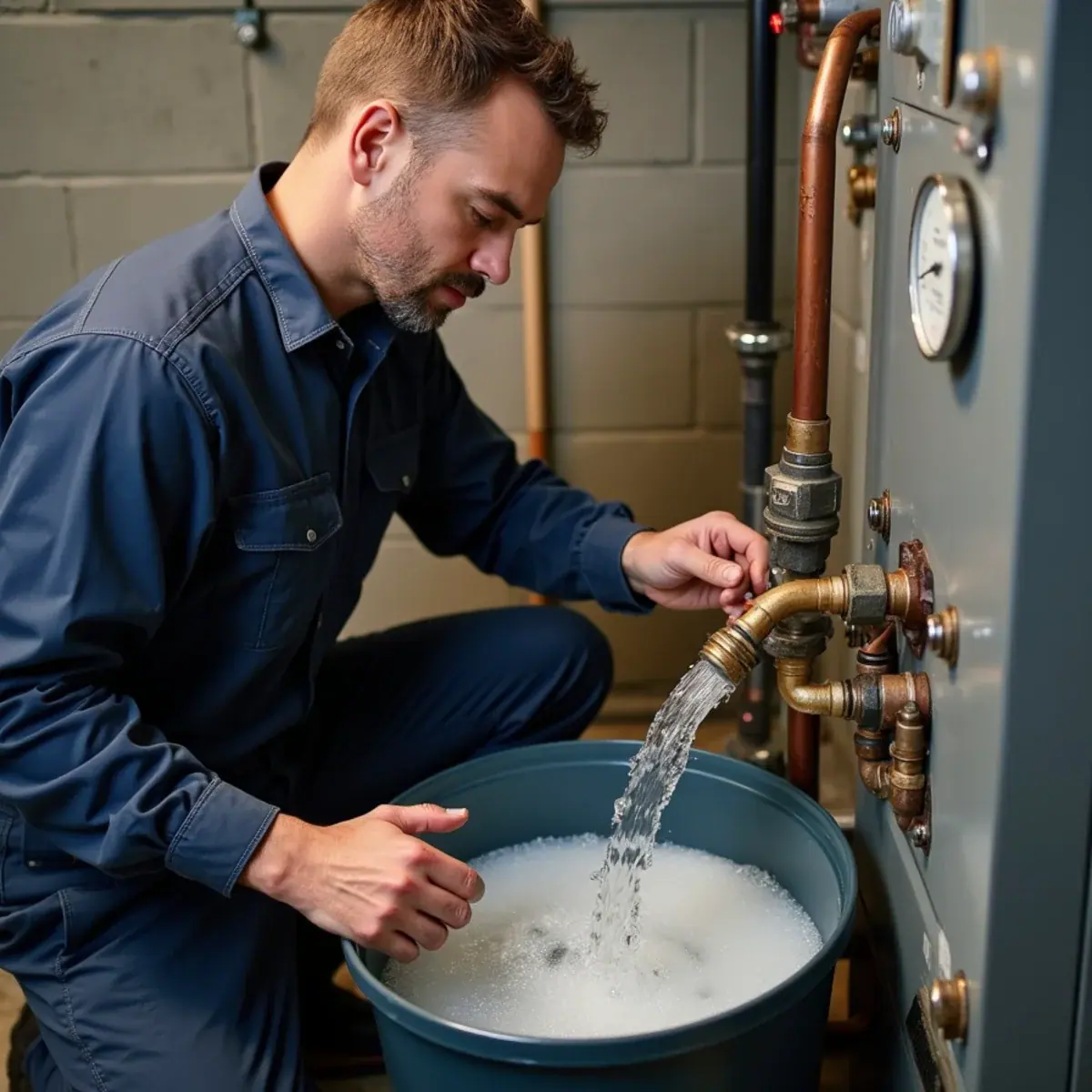
The other thing we watch is the tank. The filter cartridge we pull out is a small window into what’s at the bottom of the tank. Water beads or black sludge in the filter bowl mean the tank is shedding debris into the line, and a new filter alone won’t fix it.
- Keep the tank from running near empty; a low tank draws sediment from the bottom into the filter and nozzle.
- Don’t store paint, cardboard or laundry near the burner; it needs clear air to burn clean.
- If the burner locks out, press reset once only, then call for no-heat repair.
Keep Oil Heat Clean, Safe and Predictable
Use this checklist the next time a technician visits, and ask to see the combustion readings. A properly tuned oil burner lights quietly, burns clean and uses less fuel. If your system is due, or you are not sure what was done last year, give us a call and we will walk you through it before we start.
Frequently asked questions
How often should an oil burner be tuned up?
Once a year is the standard for residential oil burners, ideally between late spring and early fall. Homes that burn a lot of oil, have older equipment, or saw a puff-back or smoky start-up may benefit from a mid-season check. Skipping a year usually means more soot, higher fuel use and a greater chance of a lockout during the coldest weeks.
Why does my oil boiler still smell after a cleaning?
A faint smell the first few firings can come from residue burning off. A persistent oil or smoke odor is different and can point to a leaking fitting, a weeping filter housing, a draft problem or a poorly adjusted flame. Ask whether a combustion analysis and smoke test were done. If not, the burner may be clean but not correctly set up.
Is it worth tuning up an old oil boiler, or should I replace it?
A tune-up is almost always worth it, even on an older boiler, because it restores efficiency and lets us check for cracked sections, a failing chamber or leaks. The combustion readings help the decision too. If efficiency stays low after a proper cleaning and adjustment, or repairs are adding up, we will lay out repair and replacement options honestly.
How long should an oil burner tune-up take?
Plan on roughly an hour to two hours for a single oil boiler or furnace, longer if the heat exchanger is heavily sooted or the tank filter housing needs rework. A visit that ends in twenty minutes usually skipped the brushing or the combustion test. The burner has to run until it stabilizes before any meaningful readings can be taken, and that alone takes time.
Can running my oil tank low cause problems after a tune-up?
Yes. Water and sludge settle at the bottom of every oil tank. When the level drops very low, or a delivery stirs things up, that debris gets pulled toward the outlet, loads the new filter and can plug the nozzle within weeks. Keeping the tank reasonably full through winter protects the work you just paid for and helps avoid a mid-season lockout.