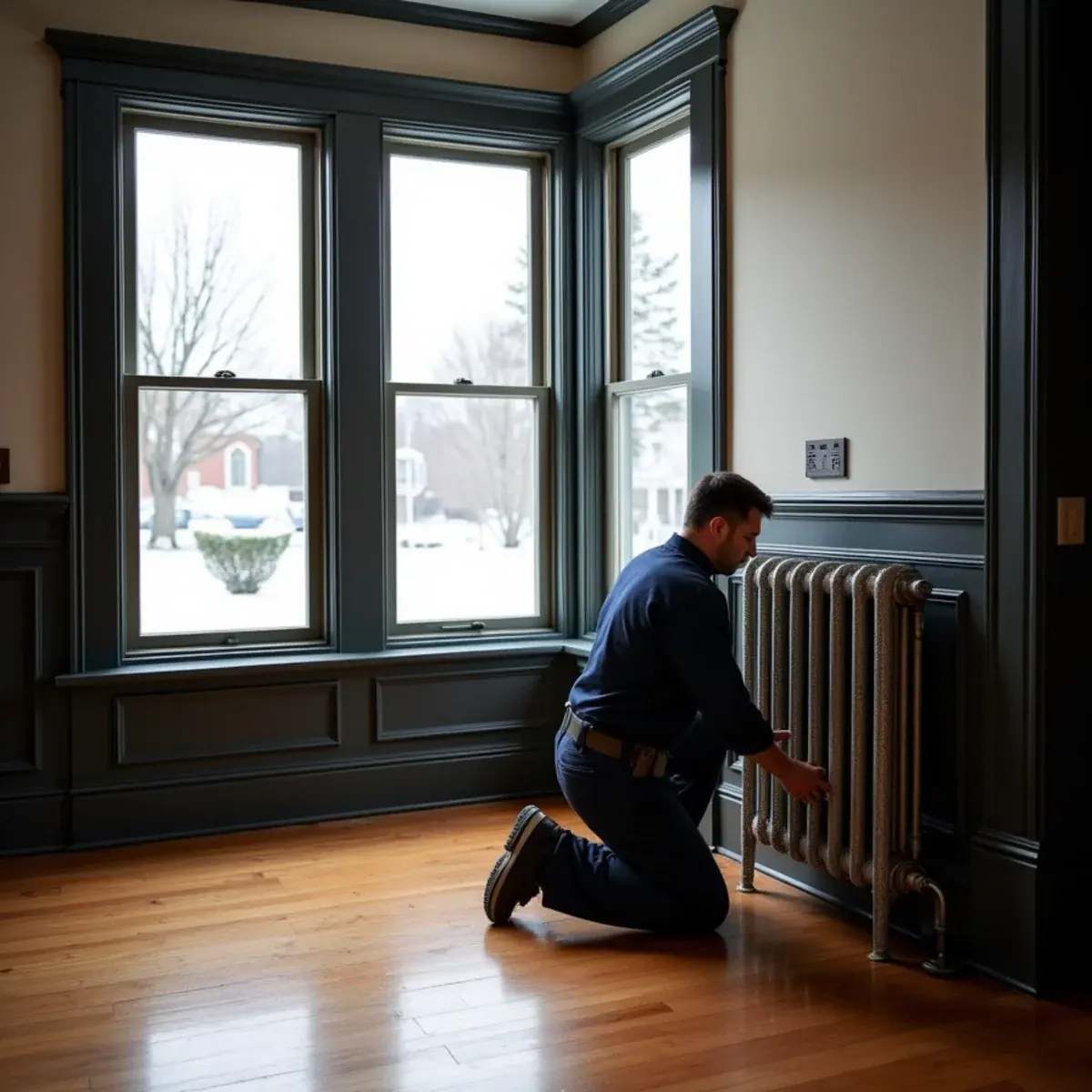
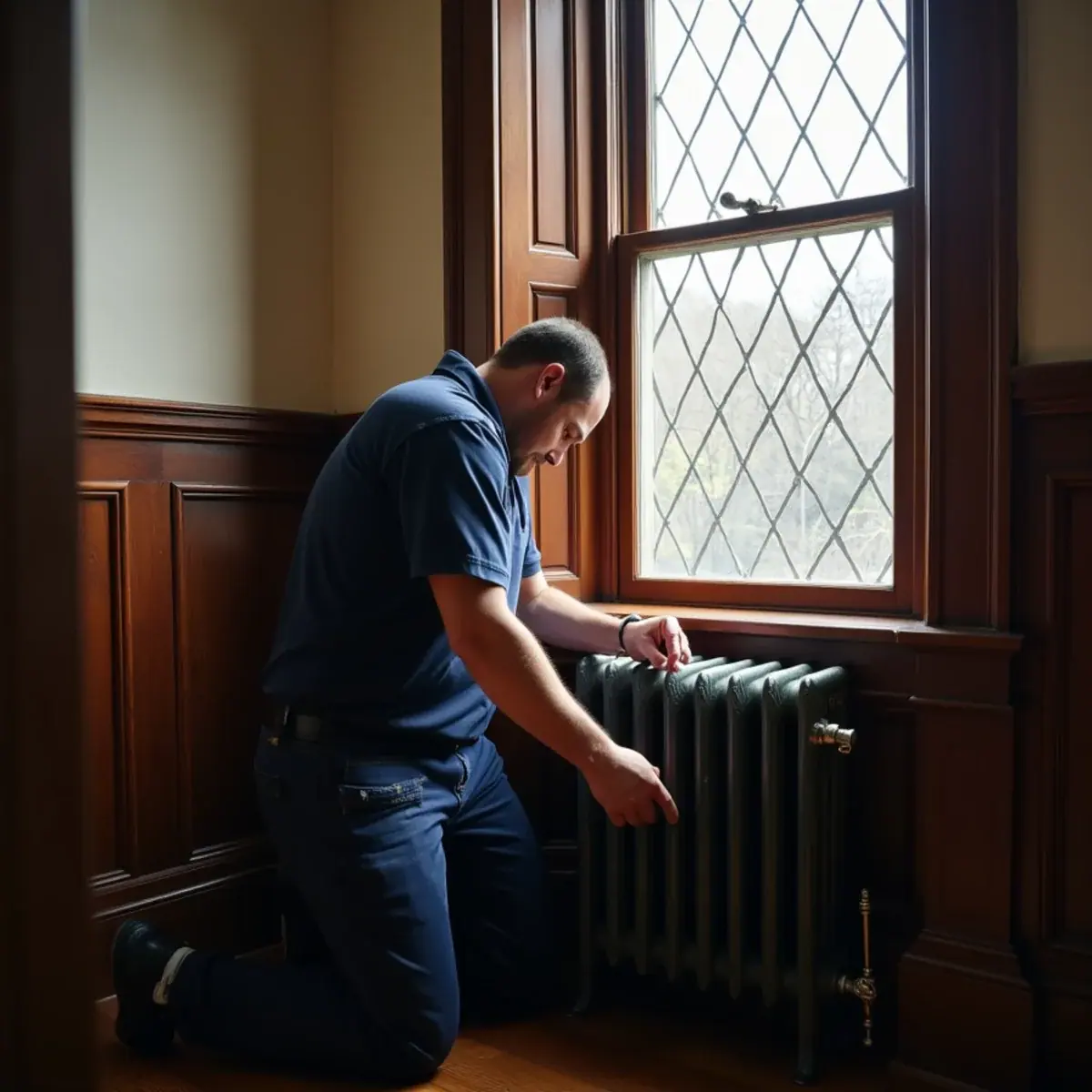
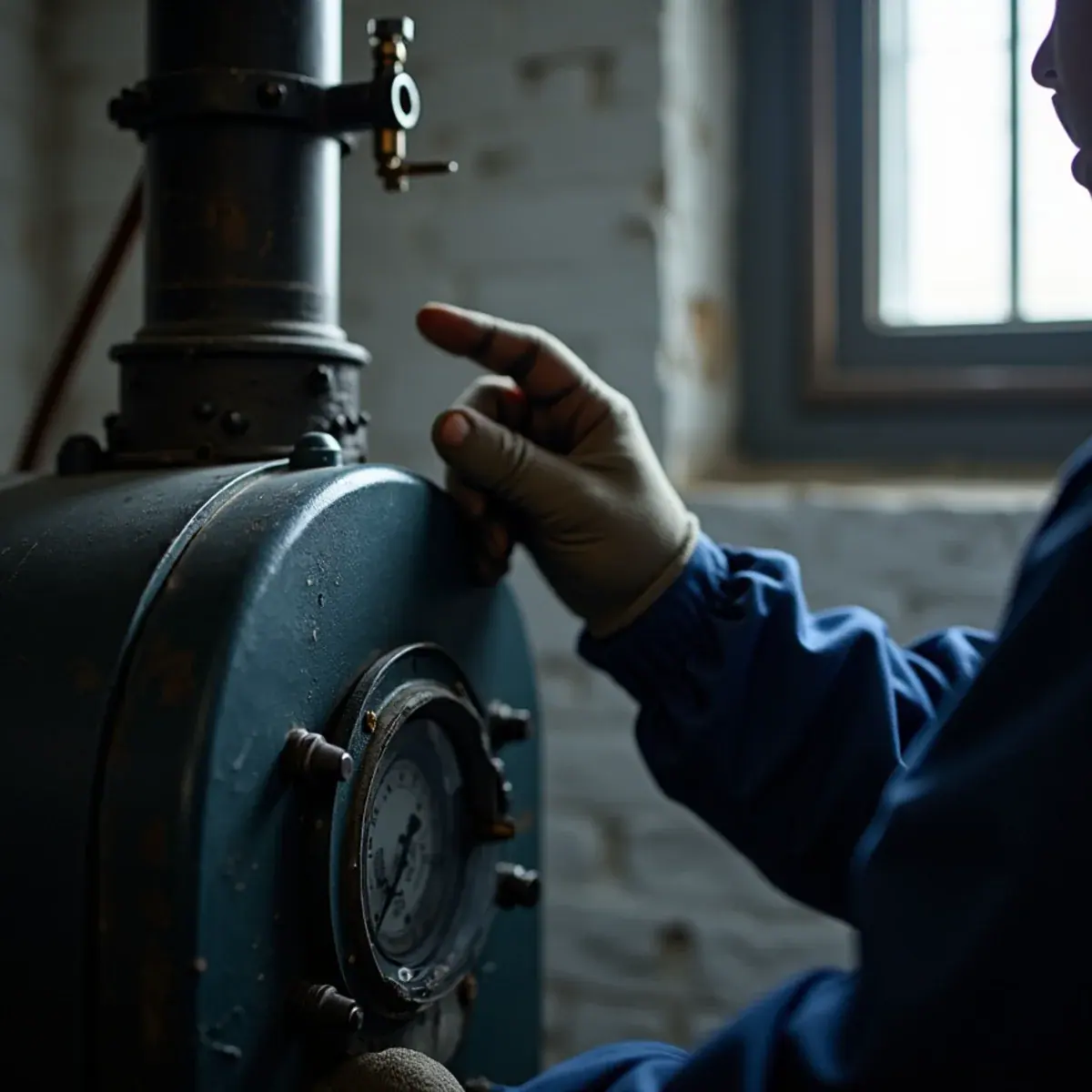
A healthy steam system is quiet, even and surprisingly efficient. Banging pipes and cold radiators are fixable when someone understands how steam is supposed to move.
Steam heat repair in White Plains usually starts with venting, pipe pitch, water level and pressure — not a new boiler. Bella Family Air Solutions services one-pipe and two-pipe steam systems in pre-war homes and buildings across Westchester, finding why radiators stay cold or pipes bang and fixing the cheapest real cause first.
Steam heat is a technology from another century, and a lot of the trouble it gets blamed for really comes from service people who never learned how it works. A steam system has no circulator pump. The boiler makes low-pressure steam, the steam pushes air out through vents, and condensed water runs back to the boiler by gravity. When the air can’t get out, the pipes lose their pitch, or the pressure is cranked too high, you get the familiar complaints: cold rooms, spitting vents, hammering pipes and an expensive fuel bill.
White Plains and the villages around it have plenty of pre-war homes and apartment buildings still heated by the original steam piping, and we service them every winter. Our techs have at least 15 years in the field, and steam is where that experience shows. We start with the basics — water line, venting, pitch and pressure — before anyone talks about replacing a boiler.
When the boiler itself fails on a cold night, our no-heat repair service is available around the clock.
Common Steam Heat Problems
Most steam complaints fall into a handful of patterns, and each points to a specific part of the system.
Banging or hammering pipes
Water trapped in pipes that lost their pitch, a sagging runout, or wet steam from dirty boiler water.
Some radiators hot, others cold
Undersized or failed main vents, clogged radiator vents, or a one-pipe radiator valve that’s partially closed.
Radiator vents spitting water
Pressure set too high, a radiator tipped the wrong way, or surging water from oily boiler water.
Water line bouncing in the sight glass
Surging usually means oil or debris in the boiler water that needs skimming.
Boiler short-cycling on pressure
A pressuretrol set too high or a clogged pigtail causes erratic cycling.
Low-water cutoff shutting the boiler down
A sludged float chamber, a real water loss, or a slow leak in the return piping.
Steam trouble? Safe checks at the sight glass, radiators and pressuretrol
Smell gas or fuel oil, see smoke, or hear a CO alarm? Get everyone out and call 911 or your gas utility from outside. Otherwise, these steam-specific checks take a few minutes and tell us a lot:
Sight glass: the water should sit roughly halfway up. If you can’t see any water in the glass, switch the boiler off at the emergency switch and let it cool — adding cold water to a hot, dry boiler can crack it.
Water line bouncing hard while it steams? Write that down. Surging points to dirty or oily water, which we remove by skimming.
Banging pipes: check that one-pipe radiator valves are fully open, not halfway. Never hit or bend pipes to quiet them.
Pressuretrol: leave the setting alone. Turning it up won’t heat cold rooms faster — it makes vents spit and wastes fuel.
A radiator vent spitting water or hissing nonstop: turn that radiator’s valve fully off (one-pipe) and put a towel underneath until we arrive.
Oil-fired steam boiler not running? Check the tank gauge, then press the burner reset once.
Stop there. Don’t blow down the low-water cutoff or drain water unless a technician has shown you how on your boiler, and don’t keep resetting a burner that won’t light. Call us and tell us what the sight glass and gauge showed.
Steam problems are rarely in one place, so the useful output of a visit is a picture of the whole system and a short list of fixes in the right order.
A main-vent inventory
We find every main vent at the ends of the steam mains, note its type and whether it opens and closes, and tell you if the mains are under-vented. Missing or dead main vents cause more uneven heat than anything else we see.
Radiator-by-radiator notes
Which rooms heat first, which lag, which vents hiss or spit and which one-pipe valves are half-closed. That room list becomes the balancing plan, so vent sizes are matched to your house rather than guessed.
A near-boiler piping review
We compare the header, risers, equalizer and Hartford loop to the boiler manufacturer’s piping diagram. Near-boiler piping done wrong during an earlier replacement is a common source of wet steam and water hammer that no vent can fix.
A water-use baseline
We ask how often water gets added and check any automatic feeder. A feeder can quietly hide a leaking return or a failing boiler section, so knowing the normal amount lets you spot trouble between visits.
Pressure you can actually read
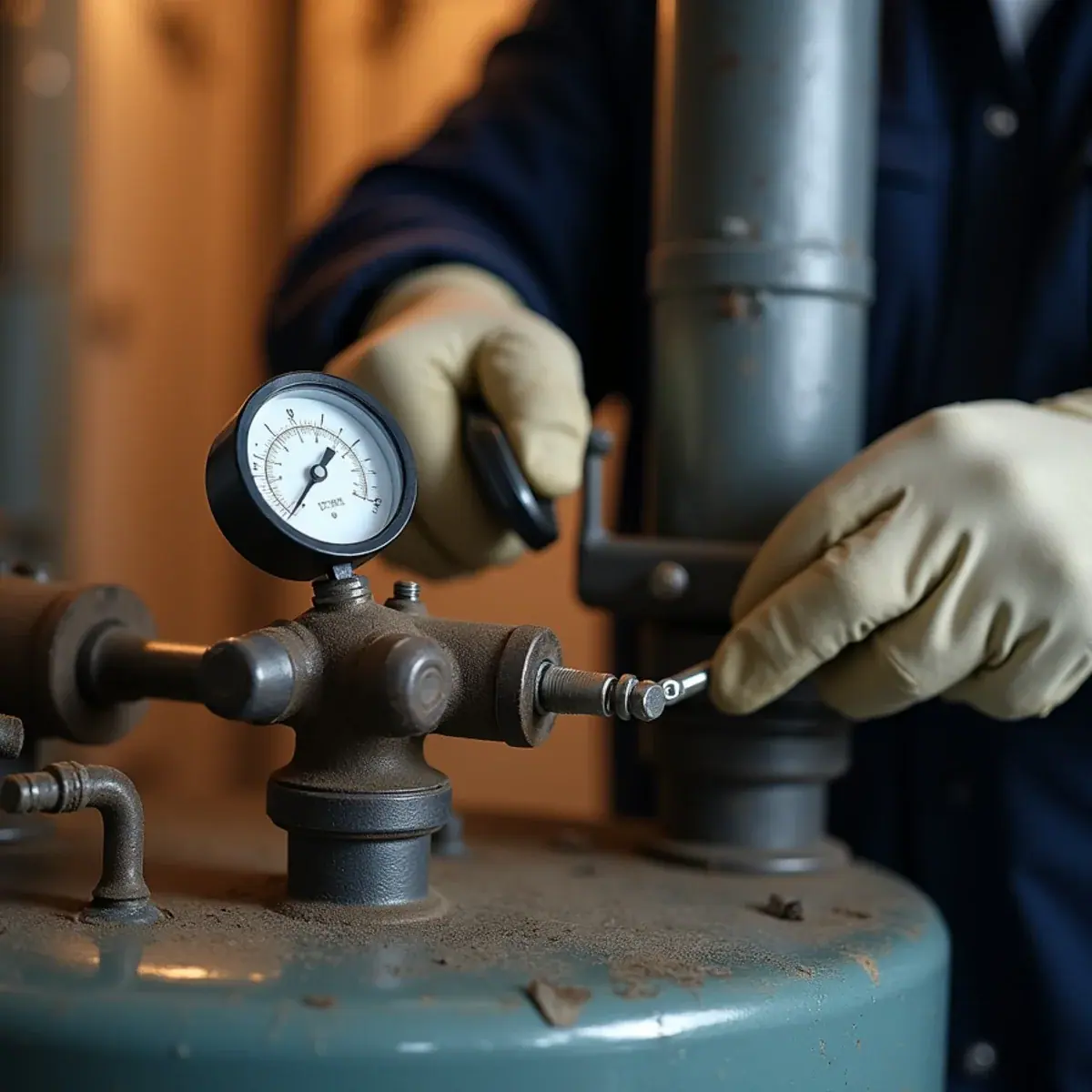
Most boiler gauges read 0 to 30 psi, which makes a system meant to run under 2 psi look like it’s at zero. Where readings matter, we check with a low-pressure gauge so the pressuretrol setting is based on fact.
Fixes ranked by cost and payoff
You get the list in order: vents and valve positions first, then pitch corrections and control replacements, and boiler discussions last. Many homes get most of the improvement from the first two items.
How We Service a Steam System
A steam visit covers the whole system, not only the boiler.
1
Check the water line
We verify the level in the sight glass, clean the glass if needed and look for signs of surging or rapid water loss.
2
Test the low-water cutoff
Blow down or test the cutoff to prove it shuts the burner off. This is the boiler’s most important safety.
3
Set and verify the pressuretrol
Clean the pigtail and confirm settings suited to the system. Most homes run best well under 2 psi.
4
Inspect venting
Test main vents at the ends of the steam mains and radiator vents throughout the house; replace failed or undersized ones.
5
Check pitch and piping
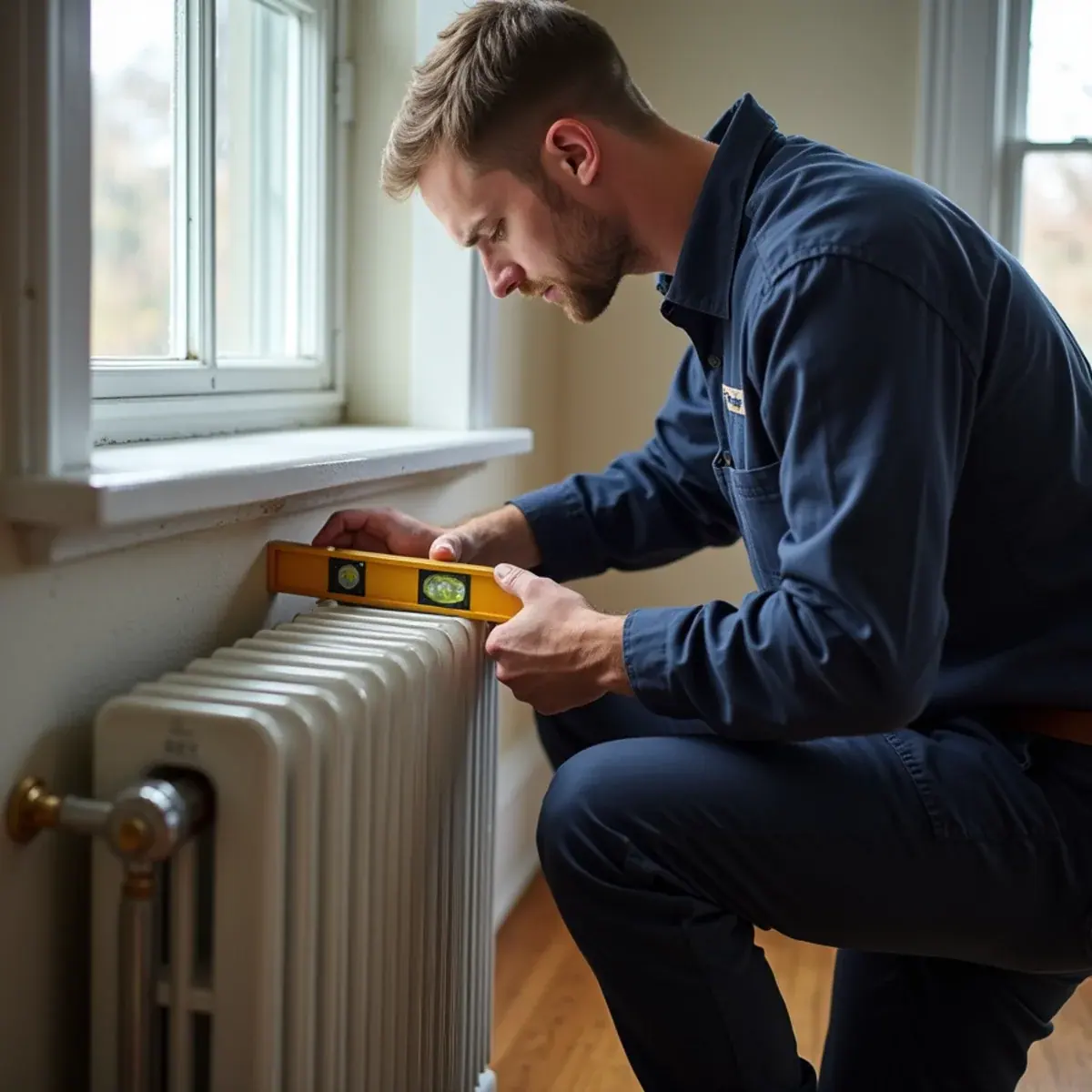
Look for sagging mains and runouts, radiators with the wrong tilt, and near-boiler piping issues.
6
Clean the burner
Burners are cleaned and combustion checked, whether gas or oil-fired.
What Affects the Cost of Steam Heat Repair
Steam repairs range from a vent swap to piping corrections. Scope depends on what’s actually wrong.
Number of vents. Replacing a few radiator vents is minor; re-venting every main and radiator is a bigger job.
One-pipe or two-pipe system. Two-pipe systems have steam traps at each radiator that can fail and need testing or rebuilding.
Pitch corrections. Re-hanging a sagging main or re-shimming radiators takes labor, especially behind finished ceilings.
Boiler water condition. Oily or dirty water may need several skimming sessions.
Control replacements. A failing low-water cutoff, pressuretrol or automatic feeder adds parts cost.
We fix the system you have before discussing a new boiler. When replacement is the right call, we explain why and size it to the radiation in the house, not to the old boiler’s nameplate.
One-Pipe vs. Two-Pipe Steam
In a one-pipe system, steam and condensate share the same pipe to each radiator. Each radiator has an air vent that lets air out as steam arrives and closes when the steam reaches it, and the radiator valve must be fully open or fully closed. In a two-pipe system, steam enters one pipe and condensate leaves through a second, with a steam trap at the outlet; failed traps let steam into the returns and cause banging and uneven heat.
Balancing steam starts with the main vents. When the mains are vented quickly, steam reaches every riser at about the same time, and radiator vents can be sized to fine-tune individual rooms. Our blog on living with steam heat in Scarsdale and Bronxville covers what owners of these systems should know, and many of those homes — in Bronxville and Scarsdale especially — still run original piping.
Pressure, Skimming and the Low-Water Cutoff
Residential steam systems are designed to run at very low pressure, typically in the range of 0.5 to 2 psi. Turning the pressuretrol up does not make the house warmer; it makes steam travel slower, wastes fuel and pushes water out of vents. We set it for the system and verify it with a low-pressure gauge where needed.
The water in a steam boiler also needs care. Oil from new piping or repairs causes surging and wet steam, which we remove by skimming through a skim port. The low-water cutoff should be flushed or tested regularly, since a boiler that fires dry can crack. For more on boiler care, see boiler repair and service, and if yours won’t fire, read our emergency steam boiler checklist.
What a steam repair estimate should spell out
Steam work is easy to oversell because most homeowners can’t see inside the piping. A useful estimate — ours or anyone’s — names:
Line by line
Which main vents and radiator vents will be replaced, their locations and the vent sizes or capacities chosen
Which pipes or radiators need pitch corrected, and how — re-hanging a main, shimming a radiator or re-piping a runout
For two-pipe systems, which steam traps were tested and which will be rebuilt or replaced
Control work: low-water cutoff, pressuretrol, pigtail, sight glass or automatic feeder, with part names
Whether skimming is included, and how many visits it may take for oily water
Any near-boiler piping corrections, with reference to the boiler manufacturer’s diagram
What was ruled out, so you know why a new boiler is or isn’t on the list
Written warranty terms on the repair work
If a quote jumps straight to boiler replacement without mentioning vents, pitch or water condition, ask why. When replacement is the answer, the new boiler should be sized to the radiation in the house — see our boiler repair and replacement page for what that quote should include.
A simple steam log for the heating season
Five minutes a week, written on a card taped near the boiler, turns a vague complaint into a quick diagnosis:
Winter log
Water level in the sight glass, and the date and amount any time you add water
Pressure on the gauge while the boiler is steaming
Which rooms heat last, and which radiators never get fully hot
When the banging happens — at startup, mid-cycle or as the system cools
Any vents that spit, hiss constantly or stay silent
Why owners of older homes choose Bella Family Air Solutions for steam
Pre-war systems are routine work for us
The family has been fixing heat in Westchester since 1976, and original steam piping in older houses and apartment buildings has been part of that work every winter. Our techs recognize a mis-pitched runout or a dead main vent by sound and feel.
Veterans on every call
Elton hires only technicians with at least 15 years of work history. Steam rewards that experience more than any other system in the house, because the fixes live in piping and physics, not in a diagnostic code.
We stay until the heat is on
A theme in our Google reviews is a technician who stayed until the boiler was working, and explained what went wrong before starting. On a cold night in an old house, that matters more than anything we could print here.
Oil and gas steam boilers both
Many older steam boilers are oil-fired. We give oil burners full preventive service and handle gas burners too, so the burner, the controls and the piping are covered on one visit instead of by three different companies.
Where we work
Steam Heating near you
We provide steam heating in White Plains and these nearby communities — plus the rest of Westchester County.
Steam heat is concentrated in the parts of our area built before World War II. The pre-war co-ops of Fleetwood in Mount Vernon and the apartment buildings along the Grand Concourse in the Bronx still run on building steam plants, while the Victorian houses of Park Hill in Yonkers often have one-pipe systems with decades of piping changes behind the walls.
The 1920s Tudors and colonials of Pelham and the older village homes of Tarrytown are also steam country. Wherever the house is, we start by listening to it heat up.
Water hammer happens when steam hits a pocket of water trapped in a pipe. The usual causes are pipes that have lost their pitch back toward the boiler, a one-pipe radiator tipped the wrong way, a partially closed radiator valve, or wet steam from oily boiler water. Each cause has a specific fix, and we trace the noise to its source.
What should my steam boiler pressure be set to?
Most residential systems work best at low pressure, typically between about 0.5 and 2 psi, and many run well under 1.5. Higher pressure doesn’t heat the house better; it slows steam delivery, wastes fuel and makes vents spit. We check the pressuretrol and clean its pigtail during service so the setting is accurate.
Some radiators never get hot. What’s wrong?
Usually air can’t escape fast enough. Main vents at the ends of the steam mains may be clogged or missing, and radiator vents can stick shut with age. In one-pipe systems, a partially closed valve causes the same trouble. Replacing and properly sizing vents is one of the most effective and affordable steam repairs.
How often should I check the water level?
Look at the sight glass regularly during heating season; the water should sit around the middle of the glass. If you’re adding water often, the system is losing water somewhere, which should be found. Also have the low-water cutoff tested or flushed as the manufacturer recommends, since it protects the boiler from firing dry.
Can I paint my steam radiators or put covers over them?
You can paint the radiator itself, though heavy metallic paints slightly reduce heat output compared with flat, non-metallic paint. Never paint the air vent or its opening — paint seals it shut and the radiator goes cold. Covers look nice but trap heat, so rooms with enclosed radiators often need larger vents or more run time to stay comfortable.
Do thermostatic radiator valves work on a steam system?
Yes, and they’re one of the best fixes for one room that overheats while others lag. On one-pipe steam, the thermostatic valve mounts between the radiator and its air vent and closes the vent when the room is warm, so steam stops entering. On two-pipe systems, it replaces the supply valve. Main venting should be sorted out first.
Where should the thermostat be in a steam-heated house?
On an inside wall in a main living area, away from radiators, sunny windows and outside doors. Steam heats in long, slow cycles, so a thermostat set to one or two cycles per hour works better than one set for forced air. A thermostat in the warmest room keeps the rest of the house cold.
Written by the Bella Family Air Solutions team · Last reviewed . Planning ranges, permit and rebate guidance are reviewed at least quarterly.
Pre-war Tudors and colonials often still run on one-pipe steam. Here is how to keep that system quiet, even and safe, from main vents and pipe pitch to pressure settings and skimming.
Steam boiler silent on a cold morning? Walk through the water level, pressure control, power and fuel checks that are safe to do yourself, and learn when it is time to call a tech.