Emergency
Steam Boiler Won't Fire? Emergency Checks for White Plains Homeowners
By Bella Family Air Solutions 4 min read
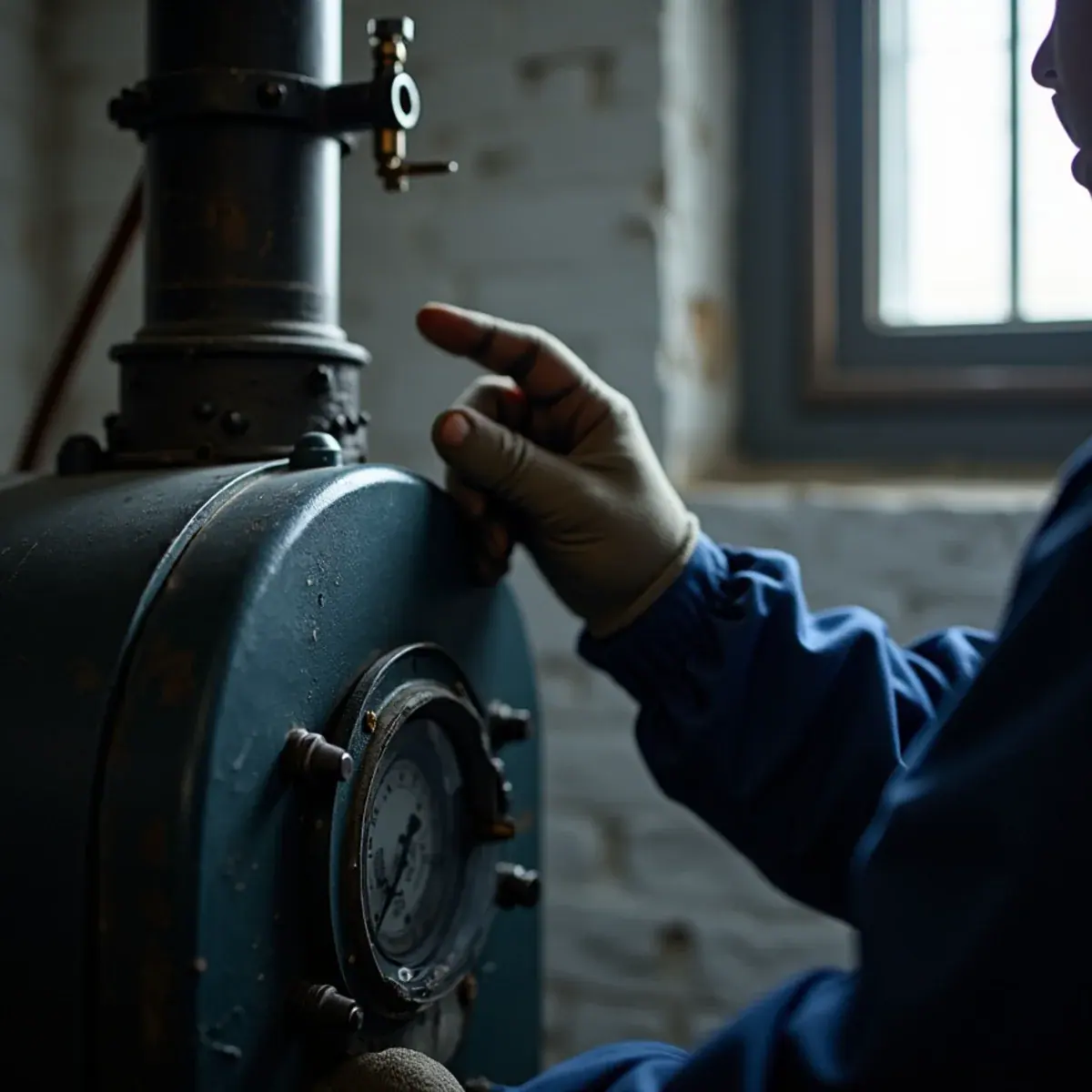
When a steam boiler is not working in White Plains or the surrounding towns, the cause is usually one of a short list of safety controls doing its job: the low-water cutoff, the pressure control, or the burner’s own flame safeguard. These controls shut the burner down to protect the boiler and your house. The checks below help you figure out which one tripped, fix the simple cases yourself, and recognize when the boiler is telling you it needs a professional.
How a steam boiler decides whether to fire
A residential steam boiler turns water into low-pressure steam that rises through the pipes to your radiators, gives up its heat and returns as condensate. For the burner to light, several conditions must all be true: the thermostat is calling, there is enough water above the heating surfaces, the pressure is below the cut-out setting, and the burner has power and fuel. If any one of those fails, the boiler sits silent.
Check 1: Water level and the low-water cutoff
Find the sight glass on the side of the boiler, a small vertical glass tube. With the boiler cool, water should sit roughly in the middle of the glass. If the glass is empty or the water is barely visible at the bottom, the low-water cutoff has probably shut the burner off.
- If the boiler is cold and the level is low, it is generally safe to slowly open the fill valve until the water reaches mid-glass, then close it. Many boilers will restart on their own once the cutoff senses water.
- If the boiler is hot and the glass is empty, do not add water. Cold water hitting a dry, hot cast-iron section can crack it. Shut the emergency switch and call for service.
- If the water in the glass is rusty, oily or bouncing wildly while the boiler runs, the system likely needs skimming or cleaning, which is a job for a technician.
A boiler that needs water every few days has a leak somewhere, often a failing return line, a leaky radiator valve or a stuck main vent letting steam escape. Topping it up keeps you warm for now but doesn’t solve the problem.
Check 2: Pressure and the pressuretrol
Home steam systems are designed to run on very low pressure, typically well under 2 psi. The pressuretrol is the gray box with a small dial, usually mounted on a looped pipe called a pigtail. If pressure climbs past its setting, the burner shuts off until pressure drops.
If your gauge shows high pressure and the boiler won’t restart, the pigtail may be clogged with sediment, making the pressuretrol think pressure is still high. Cleaning a pigtail means draining and opening parts of the boiler, so leave that to a tech. Someone may also have turned the pressuretrol up in an attempt to push heat to cold rooms; higher pressure actually slows steam distribution and wastes fuel.
Check 3: Power, thermostat and fuel
- Confirm the thermostat is set to Heat and calling above room temperature.
- Make sure the boiler emergency switch is on. It is often at the top of the basement stairs with a red plate.
- Look for a tripped breaker and reset it once.
- On oil, check the tank gauge. On gas, see whether other gas appliances work.
- If the burner has a reset button and a red light, press it once. If it locks out again, stop and call.
Signs the problem is deeper than a tripped control
Call for service if the boiler tries to light and fails, the burner runs but radiators stay cold, or you hear banging and see water spitting from air vents. Those point to issues such as:
- A failed flame sensor, igniter or thermocouple on gas equipment.
- A clogged nozzle, oil filter or bad cad cell on an oil burner.
- Main vents that are stuck shut, so air can’t leave the pipes and steam can’t get in.
- Pipes that have lost their pitch, trapping condensate and causing water hammer.
- A cracked section or a leaking tankless coil.
Our emergency HVAC repair techs diagnose these around the clock. On the service side, our boiler repair and service visits include cleaning the burners and, on hot-water systems, draining and purging each zone to clear air and correct over-pressurizing. For the quirks of older one-pipe systems, see our page on steam heating for older homes.
Neighborhood notes: Greenburgh and Hartsdale
Just west of White Plains, much of Greenburgh has mid-century houses that were built with or converted to hot-water heat, but plenty of older streets still run on original steam. In Hartsdale, a lot of residents live in garden co-ops and apartment buildings on a shared central boiler. If that describes your building, contact the superintendent or managing agent first; the boiler room is usually locked and belongs to the building. Owners of single-family homes in Hartsdale can run through the checks above directly.
How can you tell which control stopped the boiler?
You don’t need to open anything to narrow it down. Look and listen for a minute with the thermostat calling for heat:
- Glass low or empty, burner silent, no lockout light: the low-water cutoff is holding it off. Many probe-type cutoffs also have a small indicator light that shows low water.
- Water fine, gauge showing pressure on a boiler that has been off a while: suspect a clogged pigtail or a pressuretrol set too high.
- Burner motor starts, runs briefly, then a red light comes on: the flame safeguard on the burner locked out. On oil, that points to the fuel side; our oil burner service page covers what gets cleaned and replaced.
- Nothing at all, no lights anywhere: go back to the switch, the breaker and the thermostat wiring.
Steam boiler habits our technicians see in White Plains basements
Most of the steam boilers we service around White Plains sit in houses built before the Second World War, and the same patterns come up call after call. The first is the automatic water feeder. It is convenient, but it quietly replaces whatever a leaking wet return or a spitting radiator vent loses, so the homeowner never sees the level drop. By the time the boiler stops, the fresh water it kept adding has brought in oxygen and minerals that pit the cast iron from inside. A water meter on the feeder line, or simply noting the level each week, catches that early.
The second is a pressuretrol that someone turned up to five or more pounds to chase a cold bedroom. The cold room is almost always a stuck air vent or a sagging pipe, and the higher pressure just makes the system louder and the burner cycle harder. We reset it low and fix the actual cause.
Third, after any new boiler or major repair, oil and flux left in the piping make the water surge and bounce in the glass. That is when a boiler shuts off on low water even though it is full. Skimming the boiler, sometimes more than once, is tedious work, but skipping it leaves you with a boiler that trips all winter.
- Pigtails on top of the low-water cutoff clog faster than ones on the boiler itself.
- A cutoff that has been jumpered or bypassed is a serious hazard; we won’t leave a boiler running that way.
- Main vents at the ends of the supply pipes wear out, and a dead one slows heat to a whole side of the house.
Getting your steam heat back
Start with the sight glass, then the pressure, then the power and fuel. Add water only to a cool boiler, press the reset once at most, and treat a gas smell or CO alarm as a reason to leave. If the boiler still won’t fire, call our team; our techs will explain what they find before they start work and stay until the heat is back.
Frequently asked questions
What pressure should my home steam boiler run at?
Most residential steam systems heat properly on well under 2 psi, and many are happiest in the range of about half a pound to one and a half pounds. The exact setting depends on the boiler and piping. Running higher does not deliver heat faster; it tends to cause uneven heating, noise and wasted fuel, so ask your tech to confirm the right cut-in and cut-out values.
How often should I add water to my steam boiler?
A healthy steam system loses very little water, so needing to top it off more than occasionally is a sign of a leak. Common culprits include returns hidden in walls or floors, radiator valves and vents releasing steam. Some homes have an automatic water feeder, which can hide a leak by refilling constantly. If you are adding water weekly, have the system inspected.
Should I flush the low-water cutoff myself?
On boilers with a float-type cutoff, the manufacturer usually recommends periodic blowdown, and a tech can show you how to do it safely on your model. Probe-type cutoffs don’t get flushed the same way and are cleaned during service instead. If you aren’t sure which type you have, leave it to your annual maintenance visit rather than guessing.
Should I install an automatic water feeder on my steam boiler?
A feeder helps if you travel or can’t check the sight glass often, and it can keep the boiler from shutting down on low water. The downside is that it hides leaks by topping up silently. If you have one, fit it with a water meter or check the level weekly anyway. Rising water use is the early warning you want to see before the boiler suffers.
What does it mean when a technician says my steam boiler needs skimming?
Skimming removes oil and debris floating on the water surface through a skim port on the boiler. That film makes the water foam and bounce, so steam carries water into the pipes and the level in the glass jumps around. It is common after a new boiler install or piping work. It takes time and sometimes repeat visits, but it fixes banging and false low-water shutdowns.