Emergency
AC Died in a Heat Wave: Emergency Steps for Yonkers and Mount Vernon Homes
By Bella Family Air Solutions 4 min read
When central air quits during a heat wave, emergency AC repair in Yonkers and Mount Vernon gets busy fast, because every system in the area is working its hardest at the same time. Before you call, run through a few checks that can get cooling back in minutes. If they don’t, you’ll at least be able to tell the tech exactly what the system is doing, which shortens the visit.
Why air conditioners fail on the hottest days
A central air system that limps through May and June often gives out on the first 95-degree afternoon. Heat waves push the outdoor unit to run nonstop, and parts that were already weak finally fail. The most common culprits we see on heat-wave calls:
- Capacitors. The run and start capacitors help the compressor and condenser fan start. Heat accelerates their failure, and a bad one leaves the outdoor unit humming but not running.
- Contactors. The contactor is the switch that powers the outdoor unit. Pitted or insect-blocked contacts stop the condenser cold.
- Dirty condenser coils. Cottonwood fluff, leaves and grime choke airflow and drive pressures up until the unit trips.
- Frozen evaporator coils. A clogged filter or low refrigerant can ice the indoor coil so badly that no air moves.
- Clogged condensate drains. Many attic air handlers have a float switch that shuts the AC off when the drain pan fills.
Five checks before you call
- Thermostat. Set it to Cool and a few degrees below room temperature. Replace the batteries if the display is dim or blank.
- Breakers and disconnect. Check the indoor panel for tripped breakers for both the air handler and the condenser, and make sure the outdoor disconnect box near the condenser is on. Reset a tripped breaker once; if it trips again, leave it.
- Air filter. A clogged filter can freeze the coil and cut airflow to a trickle. Replace it.
- Condensate overflow. Look at the air handler or furnace for a full drain pan or a tripped float switch, especially if the unit is in the attic.
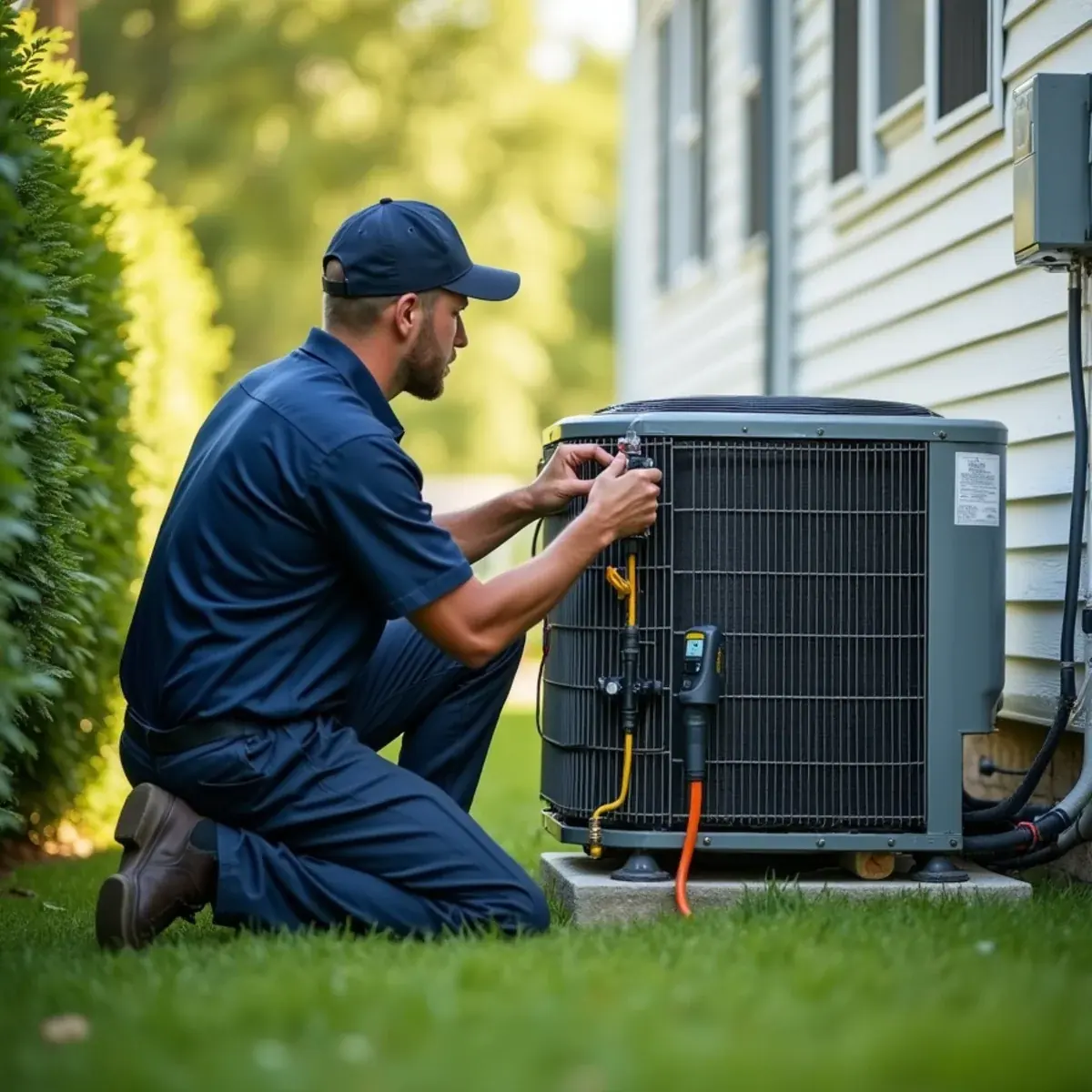
- Outdoor unit. Clear anything blocking the sides, like weeds, stored furniture or bags. With the power off at the disconnect, you can gently rinse the fins from the inside out with a garden hose.
What not to do
- Don’t repeatedly reset a breaker that keeps tripping. That usually signals a shorted compressor or fan motor.
- Don’t chip ice off a frozen coil. The fins bend easily and the tubing can puncture.
- Don’t add refrigerant yourself or hire someone who wants to add it without looking for a leak.
- Don’t open the electrical panel on the condenser; capacitors can hold a charge after power is off.
Keeping the household safe until the tech arrives
Heat illness is the real emergency, especially for older relatives, infants and anyone with heart or breathing conditions. Close blinds on sun-facing windows, keep everyone on the lowest floor, drink water, and use fans to move air. Upper floors in older houses can get much hotter than the ground floor. If someone shows signs of heat exhaustion like dizziness, nausea or confusion, get them somewhere cool and call for medical help. Cooling centers are often opened during heat emergencies, so check local announcements if you need a place to go.
Yonkers and Mount Vernon housing and central air
Much of the housing stock in Yonkers and Mount Vernon was built long before central air, so systems in two- and three-family homes are often retrofits. That usually means an air handler squeezed into an attic or closet, long duct runs and a condenser tucked into a narrow side yard or on a flat roof. Those setups are workable, but they are harder on equipment. Attic air handlers bake in summer, tight side yards restrict condenser airflow, and long ducts can leave top-floor bedrooms warm even when the system is healthy.
One point to know before you call: we service central air conditioning systems, air handlers and ducted equipment, but we do not service window units, wall units or PTAC units. If your apartment is cooled by a through-the-wall sleeve, your building management or the unit’s manufacturer is the right contact.
What the emergency visit looks like
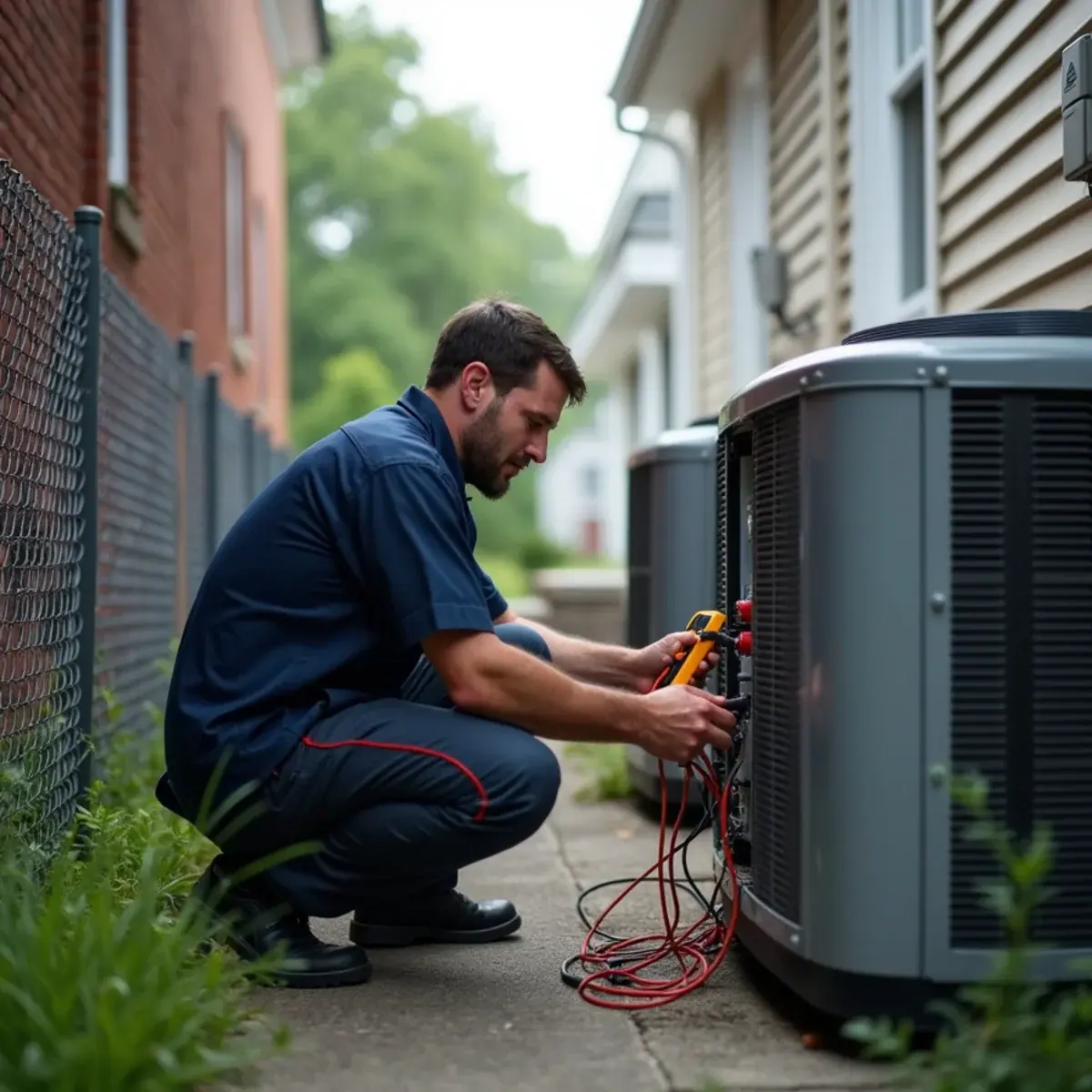
On an emergency AC repair call, the technician starts by confirming power at the thermostat, air handler and condenser, then tests the capacitor, contactor and fan motors. If electrical parts check out, they measure system pressures and temperatures to look for low charge, a restricted metering device such as a TXV, or a failing compressor. You should hear what failed and what the options are before work begins.
Many heat-wave failures are a capacitor or contactor and are fixed on the spot. If the system turns out to be low on refrigerant, the right move is to find the leak, not just add more; our page on refrigerant leak repair explains why. For older or recurring problems, our standard AC repair and installation service covers the longer-term fix.
Is your AC broken, or just outmatched by the heat?
Central air in this area is typically sized for a hot summer afternoon, not a record one. On a 97-degree day a healthy system may run nonstop and still sit a few degrees above the setting by late afternoon. A quick way to tell the difference is the temperature split:
- Let the system run for 15 minutes on Cool.
- Hold a kitchen thermometer at a return grille, then at the supply register closest to the air handler.
- A difference of roughly 15 to 20 degrees usually means the system is cooling and simply losing ground to the weather.
- A split under about 10 degrees, warm air, or a condenser that isn’t running points to a real problem that needs AC repair.
Humidity changes the numbers, so treat this as a clue for the phone call, not a diagnosis.
What heat-wave calls in Yonkers and Mount Vernon actually turn up
When the forecast hits the high 90s, our technicians see the same handful of failures across the two- and three-family houses of southern Westchester. Swollen run capacitors top the list; the domed top on the part is often visible the moment the service panel comes off. Contactors are next, and in narrow side yards we regularly find ants or wasp nests packed between the contacts. Neither part is expensive, and both are usually replaced on the first visit.
The harder problems come from where the equipment lives. A condenser squeezed between a house and a fence, or parked beside the neighbor’s unit, breathes its own hot exhaust and runs high pressures all afternoon. Condensers on flat roofs of attached houses bake in reflected heat. Attic air handlers in older homes sit in air well above 120 degrees, so a clogged drain or weak blower motor fails there first. A new part gets you cooling again, but we will point out when the setup itself is shortening the equipment’s life.
The honest trade-off on a busy heat-wave day is scope. We fix what stops the cooling now and write down the rest, such as a coil that needs cleaning, an undersized return or an aging R-22 system, so you can decide on it later with a clear head and a cooler house.
- Hose the condenser in late spring; cottonwood fluff clogs the fins before the first heat wave.
- Keep at least two feet clear around the outdoor unit, including trash cans and grills.
- A yearly maintenance visit tests capacitors under load before they swell.
Next steps when your AC quits
Check the thermostat, breakers, filter, drain and outdoor unit; thaw a frozen coil instead of forcing it; and keep your household cool and hydrated. If the system still won’t cool, call our team. A person picks up, and we will tell you honestly how the day’s call load looks so you can plan.
Frequently asked questions
Why does my AC run but blow warm air?
If the indoor fan is running but the air isn’t cold, the outdoor unit may not be working. Go outside and see whether the condenser fan is spinning and you can hear the compressor. A humming unit with a still fan often points to a failed capacitor. If the condenser runs but the air is still warm, a frozen coil or low refrigerant charge is more likely.
Can I run my AC nonstop during a heat wave?
Yes, a properly sized, healthy system can run for long stretches on very hot days, and that is normal. What you want to avoid is setting the thermostat extremely low, which won’t cool faster and can increase the chance of the coil icing up. Keep a clean filter in place and a clear space around the condenser so it can reject heat.
Do you repair ductless mini-splits?
Our emergency cooling work focuses on central air conditioning systems and the air handlers, furnaces and ductwork that go with them. If you have a different type of system, call and describe it; we will tell you straight away whether it is something we service. We do not work on window units, wall units or PTAC units.
My AC keeps the house comfortable in the morning but falls behind every afternoon. Is it failing?
Not necessarily. Most systems are sized for typical summer highs, so during a heat wave they run constantly and drift a few degrees above the setting by late afternoon. Pre-cool the house in the morning and close blinds on sunny sides. If it can’t hold within five degrees or so on an ordinary warm day, or the supply air feels barely cool, have it checked.
Can a power flicker or brownout knock out my central air?
Yes. Heat waves strain the grid, and low voltage or a brief outage can trip a breaker, reset a thermostat or stress a weak capacitor until it fails. After the power returns, many thermostats and outdoor units wait a few minutes before restarting, which is normal. If the condenser still won’t run after ten minutes, or the breaker trips again, turn the system off and call.