Emergency
What to Do When Your Heat Goes Out on a Westchester Winter Night
By Bella Family Air Solutions 5 min read
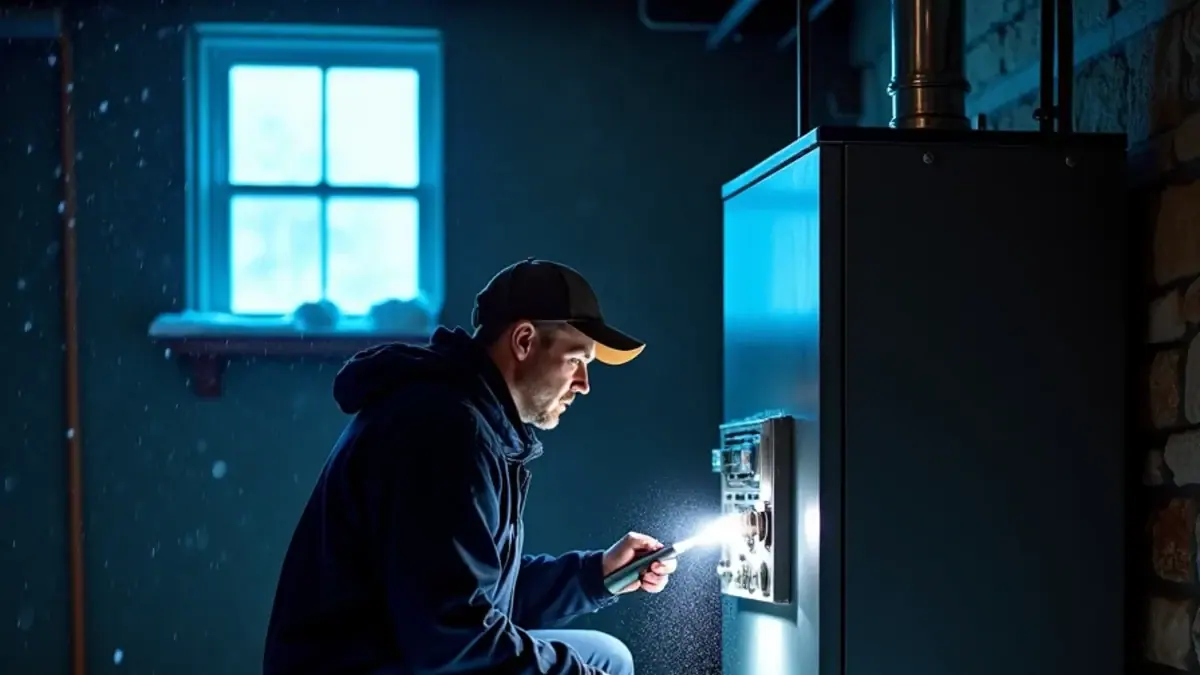
A no heat emergency in Westchester County usually starts the same way: the house feels cooler at 10 p.m., the radiators or registers go quiet, and the thermostat reads a few degrees below where it should be. Before you panic, spend ten minutes on a few safe checks. A good share of midnight no-heat calls turn out to be a tripped switch, an empty oil tank or a dead thermostat battery. The rest need a technician, and knowing which is which saves you time and money.
The first 10 minutes: checks any homeowner can make
Work from the simplest cause to the most involved. None of these steps require tools or opening the burner cabinet.
- Thermostat. Confirm it is set to Heat, the setpoint is above room temperature, and the screen is lit. Many digital thermostats go blank or act strangely when the batteries die. Swap them if you have spares.
- Emergency switch. Most Westchester basements have a light switch at the top of the stairs or on the boiler room door, often with a red cover plate. It shuts off the burner, and it gets bumped more than people think. Make sure it is on.
- Circuit breaker. Check for a tripped breaker labeled furnace, boiler or burner. Reset it once. If it trips again, leave it off.
- Fuel. On oil heat, read the tank gauge. A tank that ran dry can draw sludge into the line, so even after a delivery the burner may need its filter and nozzle attended to. On gas, check whether your stove burners light.
- Filter (forced air). A badly clogged furnace filter can make the unit overheat and shut down on its safety limit. If yours is caked with dust, replace it.
What not to do, even at 2 a.m.
The reset button on an oil burner’s primary control is the one thing homeowners are tempted to press over and over. Press it once at most. Each attempt can pump oil into the combustion chamber, and repeated resets can leave enough unburned oil to cause a puff-back or a dangerous hard start when it finally lights.
- Don’t use the kitchen oven or a gas range to heat the house.
- Don’t run a generator or grill in the garage or basement.
- Don’t remove furnace panels or bypass limit switches to “get it going.”
- Don’t add water to a steam boiler that has been firing dry; let a tech evaluate it first.
Protecting your house while you wait for a technician
Once you’ve called for service, your job is to keep the house and the plumbing from getting too cold. On a typical January night in the county, an older house can lose several degrees an hour once the heat stops, and pipes along exterior walls and crawl spaces are the first to freeze.
Keep the pipes moving
- Open kitchen and bathroom sink cabinets on outside walls so room air reaches the pipes.
- Let a pencil-thin stream of water run from the faucet farthest from where the main enters the house.
- Close doors to rooms you aren’t using and keep the family in one or two rooms.
- If you use a space heater, choose an electric model with tip-over shutoff, plug it directly into the wall and keep it three feet from anything that burns.
Older homes need extra attention
In the 1920s and 1930s Tudors and colonials you find in Scarsdale and its steam-heated homes, piping often runs through unheated sun porches, garages and outside walls with little insulation. Those runs freeze faster than the pipes in a newer split-level. If you have a room that always feels cold in winter, check it first.
When the cause needs a professional
If the thermostat, switch, breaker and fuel all check out, the problem is inside the equipment. These are the failures our techs find most often on winter no-heat calls:
- Gas furnaces: a dirty flame sensor, a failed igniter, an inducer motor that won’t start, or a pressure switch tripping because of a blocked vent or a clogged condensate trap on a high-efficiency unit.
- Oil burners: a clogged nozzle or oil filter, a failed cad cell or primary control, or a weak ignition transformer.
- Steam boilers: low water tripping the low-water cutoff, or a pressuretrol set too high or with a plugged pigtail.
- Hot-water boilers: air trapped in the zones, a stuck zone valve or a circulator pump that has seized.
A technician should explain what failed and why before starting the repair, and give you options when there is more than one reasonable fix. Our no heat emergency repair team works that way whether it is noon or midnight, and we carry common parts for both gas and oil equipment so most repairs are finished on the first visit.
How to describe the problem when you call
A few details help the tech show up with the right parts and a head start on diagnosis:
- What kind of system you have: furnace, steam boiler or hot-water boiler, and gas or oil.
- What it is doing: completely silent, trying to start and shutting off, or running with no heat reaching the rooms.
- Any lights, blink codes, noises or smells you noticed.
- Whether you pressed a reset button, and how many times.
Cutting down the odds of the next midnight call
Most winter breakdowns give some warning in the fall: a burner that takes longer to light, short cycling, a boiler that bangs, or radiators that heat unevenly. An annual tune-up catches those while it is still daylight and still warm outside. Our heating system maintenance plans include burner cleaning, combustion checks and a look at the safety controls that most often shut systems down in cold snaps. If your equipment is already acting up, schedule heating repair before the first hard freeze rather than after it.
Oil customers should also keep an eye on the tank and set up automatic delivery if they haven’t. Running out of oil is one of the most avoidable no-heat calls we get anywhere in Westchester County.
Should you call tonight or wait until morning?
Not every no-heat night needs a truck at 1 a.m. The honest answer depends on who is in the house, how fast it is cooling and what the equipment is doing. Use these as a guide:
- Call now if an infant, an older adult or anyone with a heart or breathing condition is home, if the forecast is in the teens or single digits, or if the house has already dropped below the low 50s.
- Call now if you smell oil, hear the burner trying and failing over and over, see water on the boiler room floor or find soot around the burner door.
- Morning is often reasonable when the house is holding in the 60s, pipes along outside walls are protected, and the equipment is simply off and quiet after one reset attempt.
- Either way, call and describe it. A person answers the emergency HVAC line around the clock and can help you decide.
What our technicians find behind the basement door at night
On winter-night calls around White Plains and the rest of the county, the equipment usually tells us a story before we pick up a tool. An oil burner that locked out right after a delivery often pulled sludge from the bottom of a tank that ran low, so the oil filter and nozzle both need attention, not just a reset. A tank gauge float can also stick, so the gauge reads a quarter full while the tank is actually empty.
High-efficiency gas furnaces have their own cold-night habit: the PVC intake or exhaust on the side of the house gets buried by drifting snow or frosted shut, and the pressure switch shuts the furnace down to protect you. Clearing the pipe fixes it, but we also look at why it drifted there. On hot-water boilers, a circulator that has been humming for years picks the coldest night to seize. Steam systems in older colonials usually stop on the low-water cutoff because a slow leak has been draining the boiler all season.
The trade-off we explain on these calls is simple. A night repair gets heat back, but it is done by flashlight, with whatever parts are on the truck. When the fix is a stopgap, we say so, write down what still needs doing and schedule the proper repair in daylight, instead of leaving you guessing.
- Tell us how many times the reset was pressed; it changes how we approach an oil burner.
- Snap a photo of any blinking light pattern on a furnace board before you touch the power.
- If the oil tank was just filled, mention it; that detail points us toward the filter and line first.
The bottom line on a no-heat night
Check the simple things, never ignore a gas smell or CO alarm, press the oil reset once at most, and protect your pipes while you wait. If the heat still won’t come back, call our team. Someone answers the phone around the clock, and we will talk you through what to expect before a tech heads your way.
Frequently asked questions
How cold does a house have to get before pipes freeze?
There is no single number, because it depends on where the pipe runs and how well that wall is insulated. Pipes in exterior walls, crawl spaces and unheated porches can freeze while the living room still feels tolerable. As a rule of thumb, once outdoor temperatures drop into the teens and the heat has been off for several hours, open cabinets and let a faucet drip.
Is it safe to keep pressing the reset button on my oil burner?
No. Press it once. If the burner doesn’t stay lit, leave it alone and call for service. Every reset attempt sprays oil into the combustion chamber, and when several attempts fail, unburned oil can build up. That creates a risk of a puff-back, which can spread soot through the house or damage the boiler.
Do you handle no-heat calls overnight and on weekends?
Yes. We offer 24-hour emergency service across Westchester County and nearby areas, seven days a week. When you call, a person answers, asks a few questions about your system and gives you a realistic idea of when a technician can arrive based on the calls already in the queue.
Should I shut off my main water valve if the heat is out and I have to leave?
If you must leave a house without heat in freezing weather, shutting the main and opening the lowest faucet to drain the lines lowers the chance of a burst pipe flooding the house. On a hot-water or steam boiler, don’t drain the heating system itself; leave that to a technician. Tell us when you call so the tech knows the water is off.
Once the heat is back, should I crank the thermostat up to warm the house quickly?
No. The furnace or boiler heats at the same rate whether the setpoint is 68 or 80, so a high setting only overshoots later. Set it to your normal temperature and give an older house a few hours to recover. Walls, furniture and pipes soak up heat first, so rooms can feel chilly for a while even when the system is working properly.