Emergency HVAC repair in White Plains, NY means a person answers our line at any hour, tells you how to make the house safe, and sends a technician with at least 15 years in the trade. We handle no heat, no cooling, leaking boilers and dead equipment on furnaces, boilers, oil burners and central air.
HVAC emergencies around here follow the weather. The first single-digit night of January, the third straight day above 90 in July, the morning after a nor’easter floods a basement. When the call comes in, you should reach a person who can tell you what to do right now, not a voicemail box.
Our emergency line is answered 24 hours a day. The technicians who respond have at least 15 years in the trade, so they carry the experience to diagnose boilers, furnaces, oil burners and central air without a second visit. Many of our emergency calls are no-heat repairs in winter and emergency AC repairs in summer.
What Counts as an HVAC Emergency
When in doubt, call and describe what’s happening. These situations shouldn’t wait.
No heat in freezing weather
Pipes can freeze in hours once indoor temperatures drop, especially in exterior walls and crawlspaces.
Boiler leaking or pressure climbing
A gauge heading past 30 psi, a relief valve discharging steadily or water pouring from the boiler.
No cooling for vulnerable people
Heat is dangerous for infants, older adults and anyone with health conditions.
Burning or electrical smells
A seized motor or overheating wiring. Shut the system off at the switch or breaker.
Gas odor or CO alarm
Leave the house, then call 911 or your utility from outside. We come after the scene is safe.
Equipment under water
Flooded burners and controls must not be restarted until they’ve been inspected.
Is it an emergency? A 30-second decision path
At 2 a.m. the hardest part is knowing which kind of problem you have. Sort it into one of three columns — whether you’re in a North White Plains colonial on the first single-digit night, a Downtown condo where a leak reaches the unit below, or an older Highlands home where the equipment is hard to reach.
Leave first, then call 911
Gas odor or a hissing gas line
Carbon monoxide alarm sounding
Smoke, flames or a strong burning smell from equipment
Anyone dizzy, nauseous or headachy near fuel-burning equipment
Shut it down safely, call us now
No heat when it’s freezing outside
No cooling with infants, older adults or medically fragile people at home
Boiler pressure near 30 psi, a relief valve discharging or water pouring out
A breaker that trips again after one reset
Flood water reaching the furnace, boiler or water heater
Can usually wait for a scheduled visit
A slow drip at a valve that a bucket handles
One room a little warmer or cooler than the rest
A new but mild noise with the system still heating or cooling
Maintenance that’s overdue — book it before the next cold snap or heat wave
What an after-hours emergency visit includes
An emergency visit is judged by two things: whether the house is safe when the technician leaves, and whether you understand what failed. Here is what you should expect to get.
Safe isolation of the failure
Depending on the problem, that means closing the boiler’s water feed, killing power to a shorted blower at the service switch, or shutting the fuel valve. The fault is contained before anyone starts replacing parts.
Combustion and CO check before a relight
Gas and oil equipment is not simply restarted and left. After a lockout, a flood or a puff-back, the technician checks the flame, draft and carbon monoxide before the appliance goes back into service overnight.
The cause, not just the reset
A tripped breaker or a burner in lockout is the symptom. We look for the shorted motor, clogged drain, failed circulator or empty oil line behind it, so the same failure doesn’t return by morning.
A full run cycle before we go
Once heat or cooling is restored, the system runs through a complete cycle with the technician watching temperatures, pressures and controls. A repair that only works for ten minutes is not a finished repair.
Paperwork your warranty company can use
Many of our calls come through home-warranty companies. The technician records the model, serial number, failed component and cause in a form the claims adjuster can follow, which helps avoid a second visit just for documentation.
A written plan when a part is on order
If the right part isn’t on the truck at night, you get the part description, what temporary measure is in place, what to watch for and what happens next. Nobody is left guessing until the office opens.
What Happens When You Call
Emergency calls get the same care as scheduled ones, just faster.
1
Triage by phone
We ask what’s happening and walk you through safe steps, such as shutting off the boiler or the water feed.
2
Dispatch
A technician heads out with the parts most likely needed for your type of system.
3
Make it safe
The first priority on arrival is stopping the leak, the overheating or the unsafe condition.
4
Restore service
Where possible, we repair on the spot. If a part must be ordered, we look for a safe temporary fix.
5
Explain what happened
You learn the cause and what, if anything, should be done to prevent it happening again.
What Affects Emergency Repair Cost
Emergency work is priced by what’s involved and when it happens.
Time of the call. Overnight, weekend and holiday calls carry different rates than weekday service. Ask when you call.
The repair itself. A reset and part swap costs less than a failed circulator or compressor.
Parts on hand. Common parts ride on the truck; unusual ones may mean a return visit.
Damage from the failure. Flooding or freezing can add work beyond the original fault.
Our technicians explain the problem and the cost of each option before any work begins, even at 2 a.m. You stay in control of the decisions.
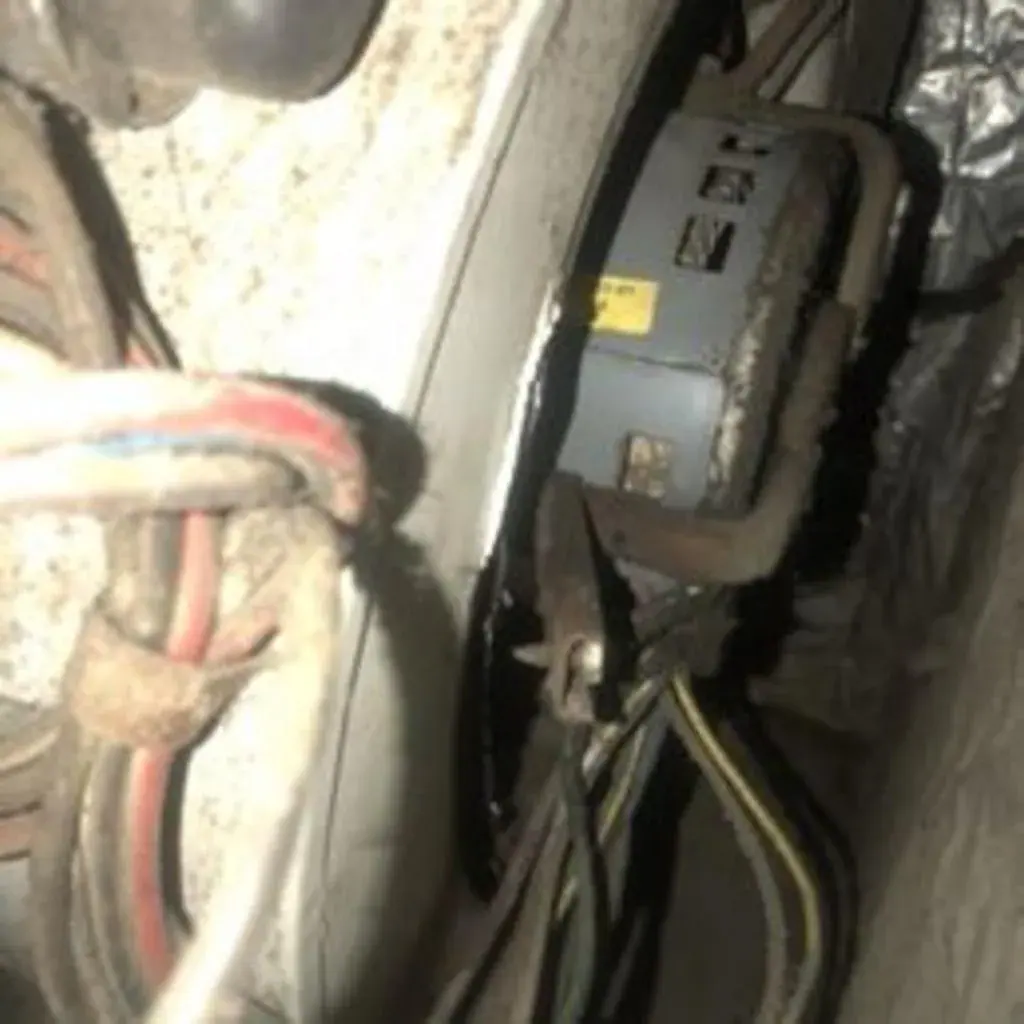
From our job files: worn wiring found on a service call.
Staying Safe Until We Arrive
A few steps can prevent a bad night from becoming a worse one. If you smell gas or a CO alarm sounds, get out first, then call 911 or the utility. For no heat in winter, open cabinet doors under sinks on outside walls and let faucets drip slightly. If the boiler is leaking, turn it off at the emergency switch, usually at the top of the basement stairs or on the boiler, and close the water feed valve if you can reach it.
Never press an oil burner’s reset button more than once. Each press can pump oil into the combustion chamber, and a flooded chamber can ignite violently when the burner finally lights.
Many emergencies are avoidable. A boiler service or furnace tune-up in the fall catches the weak parts that tend to fail on the coldest night of the year.
What to have ready when you call our emergency line
The more we know before we leave, the more likely the right part is already on the truck. If it’s safe to do so, gather this while you dial:
Tell the dispatcher
The symptom: no heat, no cooling, water, noise, odor, short cycling or a tripping breaker
Where you are: town or White Plains neighborhood, house or apartment, and whether anyone at risk is inside
Red flags: any smoke, burning smell, CO alarm, gas odor or frozen-pipe concern
The equipment: furnace, boiler, central air, heat pump or water heater; oil or gas; approximate age and any recent repairs
Photos, taken safely: the thermostat display, any error code or blinking light, the leak and the model/serial plate
Your questions: estimated arrival and how after-hours service is billed — ask before we dispatch
Our dispatcher will walk you through safe steps while the technician is on the way. Don’t remove panels, work on gas or oil lines, or handle refrigerant yourself.
After the emergency: records worth keeping
Storms, floods and hard freezes often mean an insurance claim, a landlord or a condo board. Keep the paper trail:
For your files, insurer or landlord
Photos of the equipment, the leak or water line and any damage, taken before cleanup
The date, time, outdoor weather and what the system was doing
Our written diagnosis, the estimate and the invoice for the emergency work
Any temporary repair we made and the permanent fix we recommended
Damaged parts or equipment, kept until your insurer says they can go
We document what we find and the work we complete; your insurer, landlord or warranty company decides what’s covered. For flood-damaged equipment specifically, read checking your furnace and boiler after a flood.
Why people call Bella Family Air Solutions when the system fails at night
A real person on the line
Several reviewers point to it: they called in the middle of a breakdown and a person answered. You get safe steps right away — which switch to flip, which valve to close — instead of a recording and a callback window.
Experienced hands at 2 a.m.
Our service manager hires only technicians with a minimum of 15 years in the trade. Night calls are where that shows: an old steam boiler, an unfamiliar oil burner and a flooded furnace all get diagnosed without a second opinion.
We stay until it works
One review theme stands out: a technician who stayed until the boiler was actually heating again, not just until the shift ended. The goal of every emergency call is a working system, or a safe one with a clear plan.
Prices before work, even overnight
The technician explains what failed and what each option costs before starting, whatever the hour. Repair work carries a written warranty whose terms depend on the job, so you know where you stand after the emergency is over.
Where we work
Emergency HVAC near you
We provide emergency hvac in White Plains and these nearby communities — plus the rest of Westchester County.
Emergencies follow the geography. Basements in Mamaroneck, Port Chester and Rye take on water in coastal storms and river flooding, and a submerged furnace or boiler can’t be restarted until it has been inspected. In Yonkers, Mount Vernon and the Bronx, one failed boiler can leave several apartments without heat at once.
Hilly, exposed lots around Valhalla and North White Plains carry heavy heating loads, so a failure there turns into a frozen-pipe risk quickly. Our line covers all of Westchester County and nearby areas, and emergency calls are sorted by risk to people and property.
Yes. Our emergency line is answered around the clock, seven days a week, including holidays. Customers regularly mention that they reached a real person when they called. Describe your situation and we’ll give you safe steps to take while a technician is dispatched to your home or business.
How quickly can a technician get to me?
It depends on the time of day, the weather and how many calls are open. During cold snaps and heat waves, demand spikes across Westchester. We give you an honest estimate when you call and prioritize situations involving no heat in freezing weather, active leaks and vulnerable occupants.
Should I turn off my system while I wait?
In many cases, yes. If the boiler is leaking, the pressure is high, you smell burning or the equipment has been flooded, turn it off at the emergency switch or breaker. If the system is simply not producing heat, you can leave the switch on unless the tech advises otherwise. Never repeatedly reset an oil burner.
Do you handle emergency calls for businesses?
Yes. We respond to emergency calls for offices, retail spaces and other commercial properties, including refrigeration issues. Our commercial HVAC page covers the equipment we service for businesses and the scheduled maintenance that keeps emergency calls to a minimum, which matters when a dead system means closed doors or spoiled stock.
Is a water leak from my furnace, boiler or AC an emergency?
It depends on the volume and where it’s going. A slow drip into a pan or bucket can usually wait for a scheduled visit. Water pouring from a boiler, a relief valve discharging steadily, or an AC drain overflowing through a ceiling is urgent — turn the equipment off and call. Keep water away from electrical parts.
What if the part I need isn’t available at night?
Common parts ride on our trucks, so many emergency calls end with a repair on the spot. When a part has to be ordered, the technician looks for a safe temporary fix to restore heat or cooling, or makes the system safe and explains the plan. You’ll know what was done and what still needs to happen.
Will you document storm or flood damage for my insurance?
Yes. We record what we observe, photograph the equipment and damage where useful, and provide the written diagnosis, estimate and invoice. Your insurer decides coverage, so photograph everything before cleanup and don’t discard damaged equipment until the insurer says it can go.
Is emergency repair work covered by a warranty?
Yes. Repair work comes with a written warranty, and the terms depend on the job — the part replaced, the equipment and whether it was a permanent fix or a temporary one. Customers have described warranties of six months and two years on specific repairs. Your technician tells you the terms in writing before you pay.
The power came back after an outage but my heat or AC didn’t. Is that an emergency?
Give it a few minutes first — many systems wait out a delay before restarting. Check that the breaker and service switch are on and the thermostat display is working. If the equipment still won’t run, or an oil burner has locked out, call. In freezing weather with no heat, treat it as urgent.
My home warranty company can’t send anyone tonight. What are my options?
Call the warranty company first and ask whether your plan allows an emergency visit by an outside contractor, and whether it will reimburse you. Get that answer in writing or note the claim number and the representative’s name. We handle many home-warranty calls and document the diagnosis either way, so your claim has what it needs.
Written by the Bella Family Air Solutions team · Last reviewed . Planning ranges, permit and rebate guidance are reviewed at least quarterly.
Steam boiler silent on a cold morning? Walk through the water level, pressure control, power and fuel checks that are safe to do yourself, and learn when it is time to call a tech.
When a basement floods, the furnace, boiler and water heater are often under water. Here is why you should not restart them, what usually needs replacing, and how to document the damage.