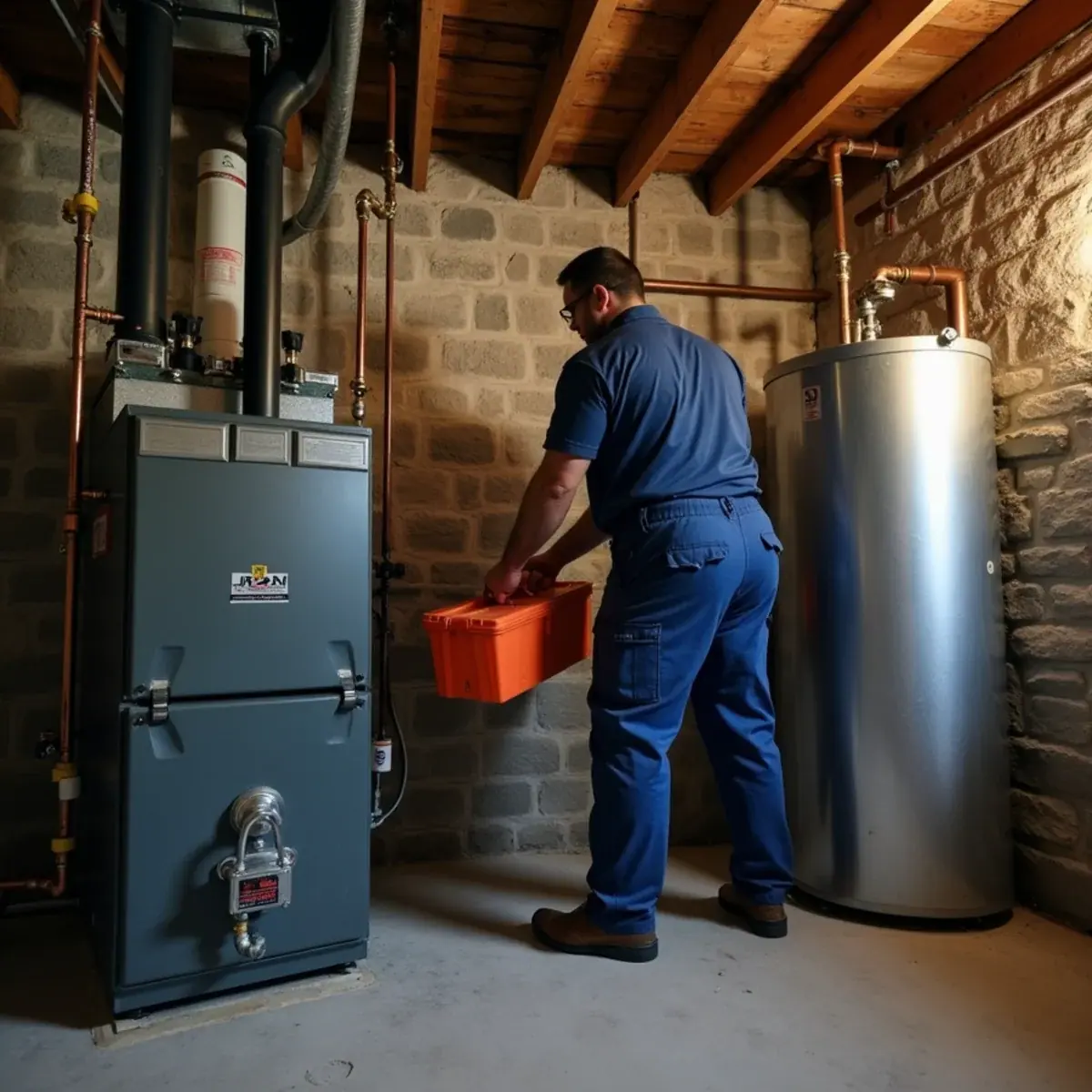
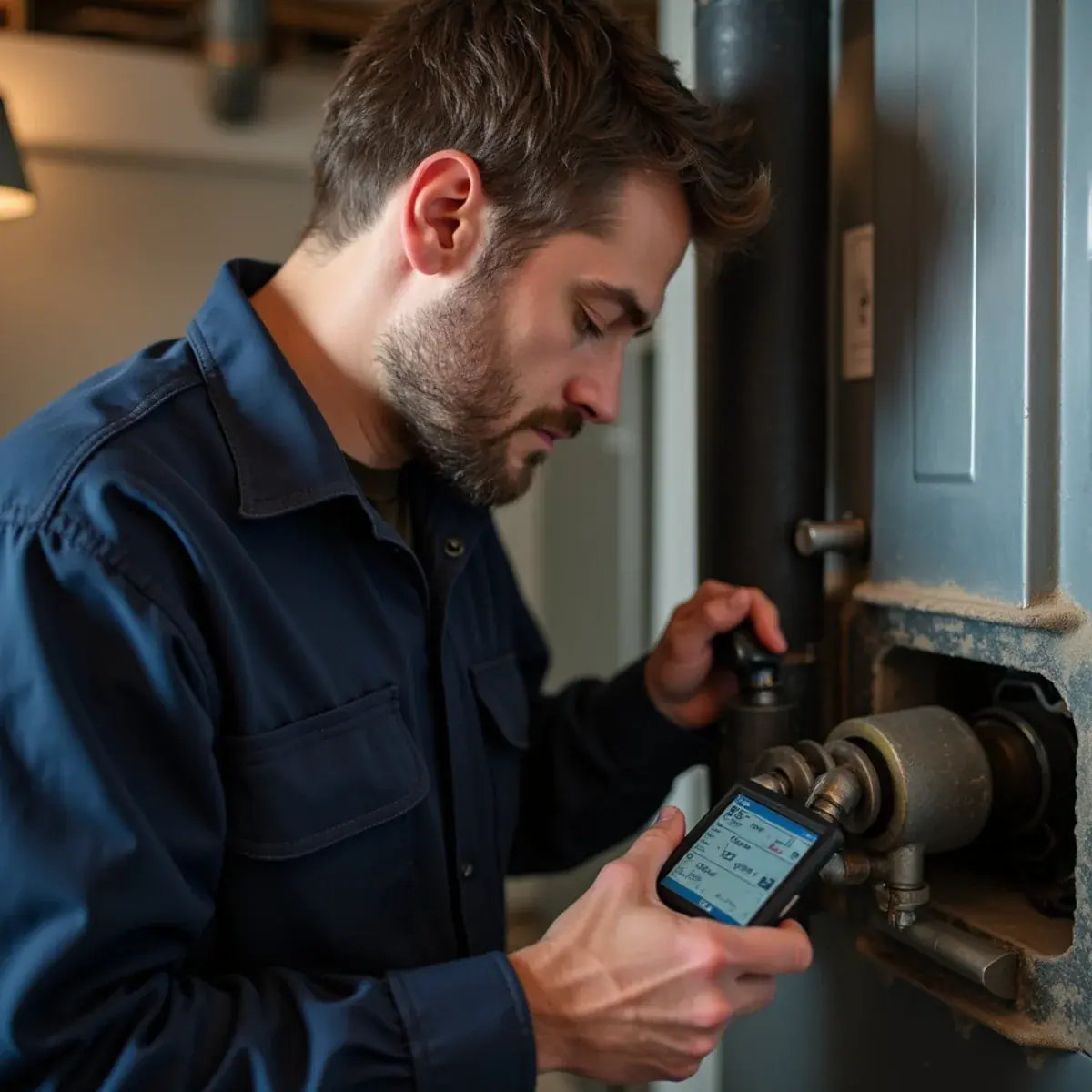
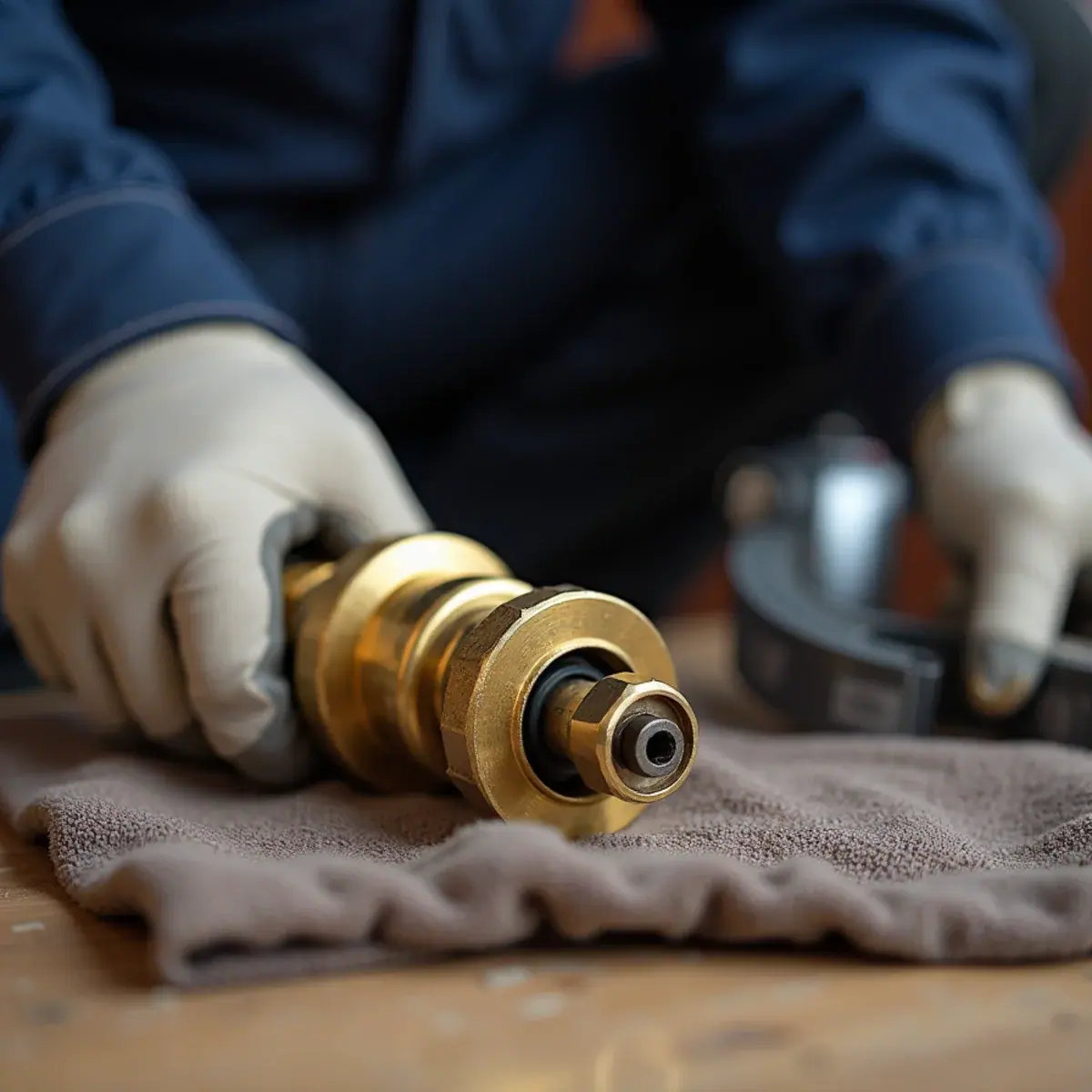
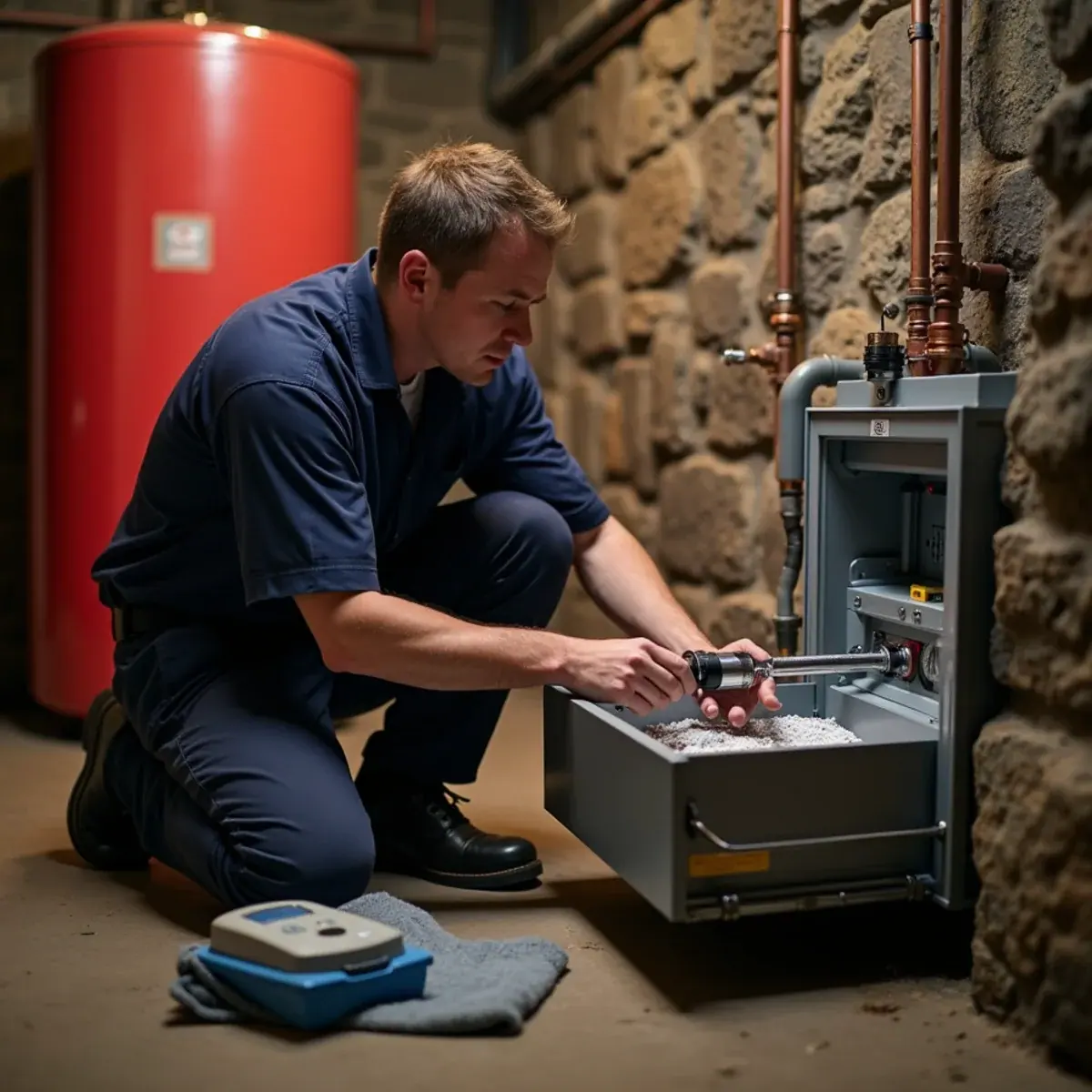
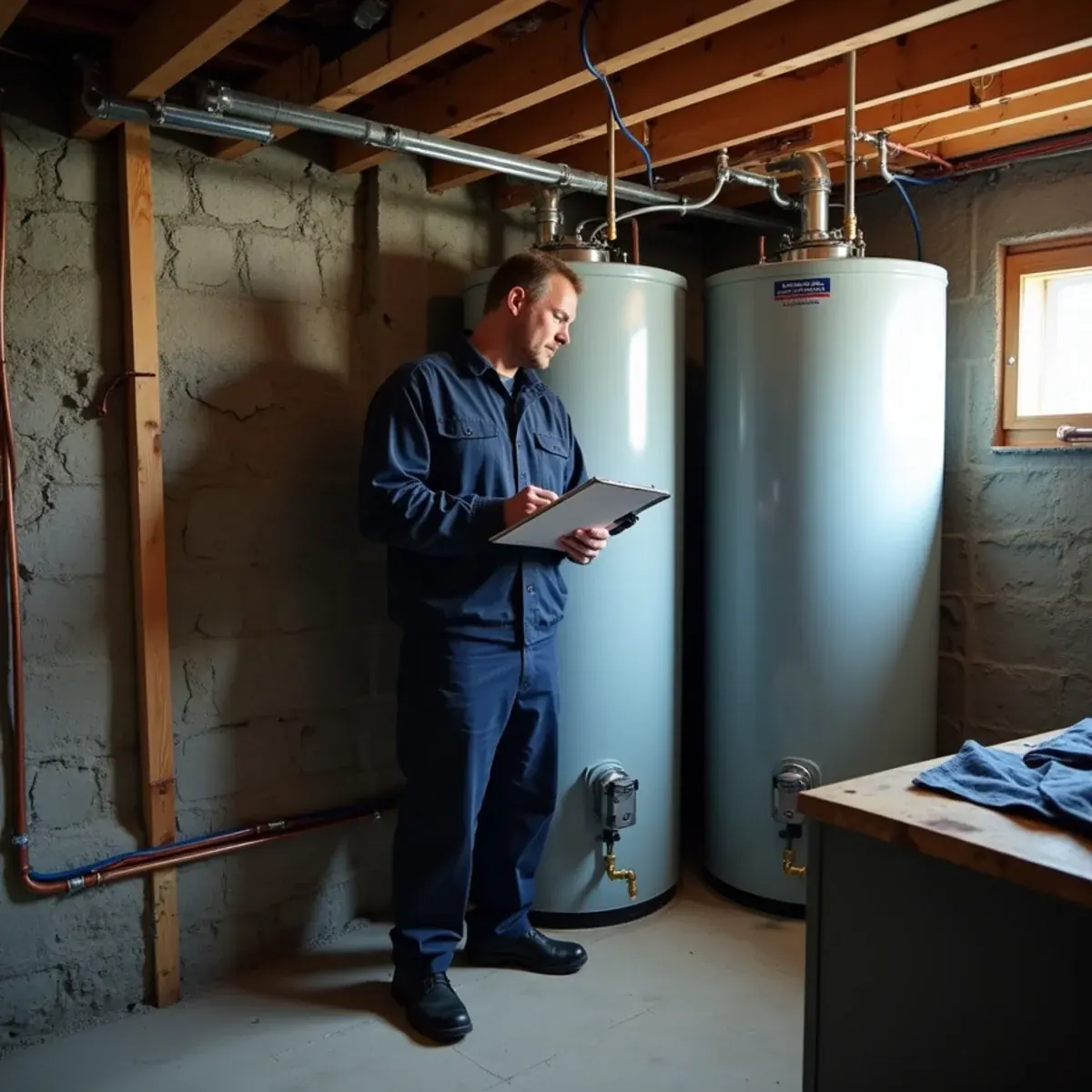
Oil burner service in White Plains, NY should happen once a year, before steady heating starts. Our preventive visit replaces the nozzle and oil filter, cleans the pump strainer, brushes out the heat exchanger and proves the adjustment with a combustion analyzer — work the family has done since 1976. If the burner is already down, the line is answered 24 hours.
Oil heat is still common across Westchester, especially where a gas main never reached the street. It is dependable but unforgiving of neglect: a burner skipped for a couple of seasons soots up its heat exchanger, drifts out of adjustment and starts locking out on cold mornings. Preventive burner maintenance has been part of our work since the family started in this trade in 1976.
Our annual service is a full teardown, not a quick nozzle swap. We replace the nozzle and oil filter, clean the pump strainer, set the electrodes, brush and vacuum the combustion chamber and flue passages, and then prove the adjustment with a combustion analyzer. Techs with a minimum of 15 years in the field do this work, and they show you the readings before and after.
If your burner is already down, call any hour. Emergency fixes are often a clogged nozzle or filter, a failed cad cell or ignitor, or sludge pulled up from the tank.
Signs Your Oil Burner Needs Attention
An oil system usually gives warnings before it quits outright. Here is what to watch and listen for.
Burner locks out and the reset button pops
Press reset once. If it locks out again, stop — every failed attempt sprays oil into the chamber, and too much can cause a puff-back.
Soot around the barometric damper or smoke pipe
Black streaks or dust mean incomplete combustion. The burner is out of adjustment or the flue passages are clogged.
Rumbling or delayed ignition
A loud thump at startup points to worn electrodes, a failing ignitor or a dribbling nozzle.
Oil smell in the basement
Could be a weeping fitting or filter gasket, or a combustion problem. Any smoke or CO alarm means leave the house and call 911 first.
Oil deliveries coming more often
A dirty heat exchanger sends heat up the chimney instead of into the water. Usage creeps up quietly year after year.
Short flame or sputtering
Often a clogged pump strainer, a partially blocked filter or air in the supply line.
Oil burner locked out? Safe checks before you call
Smoke, heavy oil fumes, a CO alarm or soot puffing out of the boiler? Turn the burner off at the emergency switch, get everyone out and call 911 — skip the list. Otherwise, check these in order:
Tank gauge: read the float gauge on top of the tank. If it’s on or near empty, the burner has probably pulled air and sludge — after a delivery it usually needs a technician to bleed the line and often a new filter and nozzle.
Emergency switch: the red-plate switch at the top of the basement stairs or near the boiler is on.
Thermostat: set to HEAT, above room temperature, with fresh batteries.
Reset button: press the red button on the burner’s primary control once. If the burner doesn’t light and stay lit, leave it.
Puff-back signs: a loud bang at startup, soot on walls or around the burner, or a smoky basement — shut the burner off and don’t restart it.
Oil on the floor: keep flames and sparks away, put down absorbent pads or cat litter and don’t hose it toward a floor drain.
Stop there and call. Repeated resets pump oil into the combustion chamber, and a flooded chamber can ignite violently when the burner finally catches.
Waiting on a cold night? Open sink cabinets on outside walls and let faucets drip. Our no-heat emergency repair line answers 24/7.
The parts of an oil burner visit most tune-ups skip
Nozzle, filter and a combustion test are the core of the job. Around them sit a handful of checks that protect the house, the tank and your hot water — we do those too.
Fire-safety valve and emergency switch
We confirm the fusible safety valve on the oil line is in place and working, and that the emergency switch at the stairs or boiler room door actually kills the burner — and is labeled so anyone in the house can find it.
Buried oil line check
Older installations often run bare copper oil line through a concrete floor, where it corrodes out of sight. We look for unsleeved lines, kinks and weeping flare fittings, and tell you when a line should be rerun.
Motor, coupling and air side
The burner motor’s bearings, the coupling that drives the fuel pump and the fan wheel that supplies combustion air all wear. A slipping coupling or a lint-clogged fan wheel throws off the adjustment we just set.
Aquastat and hot-water settings
On boilers that make domestic hot water, the high and low limits are set to match how your household uses hot water. The mixing valve is checked so tap water isn’t scalding in the morning or lukewarm by evening.
Oil-fired furnaces: the airflow side
If your oil burner fires a furnace, not a boiler, the air filter, blower and belt or direct-drive motor are checked as well. A clean flame in a furnace starved of airflow still overheats and trips its limit.
A service tag at the burner
We record the nozzle size and spray angle, the pump pressure and the date on a tag at the appliance. The next technician — ours or anyone’s — starts from facts instead of guessing what was installed.
What Our Full Burner Service Covers
This is our standard preventive visit on an oil-fired boiler or furnace. Emergency repairs follow the same diagnostic logic.
1
Fuel side
Replace the oil filter cartridge, clean the pump strainer, check the supply line and fittings for weeps, and bleed air from the pump.
2
Nozzle and electrodes
Install a new nozzle matched to the appliance’s rated firing rate and spray pattern, then gap and position the electrodes and inspect the ignitor.
3
Clean the heat side
Open the unit and brush and vacuum soot from the combustion chamber and flue passages. Inspect the smoke pipe and barometric damper.
4
Combustion analysis
Measure draft, smoke number, CO2 or O2, stack temperature and carbon monoxide, then adjust air until the burner is clean and efficient.
5
Safety controls
Test the primary control and cad cell, verify the high limit, and on boilers check the relief valve and system pressure.
6
Written readings
You get the numbers and any concerns, like a cracked chamber or corroded tank, in plain language.
What Affects the Price of Oil Burner Service
A routine annual service is predictable. Repairs and neglected equipment are where costs vary.
Time since last service. A burner cleaned every year takes far less labor than one packed with several seasons of soot.
Boiler or furnace design. Some heat exchangers open with a few bolts; others need more disassembly to reach the flue passages.
Parts needed. Nozzle and filter are standard. A fuel pump, primary control, ignitor or motor adds to the visit.
Tank and supply line condition. Sludge, water in the tank or a deteriorating oil line can cause repeated no-heats and may need its own repair.
Chimney issues. A blocked or deteriorated flue affects draft; chimney cleaning or relining is handled by a chimney specialist.
We quote repairs before we start them. If an old oil boiler is nearing the end, we’ll say so plainly and give you repair and replacement options rather than pushing either one.
Soot, Draft and the Chimney: Why They’re Linked
An oil burner is only as good as its draft. Too little and the flame smothers, soot builds and gases can spill at the barometric damper. Too much and heat races up the chimney. That’s why we measure draft over the fire and at the breech, not just eyeball the flame.
Soot is also an insulator. A thin layer on the heat exchanger measurably lowers efficiency, and heavy buildup can block flue passages entirely. Older masonry chimneys in towns like Scarsdale and Purchase sometimes have deteriorated liners that shed debris into the base. If our readings point to a flue problem, we tell you and recommend a chimney inspection before the next heating season.
Oil Burners Inside Your Larger Heating System
The burner is one part of the appliance. On a hot-water system we also look at expansion tank pressure and air in the zones, handled through our boiler repair and service work. On a steam system we check the water line and low-water cutoff, covered on our steam heating page. Many oil boilers also make domestic hot water through a tankless coil, which scales up over time.
The burner gets the attention, but the tank causes a surprising share of oil-heat trouble — and a leak can be far more expensive than a no-heat call. Look at it whenever you check the gauge:
Tank warning signs
Weeping seams, wet spots or rust scale on the bottom or legs of a basement tank
Oil odor near the tank, the filter or along the supply line
A whistle that doesn’t sound during delivery — the vent alarm tells the driver when to stop, and a silent one can mean overfilling
Unstable legs or a tank sitting on a damp floor, which speeds up corrosion
Outdoor or buried tanks: age, visible damage and whether your homeowner’s policy covers them — many don’t
Sludge and water: repeated clogged filters or nozzles often trace back to the tank, not the burner
If oil is leaking, contain it without using water, keep ignition sources away, call your oil supplier, and report petroleum spills to the New York State Department of Environmental Conservation spill hotline. Our oil burner tune-up checklist covers the tank inspection we do on every visit.
Replacing an oil boiler or switching fuels? What the quote should include
Across northern Westchester — Pound Ridge, Bedford and much of North Castle — many homes are on oil because a gas main never reached the road. Whether you’re replacing like-for-like or converting, check each quote for:
Line by line
Equipment make, model, output and efficiency, sized by heat loss or connected radiation — not the old boiler’s nameplate
Chimney: condition, and a liner if the new appliance needs one (oil and atmospheric gas appliances often do)
Fuel plan: new oil lines and filter, or confirmation that gas service is available at the street and who arranges the utility connection
Heat pump options: whether a cold-climate heat pump can carry part of the load, and whether the boiler stays as backup
Oil tank: keep, replace, or remove/abandon — and who handles the paperwork if the tank comes out
Domestic hot water: tankless coil, indirect tank or a separate water heater
Who pulls the permit and schedules inspections — confirm current requirements with your town or the White Plains Building Department
Removal and disposal of the old boiler, startup combustion analysis with recorded readings, and warranty and payment terms in writing
Why oil-heat homeowners trust Bella Family Air Solutions with their burner
Oil equipment rewards people who have seen a lot of it.
Preventive burner work since 1976
The family started in this trade in 1976, when oil heat was even more common in Westchester than it is today. Full preventive burner service has been part of the work ever since, on boilers and furnaces alike, and on equipment old enough to need patience.
Readings you can see
Our technicians show you the combustion numbers before and after the adjustment — draft, smoke, CO2 or O2, stack temperature and CO. You don’t have to take a clean burner on faith; the recorded readings show it.
No push to convert
A well-maintained oil system can have years left. If a boiler is near the end, we say so and lay out oil, gas and heat pump options without steering. Reviewers describe being given choices instead of a sales pitch.
Lockouts answered any hour
Oil burners tend to lock out on the coldest mornings, when a nozzle finally clogs or a tank runs low. A person answers our line around the clock, and technicians with 15 or more years in the trade handle the call.
Where we work
Oil Burner Service near you
We provide oil burner service in White Plains and these nearby communities — plus the rest of Westchester County.
Oil heat is concentrated in the northern and eastern parts of the county, where houses sit on large wooded lots and natural gas service is limited. In Pound Ridge, Bedford, Lewisboro and much of North Castle, an oil burner is often the only source of heat, so the annual service is not optional.
Across Putnam County, long winters and older boilers make a skipped season show up fast. Closer to the Hudson, older homes in Irvington and Ossining still run oil boilers with radiator heat. We service oil burners in all of these towns from our White Plains shop.
Once a year, ideally in late summer or early fall before steady heating starts. Oil combustion leaves soot behind no matter how well the burner is tuned, and the nozzle and filter are wear items. Skipping a season often shows up as higher fuel use, a no-heat call in January, or a dirty chimney connector that should have been caught earlier.
My oil burner locked out. Can I keep pressing the reset button?
Press it once. If the burner doesn’t light and stay lit, leave it alone and call us. Each reset pumps more oil into the combustion chamber, and if it finally ignites with a pool of oil inside, it can cause a puff-back that spreads soot through the house. The lockout is protecting you; the underlying cause needs a technician.
What does a combustion analysis tell you?
It shows how completely the oil is burning and how much heat goes up the chimney. We measure draft, smoke, CO2 or oxygen, stack temperature and carbon monoxide. Those numbers let us set the air adjustment precisely instead of by eye, which means cleaner burning, fewer soot problems and a safer appliance. We share the readings with you.
Should I convert from oil to gas or a heat pump?
It depends on gas availability on your street, the age of your boiler or furnace, your electrical service and current incentives. A well-maintained oil system can have plenty of life left. We’ll give you an honest read on your equipment, and our blog covers the tradeoffs in detail for homes in northern Westchester and Putnam.
What is an oil burner puff-back, and how do I prevent it?
A puff-back is a small explosion inside the boiler or furnace when oil vapor that built up in the combustion chamber ignites all at once. It can blow soot through the ductwork or up the chimney connector and into the house. Worn nozzles, weak ignition, poor draft and repeated reset presses are the usual causes — annual burner service and pressing reset only once prevent most of them.
What should I do if my oil tank is leaking?
Keep flames and sparks away, contain the oil with absorbent pads or cat litter, and don’t wash it toward a floor drain. Call your oil supplier about the tank and report petroleum spills to the New York State Department of Environmental Conservation spill hotline. Call us if the burner or supply line is involved, and photograph everything for your insurer.
Do I need a permit to replace an oil boiler or remove an oil tank?
Often, yes — heating equipment replacements and tank removals or abandonments usually involve a permit and inspection, and the rules vary by town. In White Plains, confirm current requirements with the Building Department at 255 Main Street; elsewhere, check with your town building department. Your quote should say who pulls the permit and handles the tank paperwork.
Can I service my own oil burner?
You can keep the area around it clear, watch the tank gauge and note any soot or odor. The service itself needs a combustion analyzer: changing a nozzle without measuring draft, smoke and CO afterward often leaves the burner sooting worse than before. Fuel-line work and adjustments also carry fire and puff-back risk, so leave those to a technician.
What size nozzle does my oil burner need?
The nozzle’s firing rate has to match the appliance’s rating plate and the home’s heat load, and the spray angle and pattern must suit the burner head. Many older systems run nozzles larger than needed, which wastes oil and shortens cycles. We check the rating, the combustion readings and how the system cycles before choosing one.
Can the oil burner be replaced without replacing the boiler?
Often, yes. If the boiler’s heat exchanger and chamber are sound, a newer flame-retention burner can bolt onto the existing appliance and burn more cleanly than a worn older one. If the boiler itself is leaking, cracked or badly sooted inside, a new burner won’t fix that, and we’ll tell you so.
Written by the Bella Family Air Solutions team · Last reviewed . Planning ranges, permit and rebate guidance are reviewed at least quarterly.
A line-by-line checklist of what an annual oil burner tune-up should include, from nozzle and filters to draft, combustion testing and the oil tank, for Westchester oil heat homes.
Leaving oil heat north of I-684 means weighing gas availability, cold-climate heat pumps, hybrid setups, tank removal and your electrical panel. Here’s how to sort through it.