Prevention
Mold in Your Return Ducts: Causes, Health Risks and Safe Treatment
Musty smell when the system kicks on? Return ducts in damp basements are a common home for mold. Here’s what causes it, why it matters and how it’s treated safely.
24-hour emergency service · Family-owned since 1976
Licensed, bonded & insured · EPA Universal Certified · BBB Accredited A+
Heating & cooling · White Plains & Westchester
Mold in an HVAC system comes back unless the moisture behind it is fixed. We clean and sanitize the return side and correct the cause.
Duct mold remediation in White Plains means removing growth from the return ducts, plenum, coil and drain pan, sanitizing those surfaces and fixing the moisture that fed it. Bella Family Air Solutions handles the inside of the HVAC system with non-toxic Nu-Calgon products; mold in walls, ceilings or insulation goes to a New York-licensed mold professional.
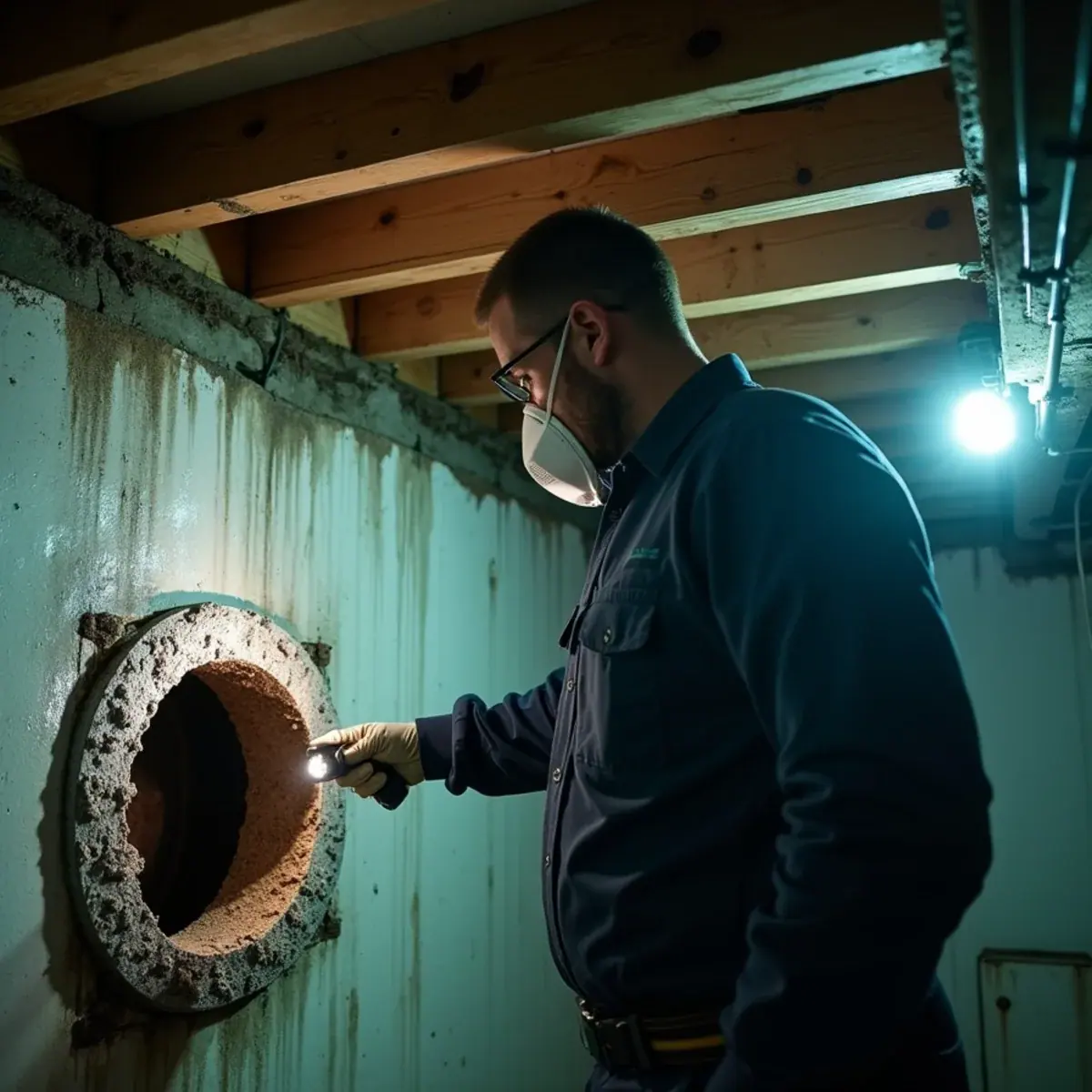
The return side of an air system is where mold most often takes hold. Return ducts pull air from the house — and in a lot of Westchester homes, from a damp basement — straight across a cold evaporator coil that sweats all summer. Add a clogged condensate drain or a coil matted with dust, and you have warmth, moisture and food in one dark place. That musty smell when the AC first kicks on is usually coming from here.
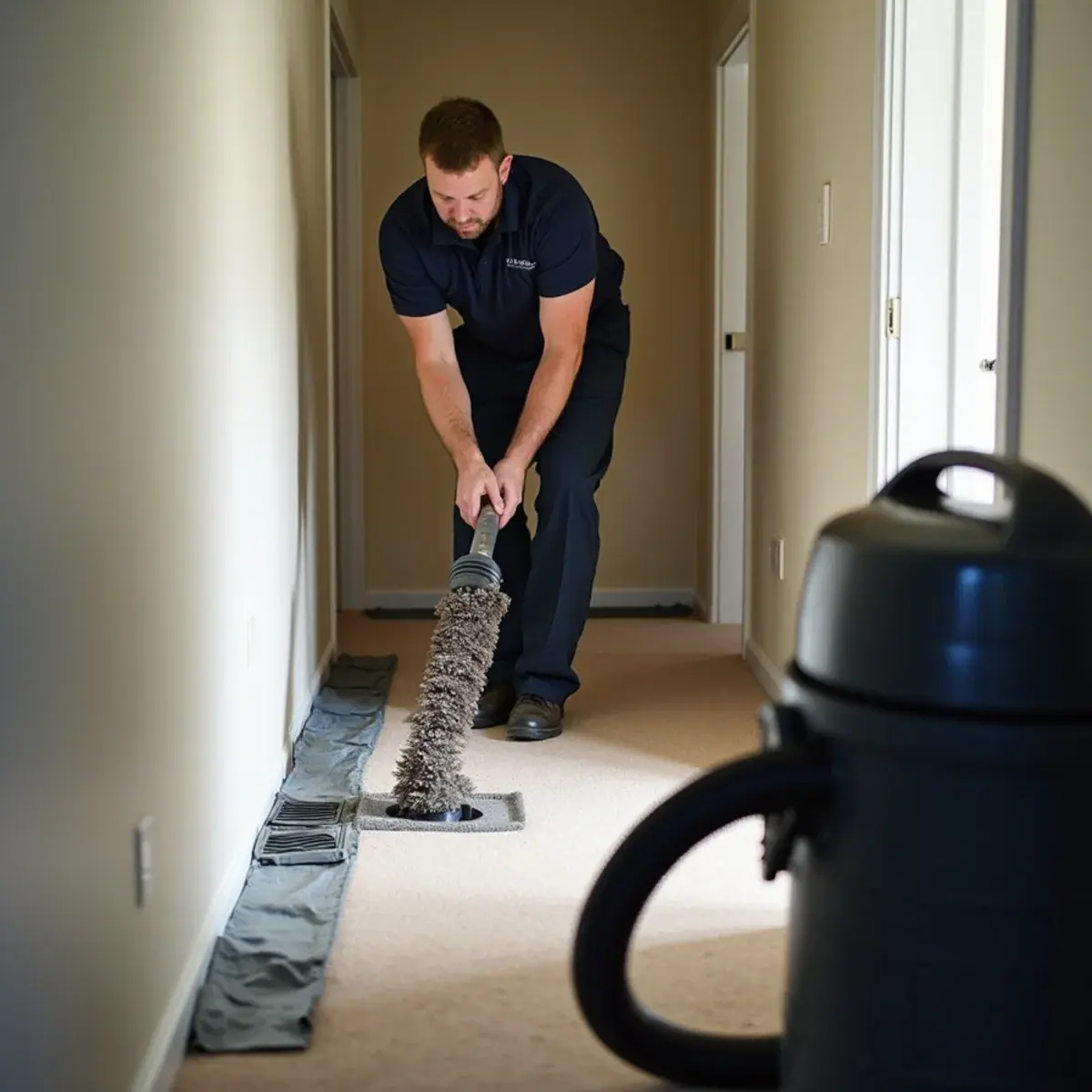
Return-duct mold remediation and sanitizing is a core part of what we do, and it’s built into our two-part maintenance for central air systems. We physically remove growth from sheet-metal surfaces, clean the coil and drain pan, and treat the area with environmentally safe, non-toxic Nu-Calgon products. Then we deal with the moisture source, because sanitizing without that step is temporary.
We’re also clear about our limits. We are HVAC technicians. If mold is growing in drywall, framing or insulation around the system, that’s a job for a licensed mold assessment and remediation contractor, and we’ll tell you so.
HVAC mold usually announces itself by smell before anyone sees it.
Musty odor when the system starts
Especially in cooling mode, when moisture on the coil stirs up odors from growth nearby.
Dark spotting at return grilles
Visible specks on the grille or the first few feet of duct behind it.
Standing water in the drain pan
A pan that doesn’t drain becomes a growth site within weeks.
Sweating ductwork
Condensation on uninsulated ducts in basements or attics wets the surrounding surfaces.
Allergy-like symptoms that ease away from home
Not proof of mold, but a reason to inspect the system alongside other causes.
High indoor humidity
Summer levels consistently above about 60 percent give mold what it needs.
Some HVAC mold is an HVAC job. Some isn’t. Before you book us, look for these signs — they mean the building needs a licensed mold assessor, not just a duct cleaning:
If any of these apply, call a New York-licensed mold assessor first. New York Labor Law Article 32 requires state-licensed assessment and remediation contractors for larger mold jobs, and the assessor and the remediator on the same project must be separate companies. We’ll clean and sanitize the HVAC system once the building-side work is done.
You should know exactly where our work starts and stops before we open a single panel. These are the deliverables of an HVAC mold job with us.
A written scope with a clear boundary
Before work begins, you get the list of components we’ll clean — return grilles, drops, plenum, coil, pan, blower — and a plain note on anything outside the HVAC system that needs a licensed mold professional instead.
The moisture source named
Every job ends with the cause identified: a sagging condensate line, a coil holding water, a return pulling damp basement air, sweating ductwork or an oversized AC. If we can’t fix it that day, you get it in writing.
Drain protection, not just a flush
Beyond clearing the condensate line, we check the trap and pitch and recommend a float safety switch where an overflow could reach a ceiling or finished floor. A drain that backs up again brings the mold back with it.
A sealed filter slot
Gaps around the filter door or a missing slot cover let unfiltered, dusty air flow straight across the wet coil. We close those gaps so the coil stays cleaner, dries better and gives mold less to feed on.
Indoor humidity measured
We take a humidity reading and tell you where it should be — the EPA suggests keeping indoor humidity below 60 percent, ideally 30 to 50. If summer readings run high, the fix may be airflow, sizing or a dehumidifier.
Porous material priced separately
Duct board, lined ductwork or flex with growth can’t be reliably cleaned. Replacement is listed as its own item with its own price, so you see what’s cleaning and what’s rebuilding.
Notes for a mold assessor, if you need one
When growth continues beyond the equipment, we describe what we saw and where, so the licensed assessor you hire starts with useful information and the HVAC cleaning can be scheduled after the building work.
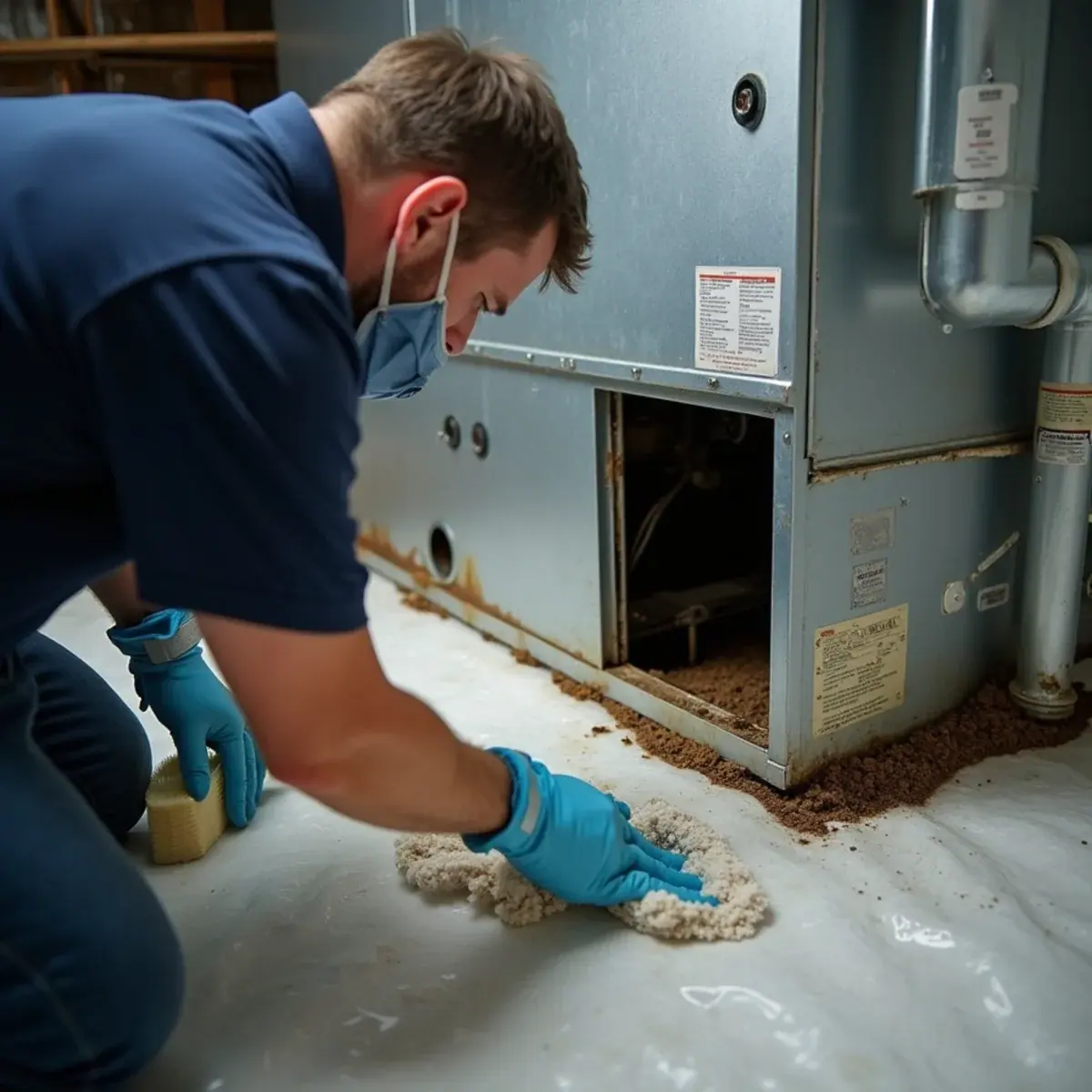
Remediation is clean, sanitize, then fix the cause — in that order, with containment throughout.
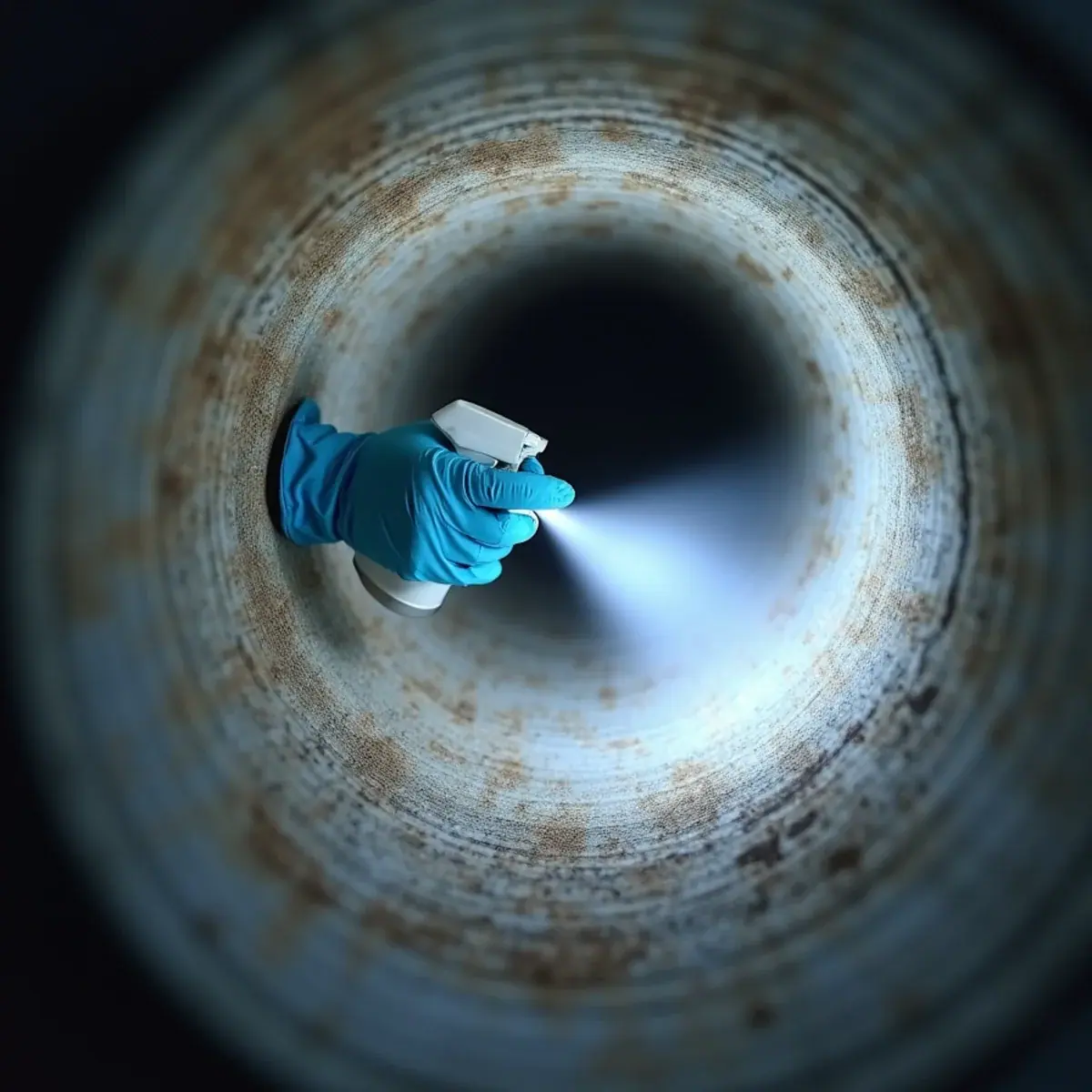
We look inside the return plenum, ducts, coil and blower, and check for moisture sources. If growth extends into building materials, we tell you before starting.
System off, work area isolated, and the ductwork kept under negative pressure so spores aren’t spread through the house.
Growth is brushed and vacuumed from metal surfaces. Contaminated porous material like duct board or flex is replaced rather than treated.
Coil, drain pan and blower cleaned, then surfaces treated with non-toxic Nu-Calgon products.
Clear and pitch the condensate line, insulate sweating ducts, seal return leaks pulling damp air, and review airflow and humidity.
Scope is everything with mold. These factors decide it.
We won’t overstate the problem to enlarge the job. If the growth is minor and caused by a clogged drain, we’ll say that — and if it’s beyond HVAC scope, we’ll refer you rather than bill for work that won’t solve it.
Nearly every case traces back to moisture the system couldn’t shed. The usual suspects are a clogged or poorly pitched condensate drain, a dirty evaporator coil that holds water, an oversized air conditioner that cools quickly but never runs long enough to dehumidify, and return ducts in damp basements that pull humid air in through unsealed joints. Low airflow from a matted filter makes the coil colder and wetter still.
Our post on mold in return ducts covers causes and health considerations in more detail. Routine HVAC maintenance — clean coil, clear drain, fresh filter — prevents most of it.
Our work covers the inside of the HVAC system: ducts, plenums, coil, pan and blower. If mold is in walls, ceilings, subfloors or insulation, the source is usually a building moisture problem — a roof leak, a foundation issue, a plumbing leak — and New York requires licensed mold assessment and remediation contractors for larger jobs. We’ll coordinate with them so the HVAC side is cleaned after the building work is done, not before.
For general dust and debris rather than mold, see our air duct cleaning service. We handle mold calls throughout the area, including older homes in Scarsdale and Harrison, where basement air handlers are common. If a high-humidity summer is the root cause, our AC repair team can look at system sizing and airflow.
A vague line that says “sanitize ducts” can mean a thorough job or a fogger and a fan. A clear estimate — from us or anyone — should list:
Line by line
Be cautious with any estimate that treats duct fogging alone as mold remediation, or that quotes whole-house mold work under an HVAC company’s name without mentioning New York’s licensing rules.
Most return-side mold comes back because one of these slipped. Check them through the cooling season:
Prevention
It’s part of our regular maintenance
Return-duct mold remediation and sanitizing is one half of our two-part maintenance on central systems, alongside pulling and cleaning the burners. We do this work every season, not once in a while as an add-on.
Non-toxic Nu-Calgon treatments
As a Nu-Calgon certified and Certified Green company, we sanitize with environmentally safe, non-abrasive products after physical cleaning. Whatever touches the inside of your ducts ends up in the air your family breathes, so product choice matters here more than anywhere.
Straight answers about our limits
We’re HVAC technicians, and we say so. When growth has spread into drywall, framing or insulation, we tell you it’s a job for a licensed mold contractor under New York law rather than billing you for a duct treatment that can’t solve it.
Experience that finds the real cause
Every technician has at least 15 years in the trade. Recognizing an oversized AC that never dehumidifies, or a return drawing air from a damp crawlspace, is what keeps a sanitized system from growing mold again next July.
Where we work
We provide duct mold remediation in White Plains and these nearby communities — plus the rest of Westchester County.
Mold in the air handler tracks with humidity and damp basements. Homes near Long Island Sound in Larchmont and Port Chester fight muggy summer air, and many older houses in Pelham and Mount Vernon keep the air handler in a basement where the return pulls damp air across the coil.
Along the Hudson, hillside houses in Dobbs Ferry often have basements dug into the slope, and those walls can stay damp well into summer. In each of those towns, the fix is the same pairing: clean and sanitize the HVAC side, then deal with the water that caused it.
FAQ
It can aggravate allergies and asthma, and some people are more sensitive than others. The practical concern is that the HVAC system spreads whatever grows inside it throughout the house. That’s why we clean and sanitize the affected components and fix the moisture source rather than just spraying something and leaving. If anyone has symptoms, talk with a doctor as well.
Spraying alone doesn’t remove growth, and dead mold can still trigger allergies. Effective remediation means physically cleaning surfaces, replacing contaminated porous material, then sanitizing with an appropriate product. We use non-toxic Nu-Calgon treatments after cleaning, never as a substitute. Without correcting the moisture, growth returns regardless of what is sprayed.
Because the moisture source is still there. Common culprits are a condensate line that clogs or backs up, a return pulling damp basement air through unsealed seams, uninsulated ducts that sweat, or an oversized AC that doesn’t dehumidify. We look for all of these during remediation and fix what we find so the cleaning actually lasts.
No. Our remediation covers the HVAC system itself. Mold in building materials such as drywall, framing or insulation needs a licensed mold assessor and remediation contractor, which New York requires for larger jobs. We’re happy to coordinate with them and to clean and sanitize the ductwork once the building-side work is complete.
No. Return-duct sanitizing cleans and treats the inside of the HVAC system: grilles, return ducts, plenum, coil, drain pan and blower. Whole-house remediation deals with mold in building materials and, in New York, larger jobs require a state-licensed assessor to write the plan and a separate licensed remediator to carry it out. We do the first and coordinate with the second.
For growth we can see on metal surfaces, a test won’t change the work — it has to be removed either way. Testing makes sense when you smell mold but can’t find it, when someone’s health is affected, or when growth may extend into the building. In those cases, hire an independent New York-licensed mold assessor first.
A UV-C lamp aimed at the coil can limit growth on the surfaces it shines on, but it doesn’t reach inside ducts and does nothing about the water causing the problem. If the drain backs up or the return pulls damp air, mold returns regardless. Fix the moisture first; treat any light as a supplement, not the solution.
Written by the Bella Family Air Solutions team · Last reviewed . Planning ranges, permit and rebate guidance are reviewed at least quarterly.
Related services
Source-removal duct cleaning done by HVAC technicians, using environmentally safe, non-toxic Nu-Calgon products — and an honest opinion about whether your ducts need it at all.
Learn moreSpring and fall maintenance built around our two-part service: burners pulled and cleaned, return ducts sanitized and every safety control tested.
Learn moreCentral air repair and installation by EPA Universal certified technicians who test before replacing parts and give you real options on older systems.
Learn morePrevention
Musty smell when the system kicks on? Return ducts in damp basements are a common home for mold. Here’s what causes it, why it matters and how it’s treated safely.
Prevention
There is no single right interval for duct cleaning. Here’s what the EPA and NADCA actually say, the signs that mean it’s time, and when you can skip it.
Tell us what your system is doing and we'll get a technician with 15+ years of experience on the way. Clear explanation, written options, no pressure.
Bella Family Air Solutions · 18 Jefferson Pl, White Plains, NY 10603 · (831) 461-3437