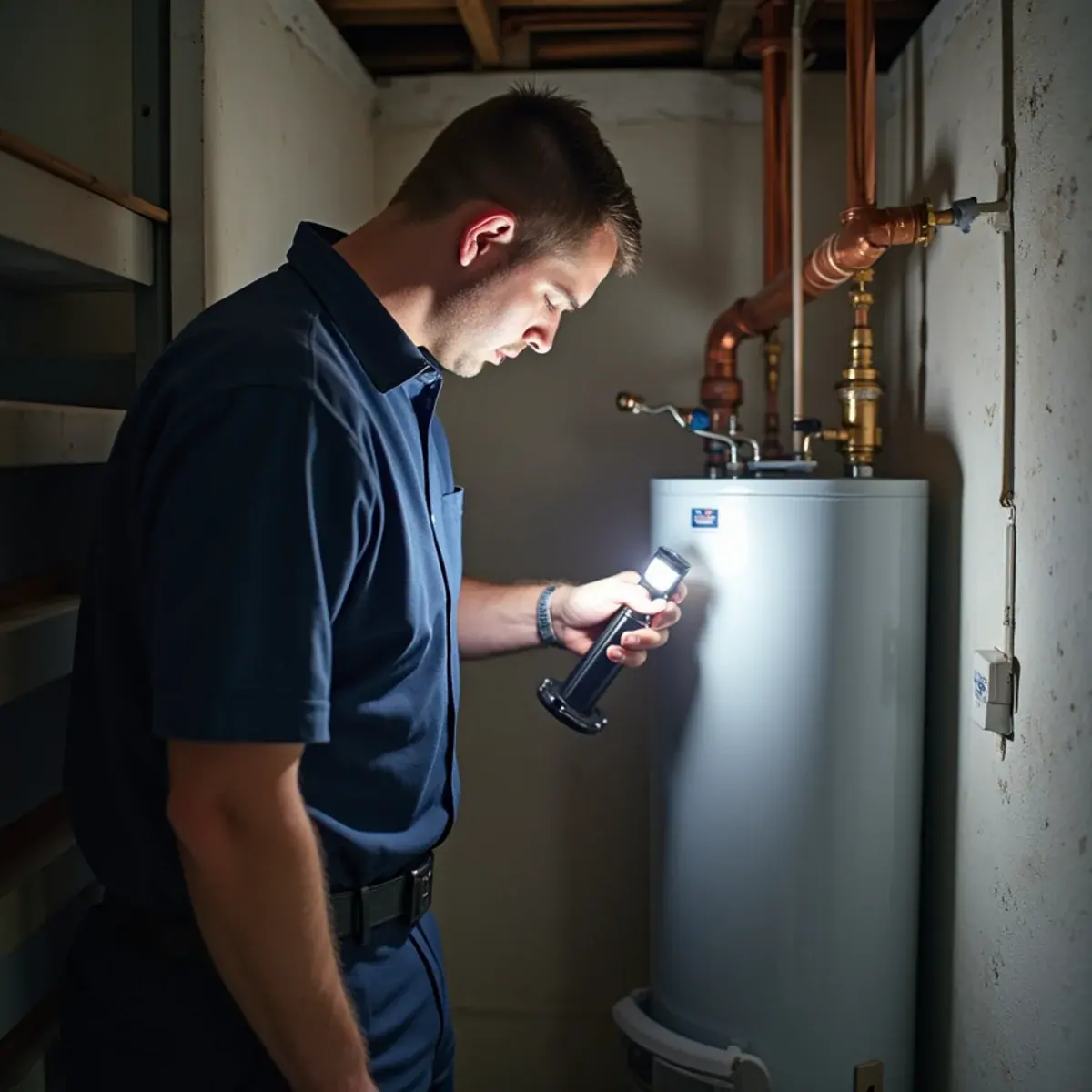
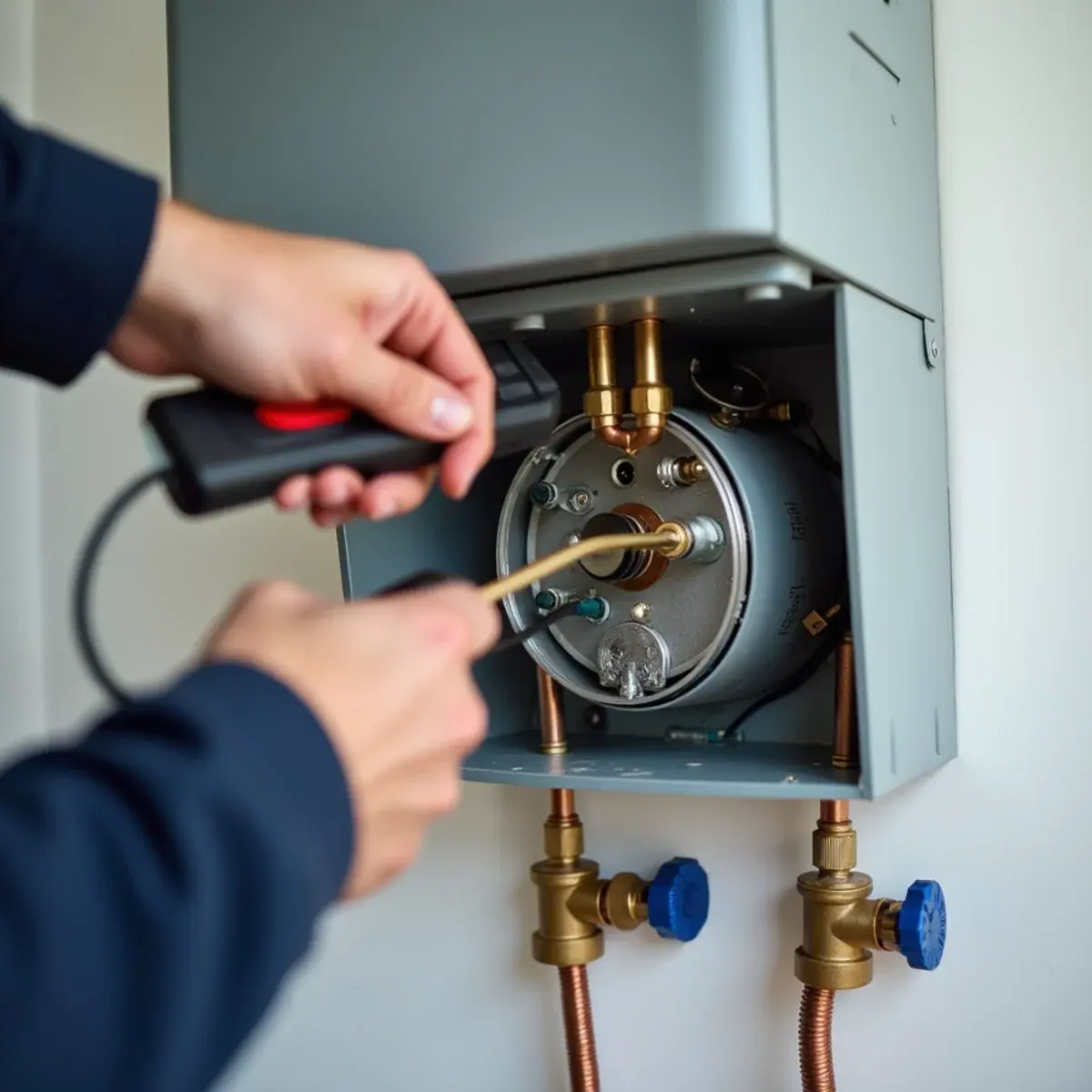
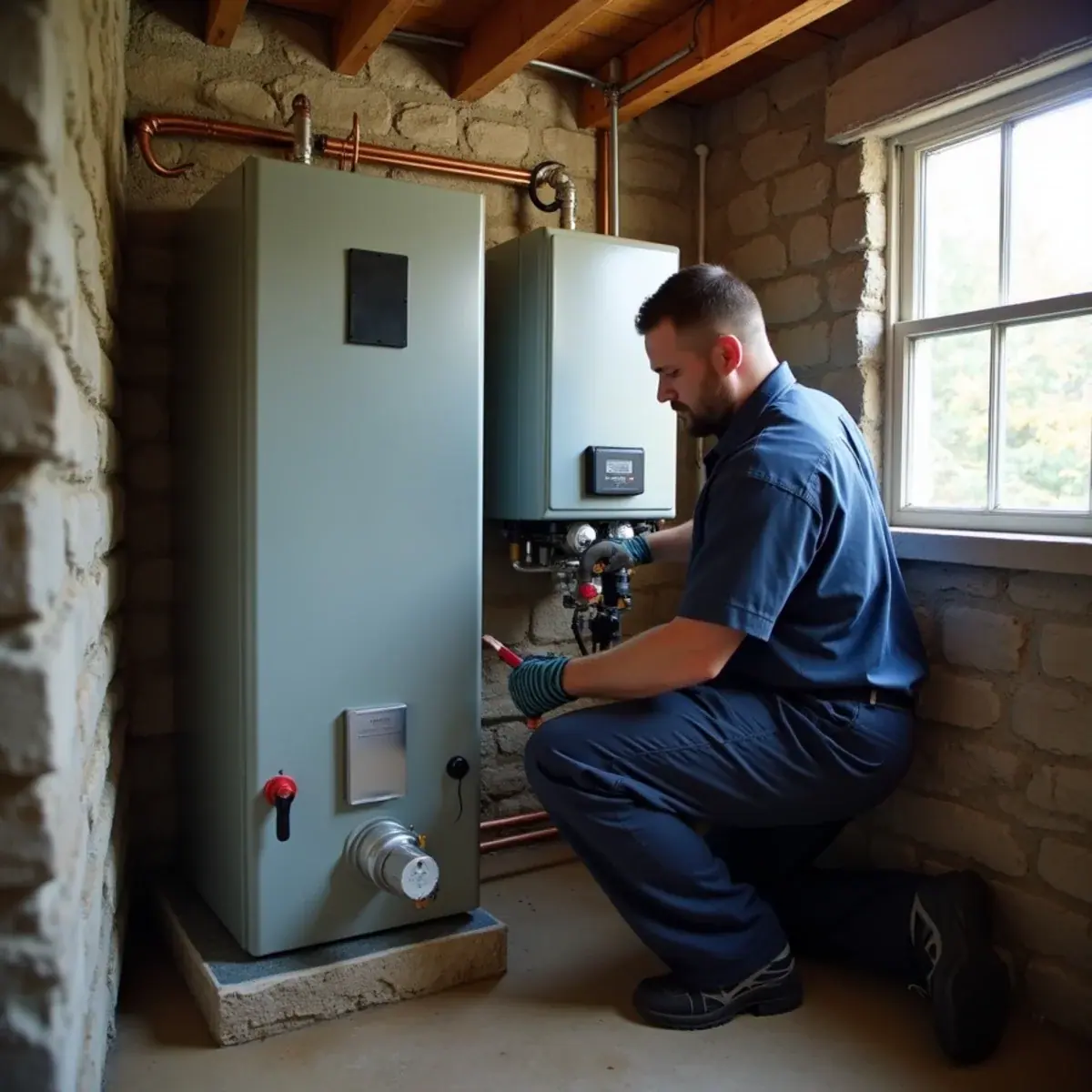
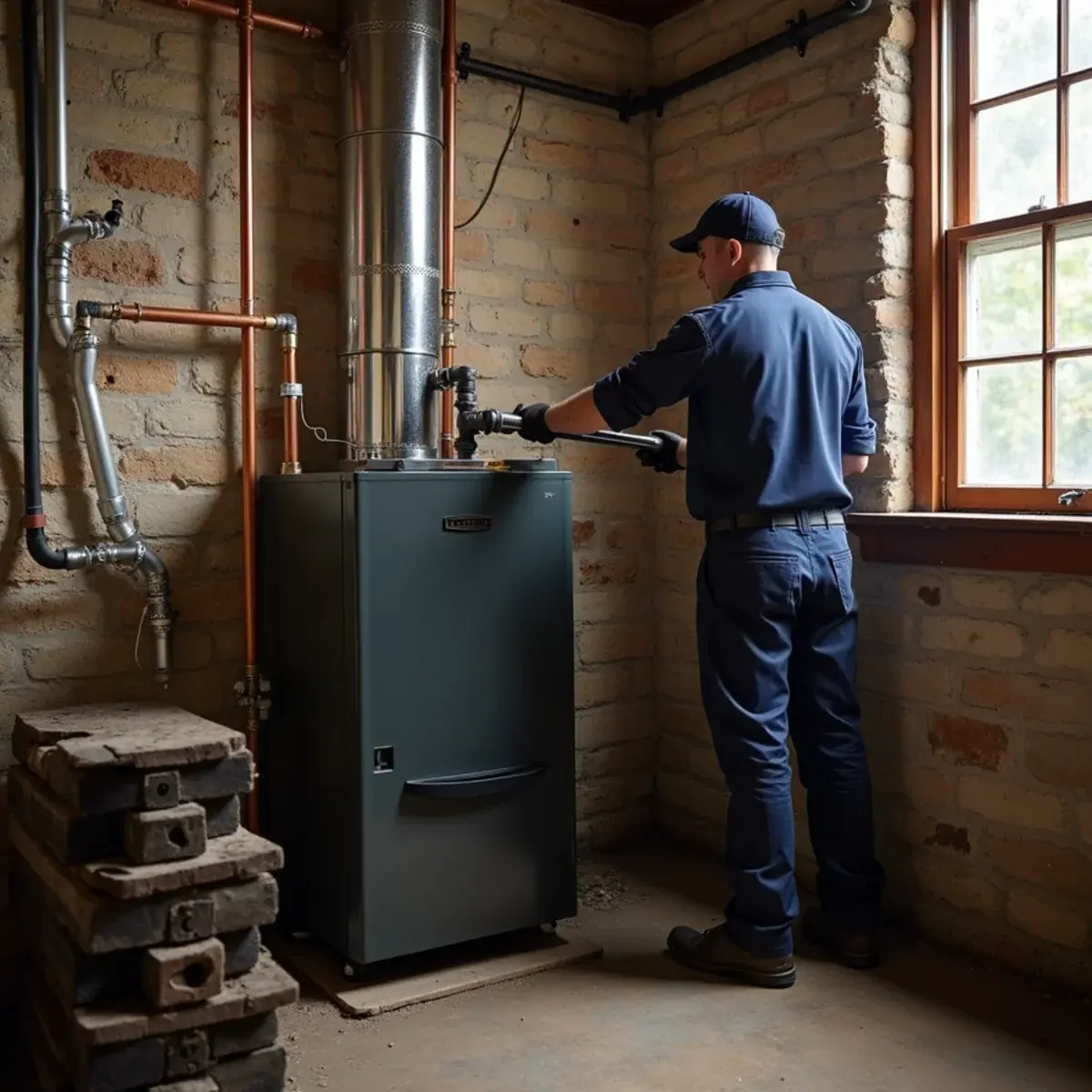
Water heater repair in White Plains, NY usually starts with a pilot that won’t stay lit, a burnt element, a leaking valve or hot water that runs out too fast. Bella Family Air Solutions repairs tank, tankless and indirect heaters on gas, oil and electric, checks venting and relief valves on every visit, and tells you plainly when a tank is beyond repair.
Hot water is the utility you notice only when it’s gone. In Westchester basements we find nearly every kind of water heater: atmospheric gas tanks, power-vented tanks, electric units, oil-fired tanks, wall-hung tankless heaters, indirect tanks heated by the boiler and older tankless coils built right into the boiler itself.
Each one fails in its own way, and some of them are really part of your heating system. That’s why we handle water heaters as HVAC work: an indirect tank that’s lukewarm may point to a boiler problem rather than the tank, and an oil-fired heater needs the same care as an oil burner. We serve homes across White Plains and Greenburgh, and we take emergency water heater calls through our 24-hour line.
Water Heater Problems Worth a Call
Some are simple repairs. A few mean the tank has reached the end.
No hot water at all
On gas tanks, often a failed thermocouple or pilot assembly; on electric units, a burnt element or tripped high-limit.
Hot water runs out fast
Sediment filling the bottom of the tank, a broken dip tube or a failed lower element on an electric heater.
Rumbling or popping
Water trapped under sediment flashing to steam. Flushing may help if it’s caught early.
Water at the base of the tank
Check the relief valve and fittings first. If the tank itself is leaking, it has to be replaced.
Rotten-egg smell in hot water
A reaction between the anode rod and bacteria in the water. Changing the anode usually fixes it.
Tankless unit showing error codes
Frequently scale buildup in the heat exchanger or an ignition fault. Regular descaling prevents most of them.
Leaking tank or no hot water? What to do right now
Smell gas, hear a CO alarm or see scorching around the burner? Get everyone out and call 911 or your gas utility from outside — skip the list. Otherwise:
Leaking tank: close the cold-water valve on the pipe entering the top of the heater, then turn the gas control to OFF (or switch off the breaker for an electric heater).
Don’t touch the relief-valve discharge pipe or the drain valve — the water can be scalding. Move stored items out of the way and let the floor drain do its job.
Gas heater, pilot out, no gas smell: follow the relighting instructions on the tank label once. If it won’t stay lit, stop — it’s usually the thermocouple or pilot assembly.
Electric heater: check its breaker once. If it trips again, leave it off.
Tankless unit: write down the error code on the display before power-cycling anything.
Indirect tank tied to the boiler: check whether the boiler is running and heating the house — a lukewarm indirect tank is often a boiler problem, not a tank problem.
Stop there and call if the pilot won’t hold, the breaker trips again, the relief valve keeps discharging or water is coming from the tank body. A tank that leaks through its shell can’t be repaired — it has to be replaced.
If water reached finished floors, walls or stored belongings, photograph everything — the tank label, the leak and the damage — before cleanup, and keep our diagnosis and invoice. Your insurer decides coverage; we document what we find and the work we do. More in our home warranty and claims guide.
What a water heater service call covers
Getting hot water back is the goal. These are the safety and condition checks that come with the repair, because a water heater mixes fire, pressure and scalding water in one small appliance.
Relief valve and discharge pipe
We confirm the temperature-and-pressure relief valve isn’t weeping or corroded and that its discharge pipe is the right size, unobstructed and ends near the floor. A capped or missing discharge pipe is one of the most dangerous things we find.
Sediment level and drain valve
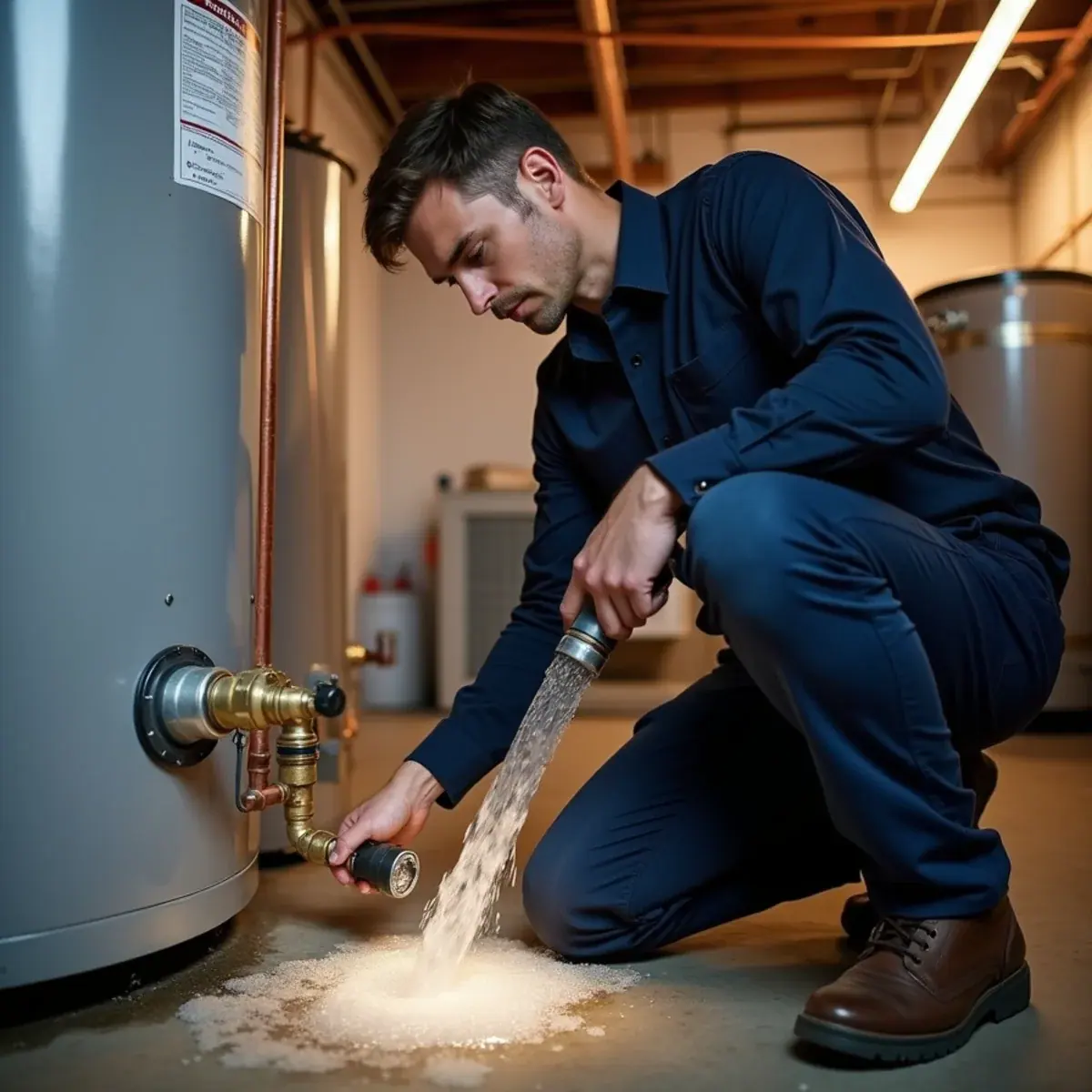
A short test flush shows how much sediment has settled in the tank. If a flush is still worthwhile, we say so; if the drain valve is clogged or brittle plastic, we note it before it becomes the leak you find on a Sunday.
Anode rod condition where accessible
The anode is the part that corrodes so the tank doesn’t. When it can be pulled safely, we check how much is left. Replacing a spent anode on a healthy tank is one of the few repairs that genuinely extends its life.
Gas shutoff, connector and sediment trap
On gas heaters we check that the shutoff valve turns, the flexible connector is in good shape and a sediment trap protects the gas valve. Debris in an unprotected gas line is a common cause of repeat gas-valve failures.
Thermal expansion protection
Homes with a check valve or backflow preventer on the water main need an expansion tank, or pressure climbs every time the heater fires. We test the tank’s charge where one exists and tell you if one is missing.
Clearances and combustion air
Paint cans, laundry and storage boxes pile up around basement heaters. We point out anything flammable too close to the burner and confirm the heater can draw enough combustion air, which matters in closets and finished basements.
Scald protection on boiler-fed hot water
Indirect tanks and boiler tankless coils can deliver water far hotter than a standard tank. We check the mixing valve that tempers it, so a boiler set for heating doesn’t send dangerously hot water to the bathroom tap.
How We Handle a Water Heater Call
Safety comes first, because water heaters combine gas, fire, pressure and venting in a small space.
1
Identify the system
Fuel, venting type, capacity, age from the serial number and whether it’s tied to the boiler.
2
Check venting and draft
Atmospheric heaters must draft properly up the chimney. We test for spillage and CO.
3
Diagnose the fault
Thermocouple, gas valve, elements, thermostats, anode and relief valve are tested individually.
4
Repair or recommend
You get the finding and the options, including whether repair is worth it on an older tank.
5
Test and set
We confirm hot water at the tap and set a safe tank temperature, typically around 120°F.
What Drives Water Heater Cost
Repair and replacement costs vary with the type of heater and the condition of what’s around it.
Type of heater. Tankless and indirect systems involve more components than a standard tank.
Fuel and venting. Power-vent units and chimney liners add parts and labor.
Code updates. A replacement may require a new expansion tank, relief discharge piping or gas shutoff.
Access. Tight closets and crawlspaces make removal and installation slower.
We explain the options and their cost before starting work. A leaking tank can’t be repaired; we’ll tell you so and discuss replacement choices that fit your household.
Tank, Tankless or Indirect?
A standard tank is the simplest and least expensive to install. Tankless heaters save space and never run out, but they need adequate gas supply, dedicated venting and annual descaling. If your home has a hot-water boiler, an indirect tank often makes the most sense: the boiler heats the water through a coil, so there’s no separate burner to maintain.
Every tank water heater has a temperature-and-pressure relief valve. It should have a discharge pipe running to within a few inches of the floor, and it should never be capped. On gas heaters, a backdrafting vent can push carbon monoxide into the basement, which is why we test draft on every visit. If you smell gas or a CO alarm sounds, leave the house and call 911 or your utility before calling us.
Most tanks last around 10 to 12 years. Past that point, a small leak or a failed gas valve is often a signal to replace rather than repair. Annual flushing as part of HVAC maintenance can stretch that lifespan.
Replacing a water heater? What the quote should include
A water heater swap looks simple until the venting, gas line or code items come up after the old tank is out. Before you compare prices, check each quote for:
Line by line
Type, fuel and size — gallons and first-hour rating for tanks, flow rate (GPM) for tankless — matched to your household, not just the old label
Efficiency rating (UEF) and the tank or heat-exchanger warranty length
Venting: chimney connection or liner for atmospheric gas and oil heaters, PVC or stainless venting for power-vent and tankless units
Whether a water heater will be left “orphaned” alone in a large chimney after a furnace or boiler upgrade — that often needs a liner to draft safely
Gas-line sizing for tankless units, and a gas shutoff and sediment trap at the heater
Expansion tank, temperature-and-pressure relief discharge pipe run to within a few inches of the floor, and a drain pan where a leak could damage finished space
For indirect tanks: the boiler zone, priority control and aquastat settings
Whether a permit is required and who obtains it — confirm current requirements with the White Plains Building Department at 255 Main Street
Removal and disposal of the old heater
Startup: draft and CO test on fuel-fired units, leak check, and tank temperature set around 120°F — with results recorded
Manufacturer warranty (and registration), labor warranty and workmanship coverage
Westchester homes run the full range: tankless coils built into older boilers in pre-war houses around Scarsdale and Bronxville, indirect tanks off newer boilers, and closet-mounted units in Downtown White Plains condos where a leak affects the neighbors below. Harder water in parts of the Hudson Valley shortens tank life and scales tankless heat exchangers — our tank vs. tankless guide covers descaling and which type fits your home.
Why homeowners pick an HVAC contractor like Bella Family Air Solutions for water heater repair
We see the heating side of hot water
Many Westchester homes make hot water from the boiler, through an indirect tank or a coil. A plumber may replace a tank that isn’t the problem. We service boilers every day, so we check the heating side first and fix the actual cause of lukewarm water.
Draft and CO testing is routine for us
Combustion and venting are core HVAC skills. On gas and oil water heaters we test draft and carbon monoxide as a matter of course, because a backdrafting heater in a tight basement is a safety problem long before it’s a hot-water problem.
A real person answers when the tank lets go
Tanks tend to fail with water on the floor, not with a warning. Our 24-hour line is answered by a person who walks you through shutting off the water and fuel while a technician is arranged.
Used to home warranty claims
Water heaters are a frequent home warranty claim, and many of our calls come through warranty companies. We document the model, serial number, failure and approved work clearly, and explain which parts of the job the warranty covers before starting.
Where we work
Water Heater Repair near you
We provide water heater repair in White Plains and these nearby communities — plus the rest of Westchester County.
Hot-water setups follow the housing stock. Pre-war homes in Pelham, Larchmont and Tuckahoe often still draw hot water from a coil in the boiler, while condos and apartments in White Plains and New Rochelle put tank heaters in closets where a leak reaches the unit below.
In northern Westchester and Putnam, many homes in Bedford, Pound Ridge and Carmel run on private wells, and mineral-heavy well water shortens tank life and scales tankless heat exchangers faster. Our tank vs. tankless guide covers what that means for replacement choices.
Why does my water heater pilot light keep going out?
On older gas water heaters, the most common reason is a worn thermocouple that no longer holds the gas valve open. Drafts, a dirty pilot orifice or a venting problem can also cause it. Relighting it repeatedly without fixing the cause isn’t safe if venting is involved, so we test draft and CO along with replacing the failed part.
Can a leaking water heater be repaired?
It depends where the water is coming from. A leak at the relief valve, drain valve or a pipe fitting is repairable. A leak from the tank body means the lining has failed, and the only fix is replacement. Turn off the water supply and the gas or power to the heater, and we’ll confirm the source.
Do you install tankless water heaters?
Yes. We install and service tankless units, including the gas line sizing, venting and condensate drainage they require. We’ll check whether your gas meter and piping can supply a high-demand unit before recommending one. We also recommend a descaling service every year or two, because hard water scale is the main cause of tankless failures.
How long do water heaters last?
A standard tank typically lasts 10 to 12 years, sometimes longer with regular flushing and anode replacement. Tankless units and indirect tanks can last considerably longer when maintained. If your tank is past 10 years and showing rust at the fittings or rumbling, it’s worth planning a replacement before it fails on its own schedule.
Do I need a permit to replace a water heater in White Plains?
Replacing a water heater — especially when the fuel, venting or gas piping changes — may require a permit and inspection. Requirements change, so confirm them with the White Plains Building Department at 255 Main Street, and make sure your quote says who obtains the permit and schedules the inspection.
Will insurance cover damage from a leaking water heater?
That’s your insurer’s decision, not the contractor’s — sudden leaks are treated differently from slow, long-term ones. Photograph the tank label, the leak and any damage before cleanup, and keep the diagnosis, estimate and invoice. We document what we find and the work we complete so you have clear records for the claim.
Should I replace my water heater when I replace my boiler?
Often it’s worth pricing together. A new hot-water boiler can heat an indirect tank with no separate burner to maintain, and removing the boiler’s old tankless coil usually improves efficiency. If the existing water heater is newer and in good shape, it can stay — but check that it will still vent safely if the boiler’s chimney connection changes.
Why is my hot water rusty or brown?
If only the hot side is discolored, the source is usually inside the heater: a depleted anode rod letting the tank corrode, or sediment stirred up after a long idle. If both hot and cold water are brown, look to the water supply or old galvanized pipes instead. Rust from a tank that’s over ten years old often means replacement is close.
Can I just turn up the water heater to get more hot water?
Raising the temperature stretches the supply a little, but above about 120°F the scald risk rises quickly, especially for children and older adults. If you run out regularly, the cause is often sediment, a failed element or dip tube, or a heater too small for the household. A mixing valve can allow a hotter tank safely when it’s justified.
Why does my tankless water heater go cold in the middle of a shower?
Common causes are a flow rate below the unit’s activation point, often from a low-flow fixture or a clogged inlet screen, scale on the heat exchanger, or a gas supply too small for the unit at full fire. Running several fixtures at once can also exceed its capacity. The error code history usually tells us which one it is.
Written by the Bella Family Air Solutions team · Last reviewed . Planning ranges, permit and rebate guidance are reviewed at least quarterly.
Tankless heaters save space and standby losses, but cold winter water, gas line sizing and hard water change the math. Here is how tank, tankless, indirect and heat pump models compare locally.
Boiler replacement cost in New York depends on far more than the boiler. Here’s how steam vs. hot water, fuel type, chimney liners, piping, permits and tank removal shape the price.