Local
Living With Steam Heat in Scarsdale and Bronxville's Pre-War Homes
By Bella Family Air Solutions 4 min read
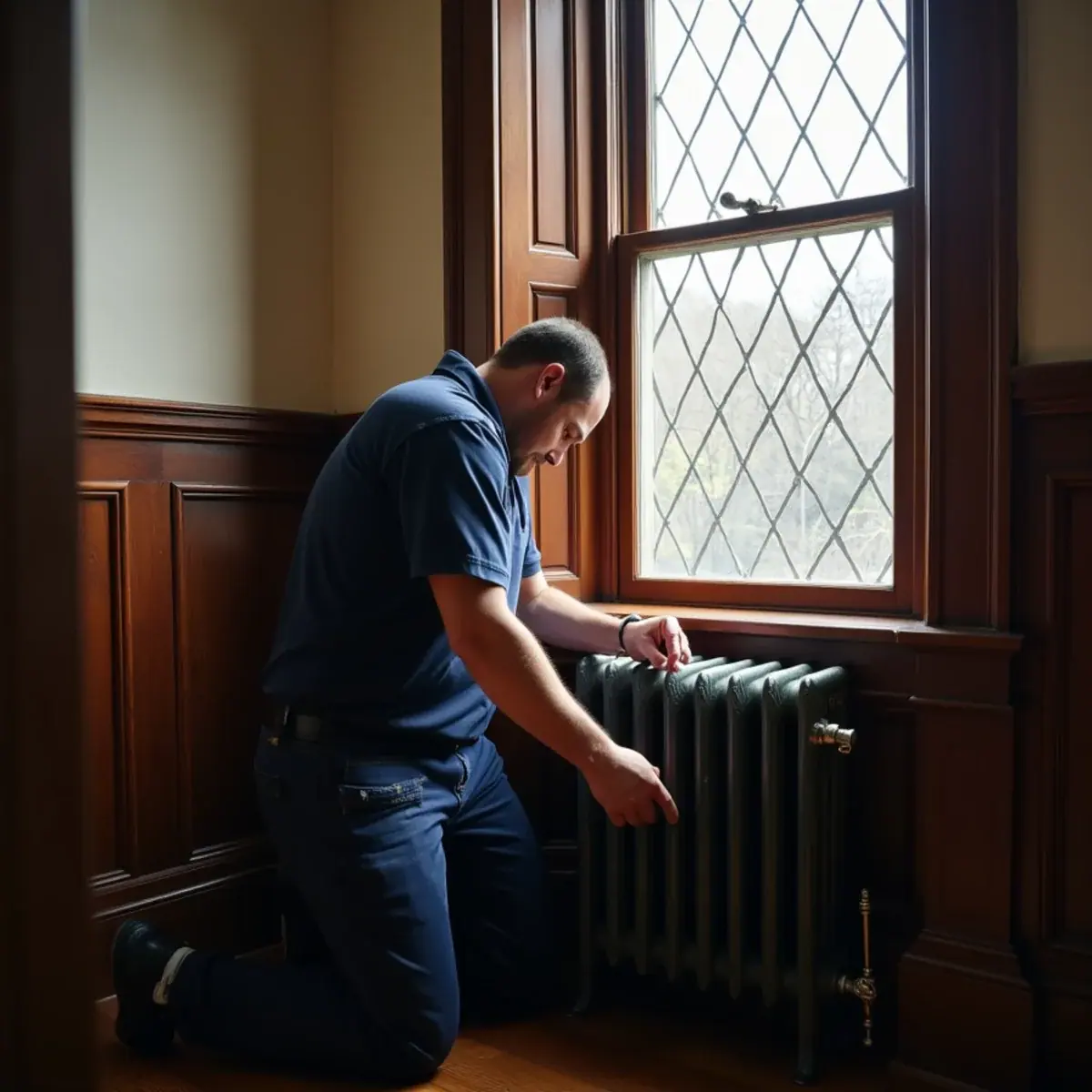
Steam heat in pre-war homes around Scarsdale is not a problem to be solved; it is a system to be understood. Many of the Tudors, colonials and stucco houses built between the world wars still heat with their original cast-iron radiators and piping. When those systems are tuned correctly they are quiet, even and remarkably durable. When they are not, you get clanking pipes, spitting vents and cold bedrooms. The difference is almost always a handful of fixable details.
We work on these systems regularly in Scarsdale and Bronxville, and the same issues come up again and again. Here is what matters.
How a One-Pipe Steam System Works
Most older homes here have one-pipe steam. The boiler makes low-pressure steam that rises through a single pipe to each radiator. As steam enters, air has to escape through a vent on the radiator. The steam gives up its heat, condenses into water, and that water drains back down the same pipe to the boiler. Everything depends on two things: air getting out quickly, and water draining back without obstruction.
Main Vents and Radiator Vents
Main vents come first
The large vents near the end of each steam main in the basement are the most important and most neglected parts in the house. Their job is to push air out of the mains quickly so steam reaches every radiator at about the same time. When they are clogged, painted over or missing, the radiators closest to the boiler heat first and the far rooms stay cold. Adding or replacing main venting is often the single best improvement for an uneven steam system.
Radiator vents balance the rooms
Each radiator vent controls how fast that radiator fills. Adjustable or sized vents let us slow down radiators near the boiler and speed up the far ones. A vent that hisses constantly, spits water or stays shut when cold usually needs replacement. Never paint over a vent, and make sure it stays upright.
Pitch and Water Hammer
That loud banging, known as water hammer, happens when steam slams into water that is sitting where it should not be. In a one-pipe system, condensate has to flow back against the steam, so pitch is critical.
- Steam mains must slope so condensate drains toward the return end and back to the boiler.
- Radiator runouts must pitch back toward the main.
- Radiators themselves should tilt slightly toward the supply valve so water can leave. A shim under the far legs often cures a noisy radiator.
- Houses settle over nearly a century. Joists sag, hangers loosen, and a pipe that was pitched correctly in the 1920s may now hold a puddle.
- One-pipe radiator valves should be fully open or fully closed. Half-closed valves trap water and cause banging.
Pressure: Lower Is Better
Residential steam systems were designed to run at very low pressure, usually well under two psi. The pressuretrol on the boiler controls this. We regularly find them cranked much higher, often because someone tried to push heat to cold rooms. High pressure actually makes things worse: vents close too early, steam moves more slowly and noise increases. Proper settings commonly have a cut-out around 1.5 psi or less. Some homes benefit from a vaporstat for even finer control.
Low-Water Cutoff Blowdown
The low-water cutoff shuts the burner off if water in the boiler drops too low, preventing a cracked or damaged boiler. Float-type cutoffs collect sediment and must be flushed, or blown down, on a regular schedule during heating season according to the manufacturer. Probe-type cutoffs need periodic cleaning and inspection. If you are not sure which type you have, ask during your next service visit so we can show you.
Skimming After a New Boiler
A new steam boiler, or even significant new piping, brings cutting oil and residue into the system. Oil on the water surface causes surging: the water line bounces, steam turns wet, and heating slows while pipes bang. Skimming through the boiler’s skim port removes that film. It may take more than one session over the first weeks of operation. Skipping it is one of the most common reasons a brand-new steam boiler seems to perform worse than the old one.
Myths We Hear About Radiators
- “Radiator covers make the room warmer.” Most decorative covers reduce output by blocking convection. If you keep them, choose open designs and leave space above and in front.
- “Insulate the radiators to save heat.” Radiators are meant to shed heat into the room. Insulating them defeats their purpose.
- “Insulating pipes is a waste.” The opposite is true for steam mains in the basement. Insulating the mains helps steam reach the radiators faster and reduces condensation along the way.
- “Turn up the pressure for more heat.” This usually creates more noise and less even heat.
Service That Respects the System
Our steam heating service starts with the basics: water line, pressure control settings, low-water cutoff, main and radiator venting, and pipe pitch, before any major replacement is discussed. For burner and boiler work, our boiler repair team cleans and adjusts the burner and confirms safety controls. If the house has no heat, our no-heat repair is available around the clock. For a quick troubleshooting list, see what to check when a steam boiler won’t fire.
Is Your House One-Pipe or Two-Pipe Steam?
Look at any radiator. One pipe at the bottom plus an air vent on the side means one-pipe steam, the most common setup here. Two pipes, one entering near the top through a valve and one leaving at the bottom through a small round fitting, and no air vent on the radiator, means a two-pipe or vapor system. Some of the larger houses built in the 1920s have vapor systems.
- Two-pipe systems use steam traps on each radiator outlet. A trap that fails open lets steam into the return lines, which causes banging, hot returns and a boiler that runs longer than it should.
- Traps have replaceable elements. Testing them one by one with a thermometer is slow work, but it often cures a house that one-pipe advice never fixed.
- Never add a one-pipe air vent to a two-pipe radiator. The system vents air centrally, and the wrong vent throws off the whole balance.
Notes from our steam technicians on replacement boilers and old piping
The biggest steam mistake we see isn’t a bad vent. It’s a replacement boiler sized the wrong way. Hot-water boilers are sized to the heat loss of the house, but a steam boiler has to fill every radiator and pipe with steam, so it’s sized to the connected radiation. That means measuring every radiator, room by room, and looking up its rating. A boiler picked by matching the old nameplate, or by square footage, can leave the far rooms cold or short-cycle on pressure.
Near-boiler piping matters as much as the boiler. Manufacturers publish minimum header sizes and riser heights so the steam leaving the boiler is dry. When an installer takes shortcuts with copper or a low header, wet steam goes up to the radiators and the house bangs no matter how well the vents are set.
Down in the basement, wet returns quietly clog with sediment after decades. When the water line bounces or the boiler shuts off on low water while the gauge glass looked fine an hour earlier, a partly blocked return is a likely suspect. An automatic water feeder helps, but it can also hide a slow leak for months, so we check how much water it’s been adding.
- Ask how the replacement boiler was sized, and expect to see the radiator measurements.
- Ask for the header piping to follow the manufacturer’s diagram.
- Watch the sight glass weekly during the heating season and note any sudden drops.
Keep the Old System Working the Way It Was Built
A well-balanced steam system can heat a pre-war home comfortably for decades. Most of the fixes are simple and inexpensive compared with replacement. If your radiators bang, heat unevenly or seem slow to warm up, schedule a visit and we will walk you through what we find before touching anything.
Frequently asked questions
Why do my steam pipes bang when the heat comes on?
Banging usually comes from water trapped where steam can strike it. Common causes include sagging pipes that lost their pitch, radiators tilted the wrong way, one-pipe radiator valves left partly closed, too much water in the boiler, or oil on the water after a new install. Each is fixable once the cause is identified during a service visit.
What pressure should my home steam boiler run at?
Most residential steam systems work best at very low pressure, commonly with the pressuretrol set to cut out around 1.5 psi or less. Higher pressure rarely improves heating and often makes it slower and noisier. The right setting depends on your system, so have a steam-experienced technician confirm it rather than adjusting it upward.
Should I replace a steam system with hot water baseboard?
Not necessarily. Converting a pre-war home is costly and disruptive, and well-maintained cast-iron radiators last a very long time. Many heating complaints come from venting, pitch or pressure problems that cost far less to fix. We recommend correcting those first, then deciding whether replacement or conversion truly makes sense.
Will a smart thermostat work with my steam heat?
Usually, if it’s set up for steam. Steam radiators keep heating after the boiler stops, so the thermostat needs its steam or radiant setting, often one cycle per hour, or it will overshoot and short-cycle. Deep overnight setbacks also backfire on steam, because the recovery run is long and noisy. A modest setback of a few degrees tends to work better in a pre-war house.
Is the old white wrap on my basement steam pipes asbestos?
It might be. Many pre-war steam systems were insulated with asbestos pipe covering, often a white or gray corrugated or plaster-like wrap. Intact covering is generally left alone; damaged or crumbling sections should be tested and handled by a licensed abatement contractor before anyone works on that piping. Tell your technician about it before a visit so the work can be planned around it.