Local
Salt Air and Your AC Condenser: Sound Shore HVAC Tips for Rye and Mamaroneck
By Bella Family Air Solutions 4 min read
AC condenser corrosion in Rye and the rest of the Sound Shore is a slow, quiet problem that ends in an expensive repair. Salt carried inland on the wind settles on the aluminum fins and copper tubing of your outdoor unit, absorbs moisture, and starts eating metal. Homes within sight of the water feel it most, but salt spray travels farther than most people think. The good news is that a few habits can add real years to a condenser near the coast.
What Salt Actually Does to a Condenser
The condenser coil is made of thin aluminum fins pressed onto copper tubes, or an all-aluminum microchannel design. Salt deposits create a corrosive film. Where aluminum and copper meet, that film speeds up galvanic corrosion, and the fins begin to flake and crumble. As fins disappear, the coil rejects heat poorly, so head pressure climbs, the compressor works harder and your electric bill rises.
Eventually corrosion reaches the tubes themselves and pinhole leaks form. At that point you are no longer dealing with maintenance but with refrigerant leak repair or a coil replacement. Cabinet screws, the fan motor mount, electrical lugs and the contactor also corrode faster near salt water.
Warning signs to look for
- White, chalky residue on the coil fins.
- Fins that crumble when brushed lightly with your hand.
- Rust on the cabinet, base pan or fan guard.
- Longer run times on hot days and warmer-than-usual air from the vents.
- Oily spots on the coil or copper lines, which can indicate a refrigerant leak.
Rinse the Coil With Fresh Water
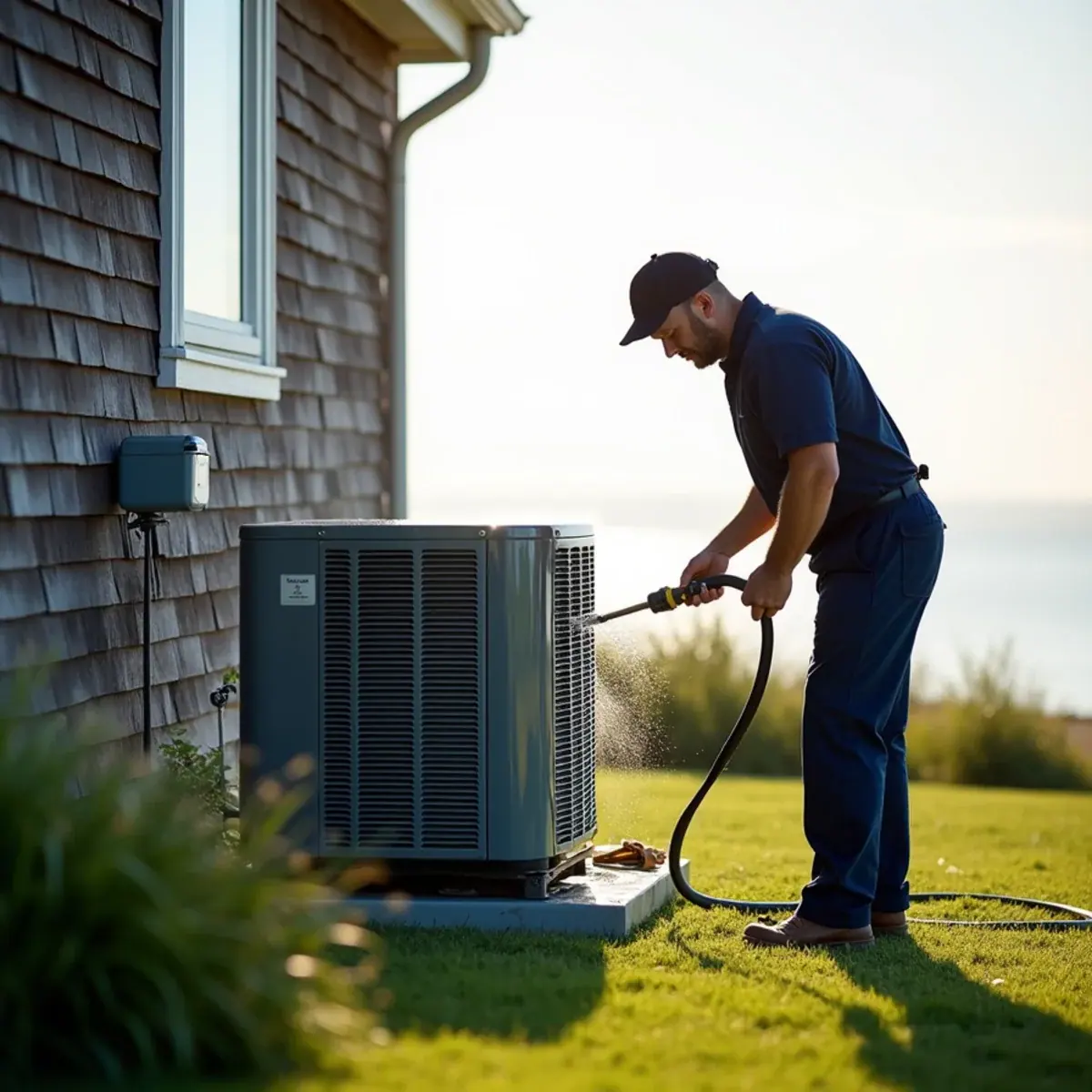
The simplest defense is washing salt off before it does damage. In Rye, around neighborhoods near Playland and the harbor, and in Mamaroneck close to Harbor Island and the shoreline, we suggest a gentle fresh-water rinse every few weeks during cooling season, and after any storm that brings spray off Long Island Sound.
- Turn the system off at the thermostat and pull the outdoor disconnect.
- Use a garden hose on a gentle setting. Never a pressure washer, which flattens fins.
- Spray the coil from top to bottom, working with the fin direction.
- Rinse the base pan and remove leaves and grass clippings.
- Let it dry for a few minutes, then restore power.
Coated Coils and Coastal Equipment
If you are replacing a condenser near the water, ask about corrosion protection. Many manufacturers offer factory-coated coils or coastal packages that add protective coatings to fins, cabinets and fasteners. Field-applied coatings are another option for an existing unit that is still in good condition. They are not armor, and rinsing is still necessary, but they slow the damage and are usually much cheaper than a new coil years early.
Placement matters too. A condenser facing directly into the prevailing wind off the water gets hit harder than one tucked behind the house. A fence or planting can block some spray, but keep at least a couple of feet of clearance so the unit can breathe.
Repair or replace a corroded condenser?
Light fin corrosion on a unit that still cools well is a maintenance issue. A coil with active leaks is different, especially on an older system that uses R-22, which is no longer produced and is costly to recharge. In those cases we lay out the options side by side: coil replacement, a new condenser matched to your indoor equipment, or a full system change. The decision depends on age, efficiency and what else is wearing out.
Elevating the Unit
Low-lying parts of the Sound Shore flood during coastal storms and heavy rain. A condenser sitting on a slab at grade can be submerged, and salt water inside the electrical compartment usually means major repairs. Raising the unit on a higher pad or a wall-mounted bracket keeps it above typical high water. If you are in a mapped flood zone, local codes may require new equipment to be installed above a certain elevation, so check before replacing.
Hurricane and Storm Prep
- Before a big storm, turn the system off at the thermostat and the disconnect.
- Make sure the unit is strapped or anchored to its pad.
- Clear loose items such as furniture and grills that could blow into it.
- Do not cover the unit with plastic during the season. It traps moisture.
- After flooding or heavy spray, rinse the coil with fresh water. If water reached the electrical parts, have it inspected before running it.
What a Coastal AC Tune-Up Should Include
Our AC repair and installation team pays extra attention to condensers near the water. A spring or early-summer visit typically includes coil cleaning and rinsing, checking refrigerant pressures and temperatures, testing capacitors and the contactor, tightening and inspecting electrical connections for corrosion, and checking the fan motor. Our HVAC maintenance visits go further with two-part maintenance, which adds burner cleaning on the heating side plus mold remediation and sanitizing of the return ducts. We work on central air systems, including split systems and heat pumps. We do not service window units, wall units or PTAC units.
Does the Manufacturer’s Warranty Cover Salt Corrosion?
Often it doesn’t. Many equipment warranties exclude damage caused by a corrosive atmosphere, and salt air near the shoreline can fall under that wording. Some brands sell coastal-rated models or coil coatings with their own terms. Before you buy a replacement condenser near the water, ask the installer to show you the warranty language on corrosion, not just the length of the parts coverage.
- Keep the installation date, model and serial number, and the registration confirmation if the brand requires one.
- Keep records of coil cleanings; a documented maintenance history can matter on a claim.
- Ask whether a field-applied coating affects the manufacturer’s coverage before it goes on.
What our technicians find inside Sound Shore condensers
The coil gets the attention, but on coastal maintenance calls the electrical side often fails first. Salt residue builds up on contactor points, capacitor terminals and the wire lugs, where it holds moisture and raises resistance. The result is a contactor that pits and sticks, a capacitor terminal that corrodes loose, or a fan motor that runs hot. We open the panel, check for green or white crust on every connection, and tighten or replace what’s degraded before it becomes a no-cooling call on the hottest day.
Coil type changes the repair conversation. Traditional copper-tube, aluminum-fin coils corrode where the two metals touch, and a leak in a tube can sometimes be located and repaired. Many newer units use all-aluminum microchannel coils, which avoid that galvanic pairing but are harder to repair in the field; a leak in one usually means replacing the coil. We tell you which kind you have before a leak happens, so the choice isn’t a surprise.
Coatings help, with one honest caveat. A coating sprayed over a dirty, salty coil seals the contamination in. It only pays off on a coil that’s been thoroughly cleaned, rinsed and dried, and is still structurally sound. On a coil already shedding fins, the money is usually better spent toward the next unit.
Give Your Condenser a Longer Life by the Water
Salt air is part of living on the Sound, and your cooling equipment will never last quite as long as the same unit inland. Regular rinsing, a yearly professional cleaning, smart placement and storm prep can make a meaningful difference. If you are seeing crusty fins or your AC is struggling on hot days, reach out and we will inspect it and explain your options.
Frequently asked questions
How often should I rinse my AC condenser near the water?
For homes close to Long Island Sound, a gentle fresh-water rinse every few weeks during cooling season is a good habit, plus a rinse after storms that bring salt spray. Always turn off power at the disconnect first and use a regular garden hose, not a pressure washer. A professional coil cleaning once a year complements the rinsing.
Are coated coils worth it for a coastal home?
Usually yes, if you live near the water. Factory-coated or coastal-package coils resist salt corrosion better than standard coils and can extend the life of the condenser. They still need rinsing and maintenance. For homes farther inland with less salt exposure, the added cost may be harder to justify.
Can I run my AC after a storm flooded the condenser?
Not until it has been inspected. Salt water in the electrical compartment can damage the contactor, capacitor, wiring and controls, creating a shock or fire hazard. Keep the power off at the disconnect and have a technician check it. Some units can be cleaned and returned to service, while others need major parts or replacement.
Is salt air harder on a heat pump than on a central AC?
Usually, yes. A heat pump’s outdoor unit runs all year, so it spends winter wet from defrost cycles, rain and snowmelt while salt keeps settling on it. That longer wet season speeds corrosion. The same habits help: fresh-water rinses in mild weather, a yearly coil cleaning, keeping snow clear of the unit, and asking for a coated or coastal-rated coil when it’s time to replace it.
Why does the disconnect box next to my coastal AC keep rusting?
The disconnect sits outside in the same salt spray as the condenser, and many older boxes are painted steel. Once the box rusts, moisture reaches the fuse holders and terminals, which can overheat or cut power to the unit intermittently. If yours is crusted or the cover won’t latch, have it replaced with a weather-rated enclosure, ideally non-metallic, and keep the cover closed.