Commercial
Commercial HVAC Maintenance for White Plains Offices and Retail Spaces
By Bella Family Air Solutions 4 min read
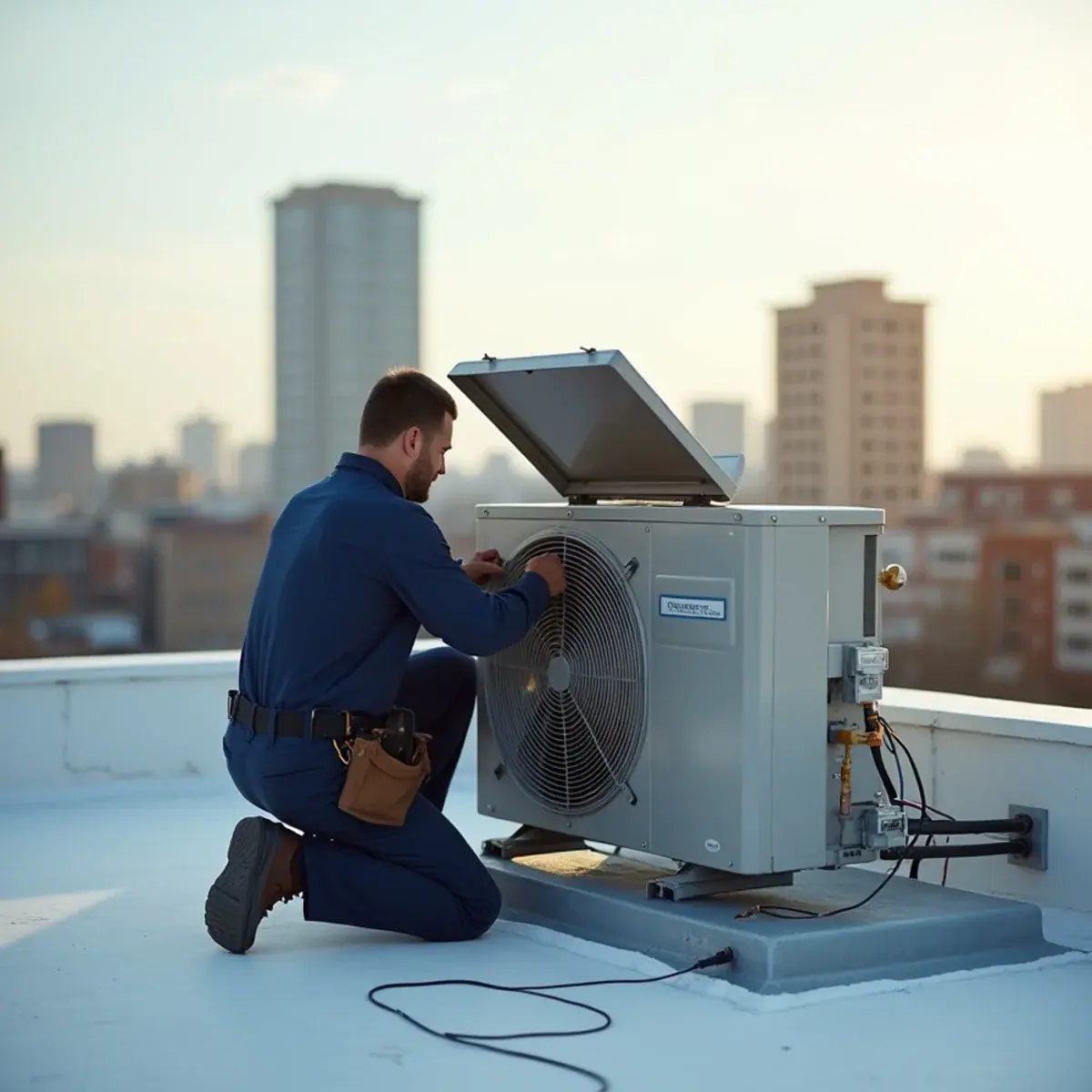
Commercial HVAC maintenance in White Plains keeps offices comfortable, stores open and kitchens within safe operating temperatures. When a rooftop unit fails on a July afternoon, the cost is more than the repair: lost sales, uncomfortable staff, spoiled product and unhappy tenants. A planned preventive maintenance program cuts those surprises by catching worn belts, dirty coils and failing components before they shut you down. Here is what a solid program looks like for the equipment we see most across the city and the surrounding business districts.
The Equipment Behind White Plains Businesses
Downtown White Plains mixes mid-rise office buildings, street-level retail, restaurants and medical offices, while the corridors along Route 119 and the I-287 area add corporate parks and light-industrial space. Most of that runs on three kinds of equipment.
Rooftop Units
Packaged rooftop units handle heating, cooling and ventilation for many single-story retail spaces and low-rise offices. They live outdoors year-round, so coils, belts, motors and cabinets take a beating from weather, pollen and debris.
Split Systems
Smaller offices, storefronts and professional suites often use split systems with an indoor air handler and outdoor condensing unit, much like a large residential system, sometimes several per tenant space.
Boilers
Older commercial buildings and mixed-use properties often heat with hot-water or steam boilers. These need burner cleaning, combustion testing, safety control checks and, on hydronic systems, a zone-by-zone purge to clear air and correct over-pressurizing.
What a Preventive Maintenance Agreement Should Cover
A written PM agreement sets out what gets done, how often, and how service calls are handled between visits. A strong one covers:
- Filter changes on a set schedule, commonly quarterly and more often for restaurants or dusty environments, with filter sizes logged per unit
- Belt inspection and replacement, checking tension, wear and pulley alignment on belt-drive blowers
- Coil cleaning on condensers and evaporators, typically at least once a year and more often near kitchen exhaust or busy roads
- Electrical checks on contactors, capacitors, wiring and motor amperage
- Refrigerant performance testing by EPA Section 608 certified technicians
- Condensate drain and pan cleaning to prevent overflows onto ceilings and merchandise
- Heating-side service with burner cleaning, flame sensor and heat exchanger inspection, and combustion and CO testing
Economizers: The Most Neglected Part of a Rooftop Unit
Many rooftop units have economizers that bring in outside air for free cooling when conditions allow. When the damper actuator fails or the linkage seizes, the damper can stick closed, wasting free cooling, or stick open, pulling in hot humid air in summer and cold air in winter. Both drive up energy use and can make a space hard to keep comfortable. Economizer operation, sensors and damper movement should be checked at every seasonal visit.
Controls, Thermostats and Older Refrigerants
Programmable and networked thermostats save money only when their schedules match how the space is actually used. We verify setbacks, occupied hours and sensor locations during visits, since a thermostat mounted near a sunny storefront window or a kitchen pass can run a unit all day. Older units still charged with R-22 deserve a frank conversation: production of new R-22 has ended in the U.S., so recharging a leaking system gets more expensive each year. Maintenance is the right time to plan replacement budgets for those units instead of discovering the issue during a breakdown.
Restaurants Need a Tighter Schedule
Restaurant kitchens push HVAC hard. Grease-laden air loads filters and coils, and makeup air must keep up with hood exhaust or the dining room turns drafty and doors become hard to open. We recommend more frequent filter changes and coil cleaning for food service, with close attention to makeup air units and any rooftop equipment near exhaust fans.
Scheduling Around Business Hours
Maintenance should not interrupt your customers. Rooftop work can usually happen during business hours with little disruption, but tasks that require shutting down heating or cooling, working inside occupied suites or accessing ceiling spaces are best scheduled early mornings, evenings or weekends. For retail, avoid the weeks before major holidays. For offices, coordinate with building management on roof access and after-hours entry. Spring cooling checks and fall heating checks should land before the season, not in the middle of the first heat wave.
Beyond Downtown: Elmsford and Purchase
Our commercial work extends past the city line. In Elmsford, near the I-287 and Saw Mill Parkway junction, light-industrial buildings and older mixed-use properties often run a mix of rooftop units and aging boilers. In Purchase, corporate campuses and large facilities call for zoned heating and cooling that needs careful seasonal balancing.
When Maintenance Turns Up a Bigger Problem
Preventive visits sometimes reveal a cracked heat exchanger, a failing compressor or a unit near the end of its life. Our approach is to lay out the options clearly, repair or replace, with the tradeoffs explained, so you can plan the expense rather than react to it. Between visits, our 24/7 emergency HVAC repair is available for breakdowns, and our boiler service covers commercial hot-water and steam systems.
Does a Maintenance Plan Cover Walk-In Coolers and Refrigeration?
For restaurants, delis and markets, a refrigeration failure costs more than a warm dining room. Walk-in coolers and freezers need their own checklist next to the HVAC one:
- Cleaning the condensing unit coil, which often shares a roof with the kitchen exhaust fan and loads up with grease
- Checking door gaskets, hinges and freezer door heater wires so the box isn’t pulling in warm, humid air
- Inspecting the evaporator for ice buildup and confirming defrost cycles end when they should
- Clearing freezer drain lines and checking the drain line heater so meltwater doesn’t refreeze in the pipe
- Logging box temperatures at each visit so a slow decline shows up before product is lost
Our commercial HVAC and refrigeration service handles both sides, and leaks on either one go through our refrigerant leak repair process with EPA Section 608 certified technicians. Food businesses from downtown White Plains to Port Chester can put the rooftop and the walk-in on one schedule.
From the rooftop: what our commercial techs check that a checklist misses
Rooftop units usually fail in ways that start small. The condensate trap is an easy one to overlook. On a draw-through unit, the drain pan sits under negative pressure, so the drain needs a properly sized trap to let water out without sucking air in. A trap that’s missing, too shallow or dried out over winter holds water in the pan until it spills into the curb and shows up weeks later as a stained ceiling tile in the space below. Traps get primed at the spring start-up, and drain lines get checked for ice cracks.
Next is the curb itself. The gasket between the unit and its roof curb breaks down with age, and a tired seal lets rain in and conditioned air out at the same time. Gas-fired rooftop units also get a look at the heat exchanger tubes and the flue hood, since birds like to nest there over summer. Belts are replaced on a schedule rather than when they squeal, and the belt size gets written on the unit so the next visit carries the right spare.
Access shapes every visit. Roof work near an unguarded edge or a skylight needs planning, which is part of why our team carries OSHA 30 training. Tell us about roof hatches, locked stairwells and building rules before the first visit; a tech who can’t reach the roof can’t do much for you. And for units still running R-22, we’ll tell you plainly when maintenance is buying time rather than fixing anything.
Setting Up a Maintenance Program
Every building is different, so the right program starts with a walkthrough of your equipment. Bella Family Air Solutions is based in the Fairview section of White Plains, holds EPA Universal certification and OSHA 30 training, and has served the area as a family business since 1976. To discuss a commercial HVAC service plan for your office, store or restaurant, reach out and we will schedule a site visit.
Frequently asked questions
How often should commercial HVAC units be serviced?
Most commercial systems benefit from at least two full service visits a year, one before cooling season and one before heating season, with filter changes in between, often quarterly. Restaurants, medical offices and dusty environments usually need more frequent filter changes and coil cleaning. A written preventive maintenance agreement sets the exact schedule for each unit.
Can maintenance be done without disrupting my business?
Yes. Much rooftop work happens with minimal disruption during normal hours. Tasks that require shutting down equipment or working inside occupied spaces can be scheduled early in the morning, in the evening or on weekends. We coordinate with owners and building managers on roof access and timing so customers and staff are not affected.
What is an economizer and why does it need checking?
An economizer is a damper assembly on many rooftop units that brings in outside air for cooling when conditions allow. If the actuator or linkage fails, the damper can stick open or closed, wasting energy and making the space harder to condition. Checking economizer operation, sensors and damper movement is part of every seasonal commercial visit.
Who is responsible for HVAC maintenance, the tenant or the landlord?
It depends on the lease. Many commercial leases, especially triple-net retail leases, put rooftop unit maintenance on the tenant even though the landlord owns the equipment. Read the HVAC clause before you sign or renew and ask for the unit’s service history. If upkeep is your job, keep your own records, because they matter when a compressor fails and someone has to decide who pays.
Is it worth maintaining a rooftop unit we plan to replace in a year or two?
Yes, at a basic level. Filters, belts, drains and coil cleaning keep an old unit running and protect the space below from leaks while you budget for the replacement. What rarely makes sense is major component work on a unit near retirement, such as a compressor on an R-22 system. We’ll tell you which repairs are worth making now and which belong in the replacement plan.